Solo developer Jake's QR code auction platform sees 13x token surge and major project participation
The Big Idea
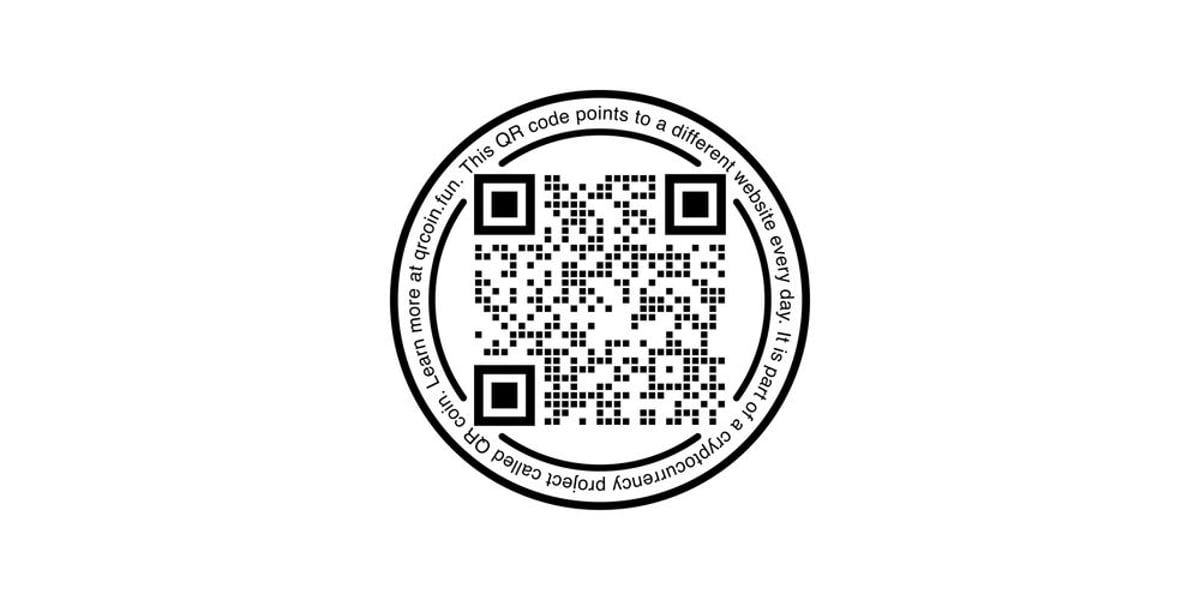
Every day, one QR code sells to the highest bidder. The winner controls where it points for 24 hours. That simple concept has generated over $44,000 in auction revenue and pushed the $QR token to a peak market cap of $4.3 million on Base blockchain.
QRCoin.fun launched in February 2025 when developer Jake deployed the $QR token through Clanker on Farcaster. After 22 quiet days with the market cap below $40,000, the project exploded. By June 10, 2025, the token had surged 13x from May levels, reaching an all-time high of $0.00004700.
The record auction bid? $3,500 for a single day's control of the QR code.
How the Daily Auction Works
The mechanics stay simple:
- Users bid USDC for control of the QR code destination
- Highest bidder wins 24 hours of redirect control
- Outbid users get instant refunds with no risk of losing funds
- The QR code never changes which means it spreads everywhere
Winners have directed the QR to Twitter profiles, token contracts, charity links, and project promotions. Major projects like ZORA (the NFT protocol), Noice (a like-reward app that won 5 auctions), and Clip.fun (a Reddit-like creator platform that won 3 auctions) have all participated.
The permanent QR code creates compound value. As people print it, share screenshots, and post it across social media, each instance becomes a gateway to that day's winning destination. Yesterday's flyer becomes tomorrow's traffic source.
View-to-Earn Rewards
QRCoin added a second layer to drive engagement. Users who visit qrcoin.fun and view the daily QR code can claim $QR token rewards. This creates dual incentives: projects pay to direct traffic while users earn tokens for exploring winning links.
The platform uses Sybil resistance tools including wallet history analysis to prevent bot farming. Real users get rewards, bots get blocked.
The Solo Developer Behind QRCoin
Jake (@0FJAKE on Twitter) built QRCoin entirely alone. No team. No venture capital. No internal token allocation. Every single token went into circulation.
Jake maintains intentional anonymity about personal details but has become increasingly visible through his work. Beyond QRCoin, he created Base Colors NFT series, a collection featuring all 16,777,216 possible RGB color values as individual NFTs.
His approach stands out in crypto. While most projects raise millions and build teams, Jake chose radical transparency and solo development. The project runs on fully permissionless smart contracts on Base blockchain, meaning the auctions continue automatically without any intermediation.
The $QR token trades primarily on XT.COM (76% of volume) with additional liquidity on decentralized exchanges. Key metrics as of January 2026:
- Current price: $0.00002051 USD
- Market cap: $1.8 to $2 million
- 24-hour volume: $300,000 to $600,000
- Total supply: 100 billion tokens (fixed, no inflation)
- Peak market cap: $4.3 million (June 2025)
The token experienced significant volatility, surging to $0.00004700 in June before correcting. Despite the price decline from peak levels, daily auctions continue with consistent bidding activity.
Why Projects Pay Thousands for a QR Code
QRCoin solves a real problem in crypto: getting attention. Projects need ways to reach users beyond traditional advertising. QRCoin offers transparent, on-chain price discovery for attention.
Unlike Google Ads or Meta's platforms, QRCoin has:
- No algorithm controlling distribution
- No data collection or tracking
- No hidden pricing or auction mechanics
- Complete transparency with all bids visible on-chain
The community frames QRCoin as "decentralized advertising" that operates without intermediaries. Base ecosystem officials describe it as a fusion of "games, performance art, and on-chain attention machines."
Technical Foundation
QRCoin runs on Base, Coinbase's layer-2 solution built on Ethereum. This provides:
- Minimal gas fees compared to Ethereum mainnet
- Instant settlement of bids and claims
- Natural alignment with Base's experimental token community
The smart contracts operate fully on-chain and permissionlessly. Once deployed, the auction runs forever without platform control.
Recent Developments and Future Plans
Jake continues active development with several features in progress:
- Farcaster mini app already launched for easier access
- Copy-trading mechanics coming soon
- Feed-trading systems in development
- Leaderboards to gamify participation
In public posts, Jake speaks candidly about navigating challenges and iterating based on feedback. He recently wrote about being "at the part of my founder journey where I'm being introduced to dark..." The incomplete thought captures the authentic, in-progress nature of the project.
Challenges Facing QRCoin
Several factors could limit QRCoin's growth:
Token utility questions: The $QR token provides claiming rewards but lacks other clear use cases. Whether meaningful applications emerge beyond reward distribution remains uncertain.
Auction demand sustainability: High bids in June 2025 might represent peak novelty interest. Long-term auction pricing depends on continued project participation.
Solo developer risk: Jake's one-person operation creates concentration risk. The project's future depends entirely on his continued commitment.
Regulatory uncertainty: The auction mechanism could potentially face scrutiny under securities or gambling regulations depending on jurisdiction.
What Makes QRCoin Different
QRCoin arrived at the perfect moment. The Base ecosystem has become the primary hub for experimental tokens. Attention has become genuinely scarce in an oversaturated information environment. Crypto communities want alternatives to centralized advertising platforms.
The project captures several truths about current crypto culture. Simple ideas executed transparently can generate viral adoption. Solo builders can create meaningful impact without venture funding. Experimentation requires tolerance for uncertainty, which the community actually appreciates when founders communicate honestly.
The Current State
As of January 2026, QRCoin has settled into a sustainable rhythm. Daily auctions continue running. Users keep claiming rewards. The community remains engaged despite the price correction from June's peak.
The continuing auction bids suggest genuine demand exists beyond speculation. Projects still pay meaningful amounts for the daily QR redirect. Whether Jake can successfully add the promised trading mechanics and whether these create lasting value remains an open question.
Looking Forward
QRCoin faces the classic crypto challenge: converting initial attention into sustained utility. The project has already achieved something notable by creating a genuinely novel on-chain mechanic that captured widespread imagination.
The auction model prices attention directly, creating transparent market discovery for a formerly intangible resource. While no revolutionary technology underlies QRCoin, the novelty and simplicity of the mechanic proved sufficient to generate real community engagement.
QRCoin demonstrates that in a market crowded with complex protocols, simple ideas executed with transparency and technical competence can still break through. The daily auction for a single QR code may sound absurd, but $44,000 in auction revenue and millions in market cap suggest otherwise.
Visit qrcoin.fun to view today's QR code or place a bid. Follow @qrcoindotfun for updates on new features and auction results.