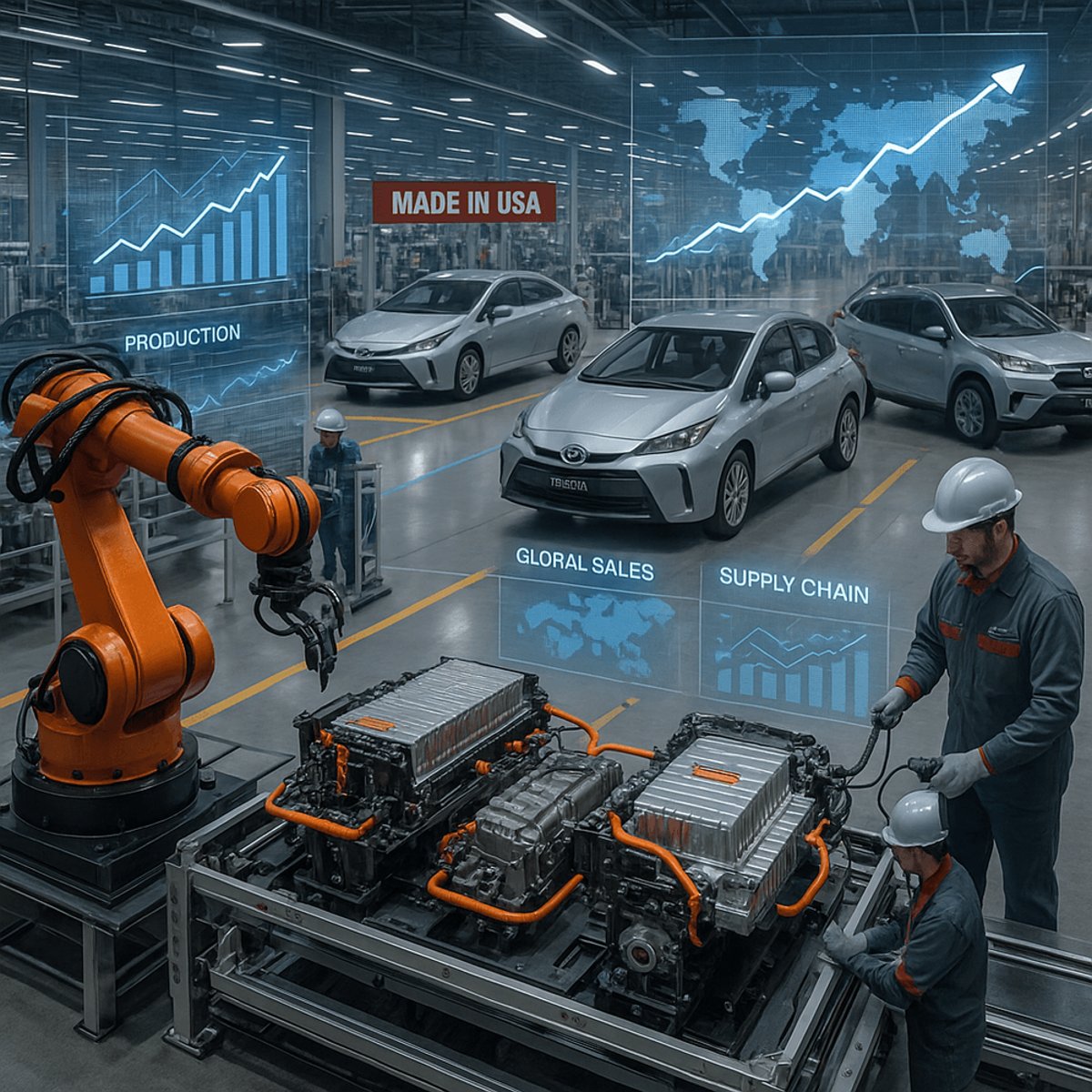
Toyota Motor just proved tariffs don't have to be a death sentence. The Japanese automaker retained its crown as the world's top-selling car company with record sales of 10.5 million vehicles in 2025, even as Trump's aggressive tariff regime slapped 25% levies on imports before dialing back to 15%. The company's secret weapon? A hybrid-heavy U.S. strategy and deep local manufacturing that absorbed tariff costs without passing sticker shock to buyers.
Toyota just handed the auto industry a masterclass in tariff survival. While competitors scrambled and profit margins cratered, the Japanese giant posted record global sales of 10.5 million vehicles in 2025, cementing its position as the world's bestselling automaker for another year. Sales climbed 3.7% from 2024, easily outpacing Volkswagen Group's 9 million units and Hyundai Motor Group's 7.27 million, according to Thursday's company report.
The real story isn't the headline number - it's how Toyota pulled it off while Trump's trade war raged. U.S. sales of Toyota and Lexus vehicles jumped 7.3% to 2.93 million units, driven by insatiable American appetite for hybrid models like the Prius and RAV4. This came despite the president initially slamming Japanese automakers with 25% tariffs before backing down to 15% after negotiations.
Toyota's tariff playbook centered on one brutal calculation: eat the costs rather than alienate buyers with price hikes. The company estimated in November that U.S. tariffs would cost it 1.45 trillion yen - roughly $9.7 billion - in its fiscal year ending March 2026. But instead of passing that tab to customers, Toyota doubled down on cost reductions and leaned hard into its existing U.S. manufacturing footprint.
That manufacturing advantage turned out to be everything. Toyota imports only about one-fifth of its U.S. sales, meaning 80% of vehicles sold stateside roll off American assembly lines. The company's been aggressively expanding U.S. production, particularly for hybrids, betting correctly that local manufacturing would insulate it from trade volatility. It's a strategy years in the making that's now paying massive dividends.
Compare that to Hyundai's predicament. The South Korean automaker reported global revenue growth of over 6% in 2025, also boosted by strong U.S. hybrid sales. But operating profit collapsed 19.5% year-over-year as U.S. levies cost Hyundai 4.1 trillion won. The culprit? Hyundai imported roughly 60% of its U.S. sales in 2025, according to September company statements. The company's now racing to ramp up production at its Georgia facilities to 80% local manufacturing by 2030, but that's cold comfort for 2025's battered margins.
Hyundai got whipsawed again this week when Trump threatened Monday to jack tariffs back up to 25%, claiming South Korea's legislature moved too slowly implementing last year's trade deal that lowered duties to 15%. Hyundai shares tumbled nearly 5% on the news, underscoring how exposed import-heavy automakers remain to political headwinds.
Toyota's hybrid bet looks prescient in hindsight. American buyers snapped up electrified vehicles that don't require charging infrastructure anxiety, giving Toyota pricing power even as costs mounted. The company raised its full-year operating profit forecast in November despite the tariff hit, citing successful cost controls and robust demand outside the U.S. market.
The competitive dynamics are stark. Toyota's local manufacturing moat and hybrid leadership created a virtuous cycle - absorbed costs kept prices competitive, driving volume that spread fixed costs across more units, protecting margins. Rivals without that manufacturing footprint got squeezed from both sides: higher input costs and pressure to match Toyota's pricing.
Investors took notice Thursday, sending Toyota shares up 3% as the sales figures sank in. The company reports fiscal third-quarter earnings February 6, with analysts expecting operating profits to rebound nearly 30% from the same period last year, according to Reuters estimates. If those projections hold, Toyota will have successfully navigated the tariff storm while actually strengthening its market position.
What comes next matters just as much. Trump's tariff threats remain unpredictable, with the South Korea situation showing how quickly trade terms can shift. Toyota's manufacturing advantage only works if Washington doesn't slap massive levies on components or raw materials, which could undermine even domestic assembly. But for now, Toyota's proving that strategic patience and local investment can trump political volatility - at least in the auto industry's current chapter.
Toyota's 2025 performance offers a blueprint for navigating protectionist trade policies: build where you sell, absorb costs strategically, and bet on products customers actually want. The 10.5 million unit milestone isn't just a sales record - it's validation that manufacturing footprint matters more than ever in an era of tariff volatility. While competitors nurse tariff wounds and scramble to relocate production, Toyota's decade-long U.S. manufacturing investment is delivering returns that go straight to the bottom line. The question now is whether other automakers can replicate this playbook fast enough, or if Toyota's head start becomes an insurmountable moat.