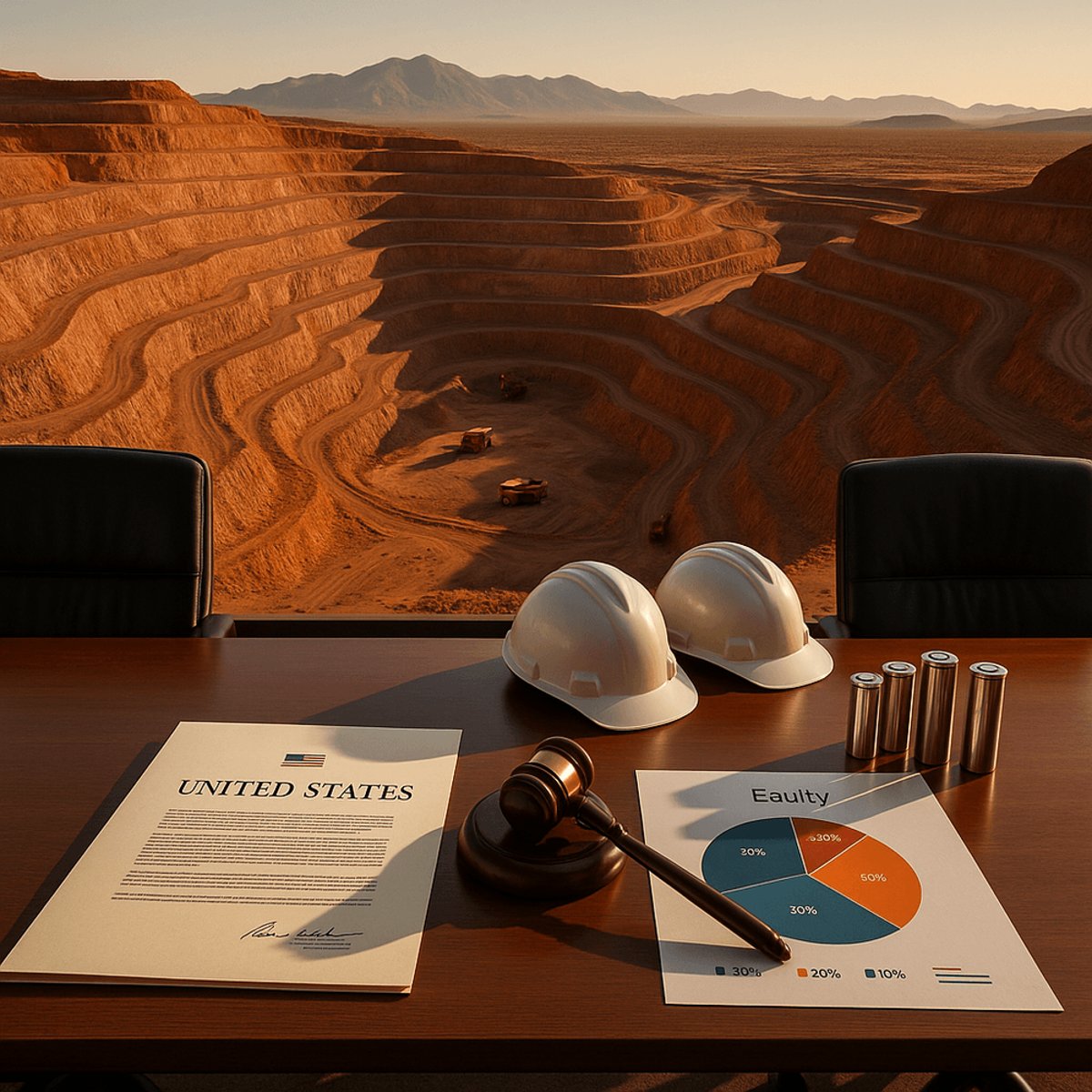
The Trump administration is pushing for a 10% equity stake in Lithium Americas as part of loan renegotiations, despite calling the energy transition a 'green new scam.' The move affects the company's massive Nevada mine project that supplies GM and represents the government's latest strategic investment in critical mineral infrastructure.
The irony is striking. The Trump administration calls the energy transition the "green new scam," yet it's aggressively pursuing a significant stake in what will become the largest lithium mine in the Western Hemisphere. Lithium Americas asked for a simple change to their loan repayment schedule, but that request just opened the door to a much bigger government play.
In exchange for renegotiating the repayment terms on a $2.26 billion Department of Energy loan, the Trump administration is demanding up to 10% equity in the Nevada-based mining company. The move puts the government directly into business with GM, which already owns a commanding 38% stake in the operation.
"President Trump supports this project. He wants it to succeed and also be fair to taxpayers," a White House official told Reuters. "But there's no such thing as free money." The comment reveals how the administration views these critical mineral investments - not as climate policy, but as economic nationalism.
This isn't the first time the government has taken equity stakes in strategic companies. The pattern emerged earlier when the U.S. secured positions in Intel and MP Materials, signaling a broader shift toward state capitalism in sectors deemed critical to national security.
Lithium Americas is developing the Thacker Pass mine in Nevada, a project that spans multiple presidential administrations. Trump approved the initial permit during his first term's final days, while Biden's DOE awarded the massive loan. Now Trump's return to office is reshaping the terms entirely.
The numbers are staggering. The first phase alone will produce enough lithium for 800,000 electric vehicles annually. When GM bought its 38% stake last year for $625 million, the deal included exclusive purchasing rights - the entire first phase output plus 20 years of the second phase. That translates to material for 1.6 million EVs over two decades.
But here's where it gets complicated. The Trump administration is reportedly demanding that GM guarantee those lithium purchases, even while pursuing policies that actively undermine automakers' EV transitions. It's a contradiction that highlights the administration's complex relationship with the clean energy supply chain.
The government's equity demands come at a crucial moment for American lithium production. China currently dominates lithium processing, controlling about 60% of global refining capacity. The Thacker Pass project represents one of the few large-scale opportunities to build domestic supply chains that could reduce that dependence.
For GM, the situation creates a strategic bind. The automaker needs secure lithium supplies for its EV ambitions, but it's now caught between a government partner that's hostile to electric vehicles and supply chain realities that demand domestic sourcing. The company's $625 million investment suddenly looks more complicated with Uncle Sam as a business partner.
Industry observers note that government equity stakes in mining operations aren't unprecedented globally - China's state-owned enterprises routinely take positions in critical mineral projects. What's new is the U.S. government's willingness to act like a private equity player in sectors it deems strategically important.
The Thacker Pass negotiations also reveal how loan terms can evolve into ownership structures. What started as a straightforward government loan to support domestic lithium production has morphed into a complex arrangement where taxpayers become shareholders in a private mining venture.
Looking ahead, this deal could set the template for future critical mineral investments. If the government successfully negotiates equity positions in exchange for favorable loan terms, expect similar demands in copper, rare earth, and semiconductor projects. The precedent matters as much as the lithium itself.
The Trump administration's push for equity in Lithium Americas reveals how critical mineral security is reshaping government investment strategies. While publicly opposing the energy transition, the administration is quietly positioning taxpayers as stakeholders in the EV supply chain. This contradiction between rhetoric and reality may define how America builds its clean energy infrastructure - not through climate policy, but through economic nationalism wrapped in strategic investment terms.