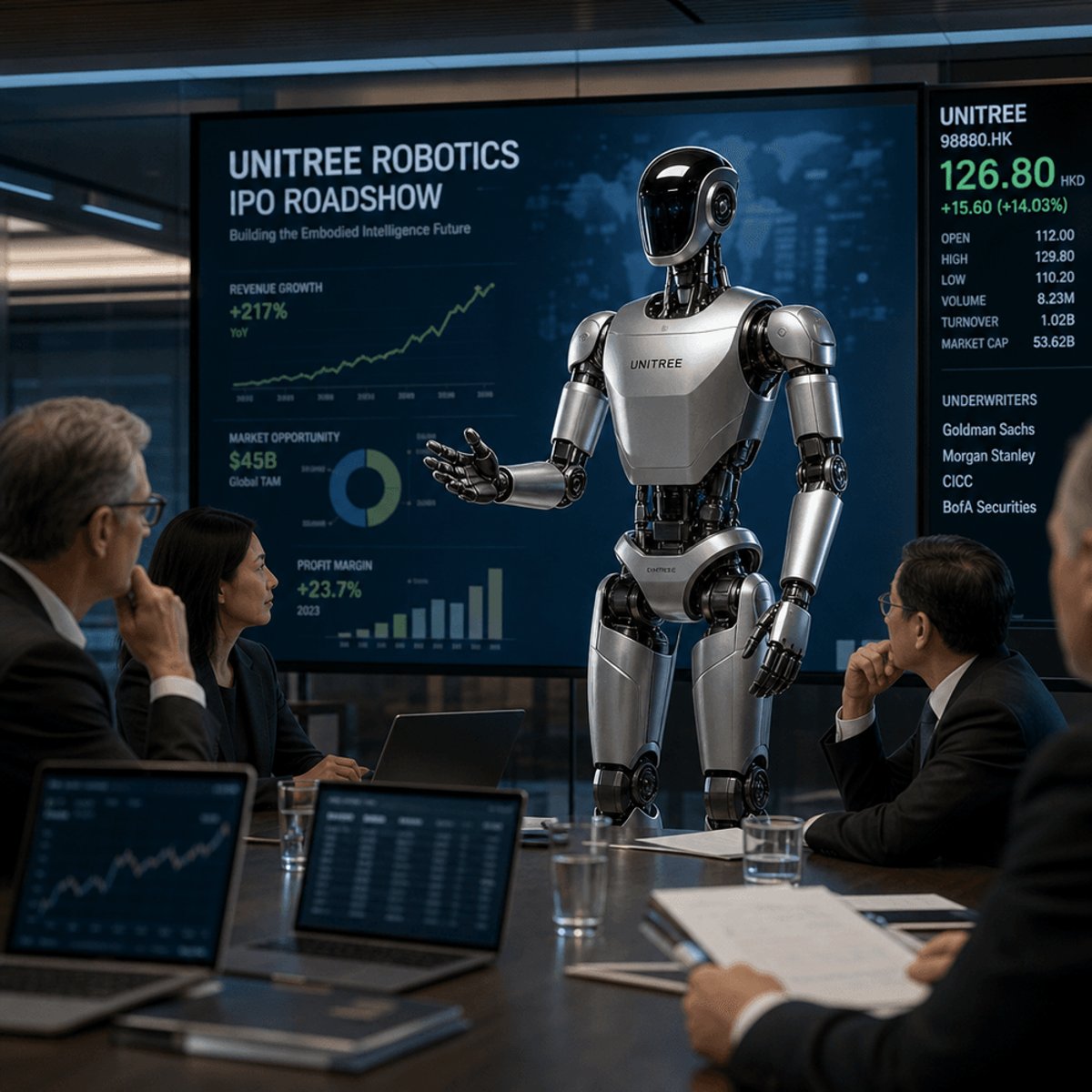
Chinese robotics company Unitree is preparing to go public in a move that will test whether investors are ready to bet real money on humanoid robots that can do backflips but haven't proven they can turn a profit. The IPO comes as geopolitical tensions between the US and China intensify over AI and robotics technology, with Tesla's Optimus program creating a high-stakes race to commercialize machines that blur the line between science fiction and factory floor.
Unitree is about to find out if Wall Street will pay up for robots that can do backflips. The Chinese robotics firm's impending IPO represents the first real market test for humanoid robotics - a technology that's generated massive hype but zero proven revenue models. According to CNBC's reporting, the offering comes at a moment when investors are increasingly skeptical of hardware moonshots that burn cash without clear paths to profitability.
The timing puts Unitree in direct competition with Tesla's heavily promoted Optimus program for mindshare and capital. While Tesla CEO Elon Musk has promised Optimus will eventually be worth more than the company's car business, the robots remain confined to controlled demonstrations and factory tests. Unitree faces the same challenge - its machines can perform impressive gymnastic routines, but that doesn't translate to assembly lines or warehouse operations where reliability and cost matter more than viral videos.
Geopolitical headwinds make the investment thesis even trickier. US-China tensions over advanced technology have already resulted in export controls on AI chips and robotics components. Any American institutional investor buying into Unitree's IPO has to price in the risk that trade restrictions could cut off access to critical suppliers or markets. The Biden administration's expanded controls on AI technology exports, detailed in recent Commerce Department filings, specifically target applications that could have military dual-use - and humanoid robots check that box.
The commercial viability question haunts the entire sector. Industrial robots from companies like ABB and FANUC generate billions in revenue because they solve specific, repeatable tasks better than humans. Humanoid robots, by contrast, are designed for general-purpose work - which sounds appealing but means they're not optimized for anything in particular. The economics don't make sense yet. A specialized robotic arm costs tens of thousands and pays for itself in months. A humanoid robot that can theoretically do multiple jobs but excels at none might cost hundreds of thousands while delivering uncertain returns.
Unitree's IPO prospectus will need to answer hard questions about unit economics, target markets, and competitive moats. Investors burned by overhyped robotics startups in previous cycles - remember when warehouse robots were supposed to eliminate all human workers by 2020? - will demand more than demonstrations. They'll want signed purchase orders, deployment timelines, and realistic margin projections.
The company does have some advantages. China's manufacturing ecosystem gives Unitree access to cheaper components and faster iteration cycles than Western competitors. Labor costs in Chinese factories are rising, creating potential domestic demand for automation. And the Chinese government has identified robotics as a strategic priority, potentially opening up subsidies and guaranteed purchases that could de-risk early production runs.
But those same government ties create different problems. US pension funds and institutional investors face increasing pressure to divest from Chinese companies with potential military applications. The humanoid robotics space sits squarely in that crosshairs - these machines could just as easily patrol borders or handle logistics for armed forces as they could stock shelves or clean offices.
Tesla's Optimus program casts a long shadow over any humanoid robotics IPO. Musk's company has advantages Unitree can't match - an existing manufacturing footprint, vertical integration for AI chips and actuators, and a brand that lets it raise capital cheaply. If Tesla struggles to make Optimus commercially viable, what chance does a startup have? On the other hand, if Unitree can demonstrate progress while Tesla remains in the demonstration phase, it might capture first-mover advantage in specific verticals.
The IPO will also reveal how investors value optionality versus execution. Humanoid robots represent a massive addressable market if the technology works - potentially trillions of dollars replacing human labor across industries. But that's a big if, stretched across a timeline measured in decades, not quarters. Companies with clearer near-term revenue opportunities in AI software or specialized industrial automation might look more attractive by comparison.
What happens with Unitree's debut will ripple across the robotics sector. A successful offering could unleash a wave of funding for competitors and adjacent technologies. A flop could freeze capital for years, relegating humanoid robots back to research labs and demo videos while investors chase more proven opportunities in software and services.
Unitree's IPO will do more than determine one company's valuation - it will signal whether the market believes humanoid robotics has graduated from spectacle to serious business. Investors will have to weigh breathtaking technical progress against stubborn economic realities, all while navigating geopolitical minefields that could reshape the competitive landscape overnight. The outcome will likely determine whether the 2020s become the decade humanoid robots went mainstream or just another chapter in the long history of overpromised automation revolutions.