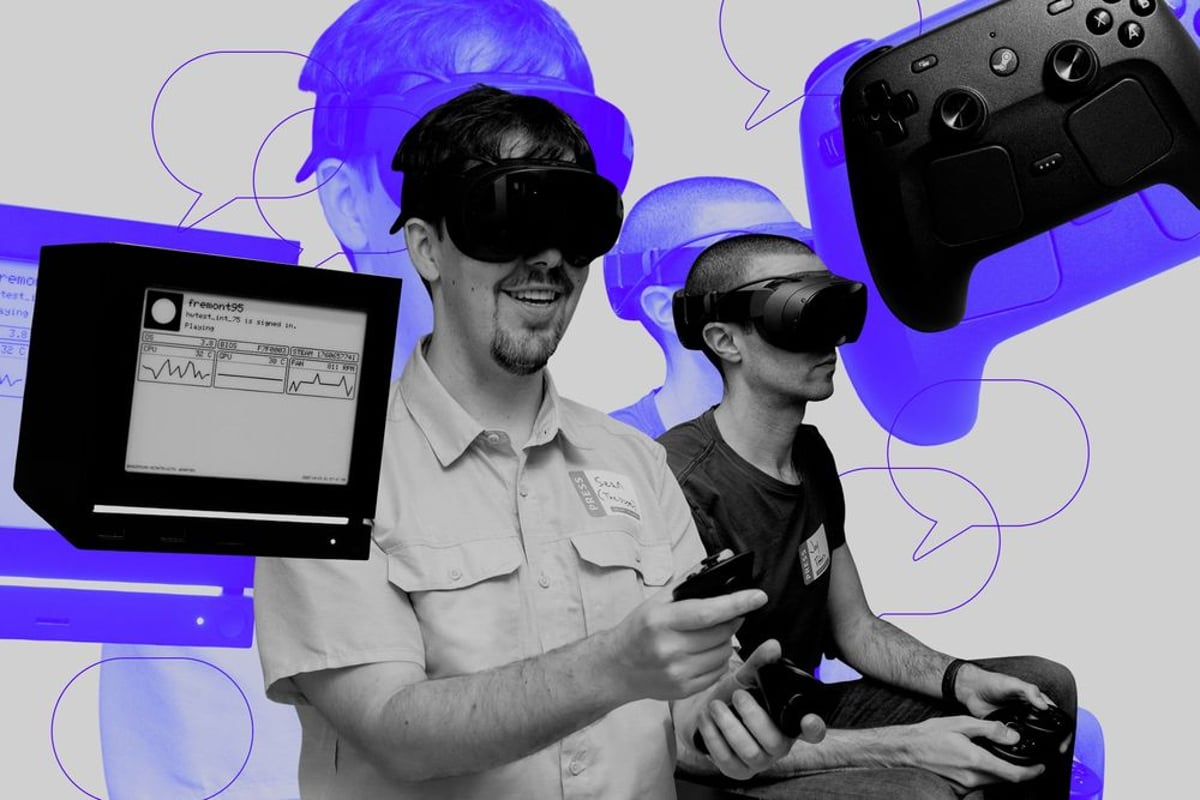
Valve just dropped three major hardware announcements that could reshape PC gaming. The company unveiled the Steam Frame streaming VR headset, a new Steam Machine gaming PC for living rooms, and an updated Steam Controller - marking Valve's biggest hardware push since the Steam Deck launched. The Verge reporters got exclusive hands-on time at Valve headquarters, and their initial impressions suggest this trio could finally deliver on Valve's long-promised vision of bringing Steam everywhere.
Valve is making its biggest hardware bet since the Steam Deck, and it's not just doubling down - it's going all in with three distinct products that could redefine how we think about PC gaming ecosystems. The Verge's Jay Peters and Sean Hollister just returned from Valve's headquarters in Bellevue with exclusive hands-on impressions of the Steam Frame, Steam Machine, and Steam Controller.
The Steam Frame represents Valve's most intriguing play - a streaming-focused VR headset that could sidestep the computing power limitations that have kept VR niche. Unlike traditional standalone headsets that compromise on graphical fidelity, or tethered units that chain users to expensive gaming rigs, the Frame appears designed to leverage cloud gaming and local streaming in ways that could make high-end VR accessible to mainstream audiences.
But it's the return of the Steam Machine that really signals Valve's broader ambitions. The original Steam Machine initiative launched in 2015 to lukewarm reception, hampered by unclear messaging and limited game compatibility. Now, with Steam's Linux compatibility layer Proton having matured dramatically and the Steam Deck proving that Valve can execute on hardware, the company seems ready for a second shot at the living room.
"You can imagine how excited we were to visit Valve's headquarters," Peters wrote, with the enthusiasm of someone who's witnessed gaming history in the making. The timing isn't coincidental - Valve is riding high on Steam Deck success, with the handheld finally proving that the company can deliver polished consumer hardware that actually sells.
The new Steam Controller marks another attempt to crack the input code that has eluded the company. The original controller, discontinued in 2019, was beloved by a devoted niche but never achieved mainstream adoption. With trackpads, haptics, and unconventional layouts, it represented Valve's belief that mouse-and-keyboard precision could translate to living room gaming. This iteration suggests they haven't given up on that vision.
What's particularly striking is how these three products work together. The Steam Frame could bring VR to users without expensive gaming PCs. The Steam Machine provides that local computing power for both traditional gaming and VR streaming. The Steam Controller bridges the gap between precision PC gaming and couch-friendly console experiences. It's an ecosystem play that finally makes sense.
The broader gaming industry is watching closely. Meta dominates VR but struggles with content beyond social experiences. Microsoft and Sony control living room gaming but haven't cracked PC game libraries. Nintendo perfected portable gaming but can't match PC performance. Valve's approach could thread the needle by leveraging Steam's massive game library across multiple form factors.
Early indicators suggest Valve has learned from past mistakes. The Steam Deck's success came from clearly defined use cases, realistic performance targets, and seamless integration with Steam's existing ecosystem. If these three products follow that blueprint while addressing the gaps that kept previous Valve hardware from mainstream success, we could be looking at a genuine game-changer.
The hands-on session at Valve headquarters was limited to Verge subscribers during an AMA format, suggesting the company is still controlling the narrative carefully. But Peters and Hollister's excitement comes through clearly - these aren't just iterative updates, but potentially transformative products that could finally realize Valve's decade-long vision of Steam everywhere.
Valve's three-product announcement represents the company's most ambitious hardware strategy since entering the market. The combination of streaming-focused VR, living room gaming, and refined input shows a clear ecosystem vision that leverages Steam's existing strengths while addressing the gaps that kept previous Valve hardware from mainstream adoption. Whether these products can succeed where others failed will depend on execution, but the early hands-on impressions suggest Valve has learned from past mistakes and may finally be ready to deliver on its long-promised vision of ubiquitous Steam gaming.