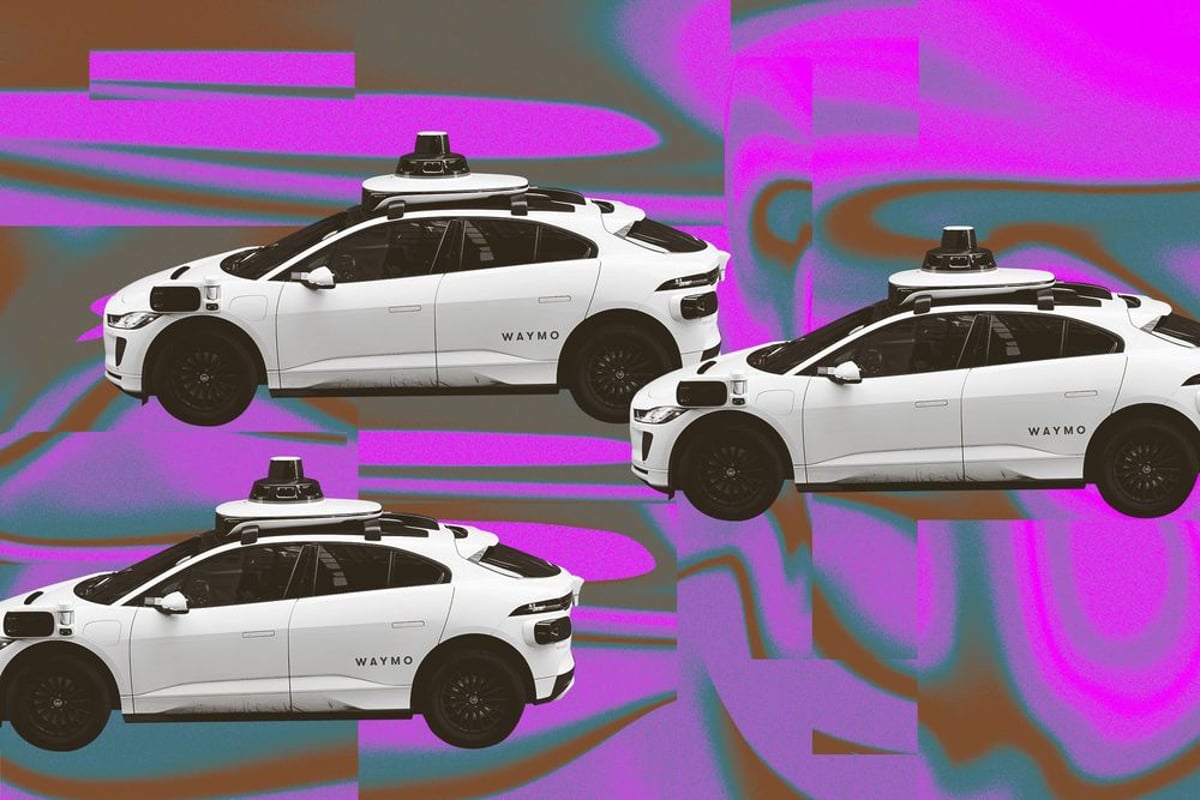
Waymo just published groundbreaking research that could reshape how autonomous vehicles predict human behavior. The Google-backed robotaxi leader revealed a computer-based cognitive model in Nature Communications that explains how human drivers make split-second decisions to avoid collisions. The breakthrough could give Waymo's fleet a critical edge in anticipating erratic human behavior on public roads, where understanding panic reactions matters as much as processing sensor data.
Waymo is betting that understanding human panic is the key to safer autonomous vehicles. The company's latest research, published today in the peer-reviewed journal Nature Communications, introduces what it calls a "reference driver model" - essentially a virtual human that reacts to road surprises the same way flesh-and-blood drivers do when a car swerves into their lane or a pedestrian darts into traffic.
The timing is strategic. As Waymo expands its robotaxi operations across Los Angeles, Austin, and San Francisco with over 150,000 paid rides per week, the Alphabet-owned company faces mounting pressure to prove its vehicles can handle the chaos of human drivers better than humans themselves. According to The Verge's coverage, this isn't Waymo's first rodeo with virtual systems - but it might be its most important.
The cognitive model works by simulating split-second decision-making during what researchers call "surprise events" - those moments when a driver's brain shifts from autopilot to crisis mode. Unlike previous models that focused on ideal driving behavior, this one captures the messy reality of human reaction times, attention lapses, and panic braking. Waymo's engineers trained the model using real-world driving data, creating a digital twin that freezes, overcorrects, and hesitates just like actual drivers do.
What makes this research different from Waymo's earlier simulation work is its focus on the cognitive layer. The company previously built realistic 3D worlds to test edge cases like wildfires and flooding, and created a hyperattentive virtual driver for crash avoidance comparisons. But those systems modeled perfect decision-making. This new model embraces imperfection - because that's what Waymo's AVs encounter every day on public roads.
The implications ripple across the autonomous vehicle industry. Tesla's Full Self-Driving system relies heavily on neural networks trained to mimic human driving patterns, but critics argue it doesn't adequately predict when humans will make mistakes. Cruise, which paused operations after a pedestrian dragging incident in 2023, has struggled to demonstrate its vehicles can anticipate human error better than human drivers can. Waymo's cognitive model offers a potential solution - a testable, publishable framework that regulators can scrutinize.
The research paper represents more than academic credibility. By publishing in Nature Communications, a high-impact scientific journal, Waymo is making a strategic play for regulatory acceptance. The National Highway Traffic Safety Administration has repeatedly asked AV companies to prove their safety claims with reproducible research, not just internal testing data. This peer-reviewed study gives Waymo ammunition in those conversations.
Industry observers note the contrast with competitors. Tesla CEO Elon Musk has promised full autonomy for years but hasn't published comparable peer-reviewed safety research. Apple, which recently shuttered its secretive car project, never released academic studies on its AV decision-making systems. Amazon-backed Zoox focuses on custom-built vehicles but has published limited research on human behavior modeling.
Waymo's simulation strategy also reveals how Google's parent company Alphabet is leveraging AI resources that smaller AV startups can't match. The cognitive model likely draws on DeepMind's machine learning expertise and Google Cloud's computational infrastructure - advantages that independent players like Aurora and Motional struggle to replicate.
The research arrives as Waymo faces fresh scrutiny over safety incidents. Recent reports of Waymo vehicles honking at each other in parking lots and confused navigation in construction zones have fueled skepticism about whether robotaxis are truly ready for mass deployment. The cognitive model addresses these concerns by demonstrating Waymo's vehicles can predict not just what humans should do, but what they actually will do when startled or confused.
What's notable is what Waymo isn't saying. The research paper doesn't claim the model makes Waymo's vehicles perfectly safe - it establishes a baseline for comparing AV performance against typical human drivers. That's a subtle but important distinction. Waymo is positioning its technology not as infallible, but as statistically safer than the unpredictable humans sharing the road.
The model's real-world application remains to be seen. Waymo hasn't disclosed whether this cognitive system is already running in its commercial fleet or if it's still in the research phase. Given the company's history of multi-year testing before public deployment, the Nature Communications paper likely previews capabilities that will roll out gradually across Waymo One and Waymo Via services over the next year.
Waymo's cognitive driver model marks a turning point in the autonomous vehicle race - not because it solves every safety challenge, but because it reframes the conversation around what "safe enough" actually means. By publishing peer-reviewed research that quantifies human reaction failures, Waymo is building the scientific foundation regulators need to approve wider robotaxi deployment. The real test won't be whether the model perfectly predicts human panic, but whether it convinces skeptical cities and federal agencies that Waymo's vehicles are safer than the distracted, drowsy, and unpredictable humans currently behind the wheel. As competitors scramble to match this level of transparency, Waymo's simulation advantage could prove just as valuable as its miles driven.