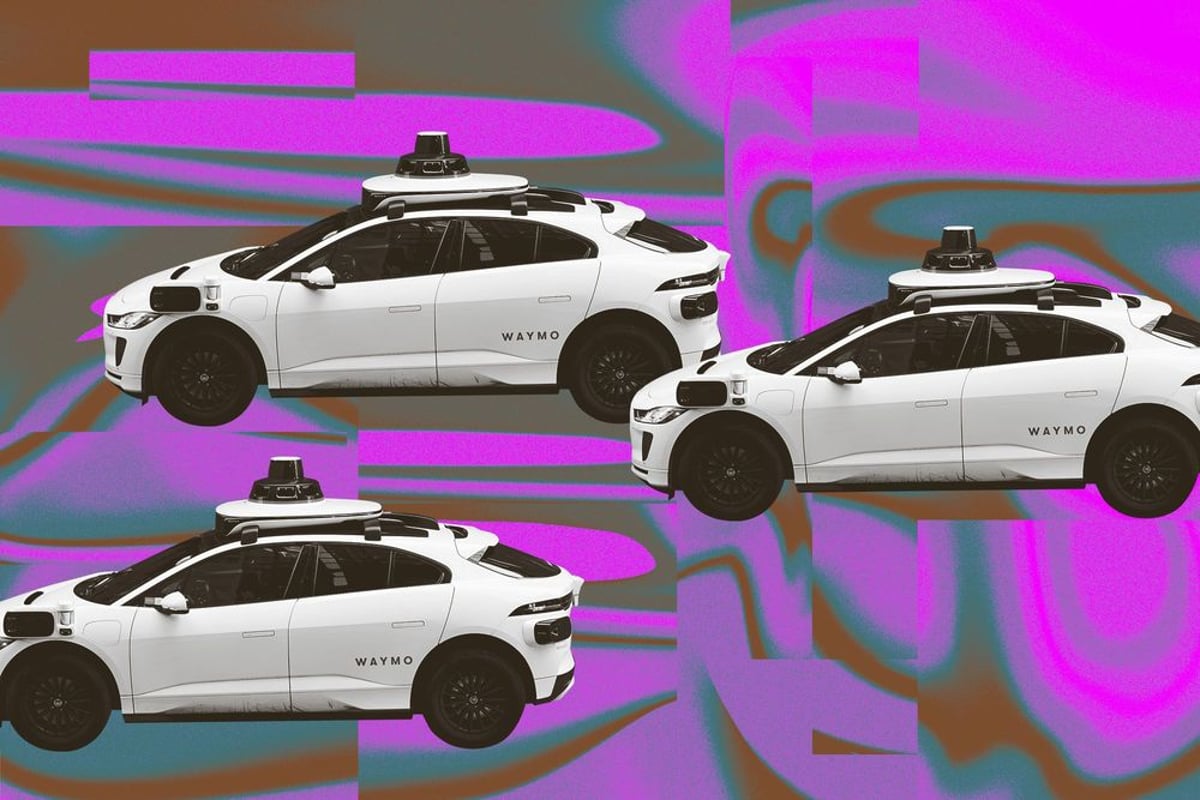
Waymo just unveiled a wild new testing ground for its self-driving cars - one where robotaxis can face down tornadoes, rogue elephants, and neighborhoods on fire. Built on Google's Genie 3 AI world model, the Waymo World Model generates photorealistic virtual environments to test autonomous vehicles in scenarios they'd rarely (or never) encounter on actual roads. According to Waymo's blog post, the system can create "virtually any scene - from regular, day-to-day driving to rare, long-tail scenarios" across multiple sensor types, marking a significant leap in how AV companies prepare their fleets for the unexpected.
Waymo is taking its autonomous vehicle testing into some seriously extreme territory. The Google-owned self-driving car company just rolled out its World Model, a simulation platform built on Genie 3 that can conjure up virtually any driving scenario imaginable - including the kind of edge cases that would make most AV engineers lose sleep.
Picture this: a Waymo robotaxi cruising down a lonely highway when suddenly, a massive tornado materializes in the distance. Or imagine the same vehicle navigating a snow-covered Golden Gate Bridge, dodging furniture floating through a flooded suburban street, or encountering an elephant blocking the road. These aren't hypothetical nightmares - they're actual scenarios Waymo can now simulate using Google DeepMind's latest AI breakthrough.
The Waymo World Model represents a major evolution in how autonomous vehicle companies stress-test their technology. While simulation has always been critical to AV development - allowing companies to rack up billions of virtual miles without risking actual passengers - most existing platforms struggle to generate truly photorealistic environments that accurately mirror real-world sensor data. Genie 3, Google's AI world model that can generate interactive 3D spaces from text or image prompts, changes that equation dramatically.
"The Waymo World Model can generate virtually any scene - from regular, day-to-day driving to rare, long-tail scenarios - across multiple sensor modalities," the company explains in its announcement. That last part matters tremendously. It's not just about creating visually convincing simulations; the system needs to generate accurate lidar point clouds, radar returns, and camera imagery that match what Waymo's sensor suite would actually detect in those scenarios.
Waymo points to three core mechanisms that make Genie 3 ideal for autonomous driving simulations. Driving action control lets developers create "what if" counterfactuals - basically allowing them to rewind moments and test alternative responses. Scene layout control enables customization of road configurations, traffic signals, and how other vehicles and pedestrians behave. But it's the language control feature that Waymo calls its "most flexible tool," allowing developers to adjust time-of-day, weather conditions, and lighting with simple text prompts.
That language control capability proves especially valuable for testing sensor performance in challenging conditions. Low-light scenarios at dusk, blinding glare from a setting sun reflecting off wet pavement, heavy fog obscuring road markers - these are exactly the situations where autonomous systems can struggle, and where traditional simulation tools often fall short in terms of realism.
The platform can also ingest real-world dashcam footage and transform it into fully interactive simulated environments, what Waymo describes as achieving "the highest degree of realism and factuality" in virtual testing. This capability essentially allows the company to take any interesting or problematic real-world scenario its fleet encounters and replay it endlessly with different variables and responses.
Even more impressive, the Waymo World Model can generate extended simulation sequences at 4X playback speed without degrading image quality or overwhelming computer processing power. That's a significant technical achievement that could dramatically accelerate testing cycles.
"By simulating the 'impossible,' we proactively prepare the Waymo Driver for some of the most rare and complex scenarios," the company notes. It's an acknowledgment that autonomous vehicles need to handle not just statistically likely situations, but also the weird, unexpected moments that define real-world driving.
This isn't Waymo's first time tapping Google's AI arsenal to sharpen its autonomous driving chops. The company's EMMA (End-to-End Multimodal Model for Autonomous Driving) training model was built using Google's Gemini. Waymo is also reportedly developing a Gemini-powered in-car voice assistant. And DeepMind has previously provided solutions to help Waymo reduce false positives in its sensor data.
The timing of this announcement is notable. Waymo has been aggressively expanding its robotaxi operations across multiple cities, but the company - like every AV operator - faces ongoing scrutiny over safety and reliability. Just this week, questions emerged about how Waymo vehicles handle interactions with school buses and emergency situations. Advanced simulation capabilities like the World Model could help address those concerns by allowing the company to test and refine responses to rare but critical scenarios without waiting for them to occur in the real world.
For the broader autonomous vehicle industry, Waymo's World Model represents both a competitive advantage and a glimpse at where AV testing is headed. As AI-generated environments become more sophisticated, the line between virtual and physical testing will continue to blur - and companies with access to cutting-edge generative AI models like Genie 3 will have a distinct edge in preparing their vehicles for every possible situation.
Waymo's World Model marks a significant shift in how autonomous vehicles get battle-tested before hitting real streets. By harnessing Google's Genie 3 to generate photorealistic simulations of everything from natural disasters to wildlife encounters, Waymo can now prepare its robotaxis for scenarios that might take years - or never happen at all - in physical testing. This kind of AI-powered simulation could become the new standard for AV development, giving companies with access to advanced generative models a major advantage in the race to deploy truly autonomous fleets. For passengers, it means the robotaxi that picks them up tomorrow might have already survived a thousand virtual tornadoes.