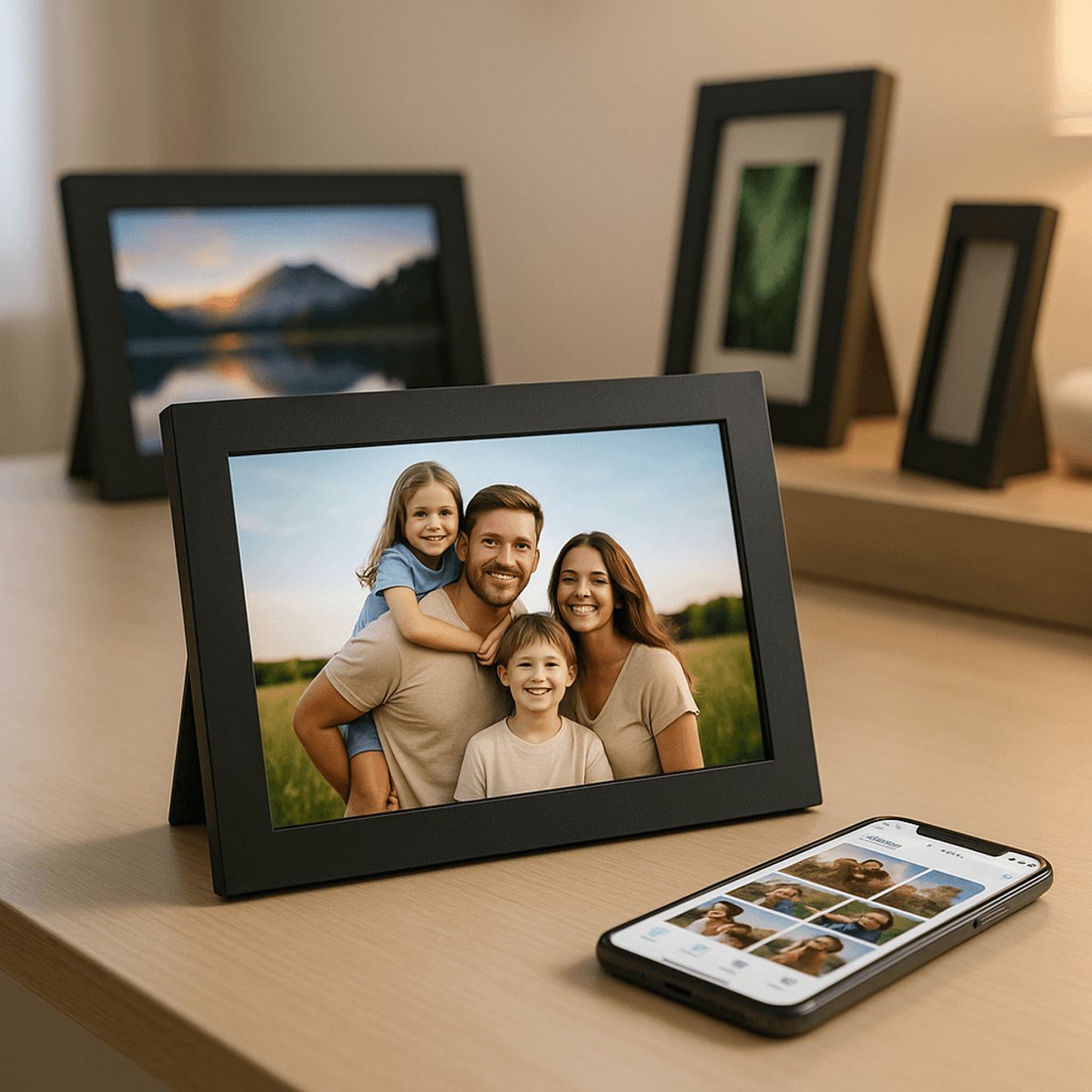
WIRED's Nena Farrell just released her comprehensive 2025 digital photo frame buying guide, testing everything from budget-friendly options to premium displays. The review spotlights Aura, Skylight, and Nixplay as top contenders in the increasingly competitive smart home display market.
WIRED's latest buying guide drops just as digital photo frames hit their stride in the smart home ecosystem. The comprehensive review by Nena Farrell tests over a dozen models, from budget $80 options to premium $750 art displays, revealing how this once-niche category is getting serious competition from tech giants.
Aura dominates the recommendations, with multiple models earning top spots. The company's approach to unlimited cloud storage and streamlined apps sets it apart from competitors who charge annual fees or rely on generic third-party software. But Skylight pushes back with its Frame 2 lineup, while Nixplay maintains its position in the premium segment.
The review reveals a telling divide in the market. Premium brands like Aura and Skylight offer dedicated apps and robust privacy policies, while budget options often rely on the generic Frameo app across multiple brands. "They're better than other cheap options we've tested, but, like Cozyla, they cross the $100 threshold," Farrell notes about the Aeezo 9-inch frame, pointing to how even budget options are creeping toward premium pricing.
Privacy emerges as a key differentiator. Aura's privacy policy includes metadata deletion options, while Nixplay encrypts photos during transmission. Generic brands offer less transparency about data handling. "You might not think that photos count as sensitive information," Farrell writes, "but it can be devastating to find photos of loved ones used for nefarious or unsavory purposes."
The technical specs battle centers on aspect ratios and storage. Smartphone photos typically use 4:3 ratios, while many budget frames stick to 16:9, creating awkward borders or forcing users to crop every image. Premium models increasingly offer rotation capabilities and larger storage - though some, like the older Skylight 10-inch, still limit users to just 8GB.
Google quietly emerges as a dark horse candidate. The Nest Hub Max at $230 offers photo slideshow capabilities that "look almost on par with a true digital photo frame," thanks to seamless Google Photos integration. It's a reminder that dedicated photo frames face competition from multipurpose smart displays.
The premium end showcases how far the category has evolved. Vieunite's Textura Digital Canvas at $754 targets art lovers with museum-quality displays bright enough to preserve painting integrity. It signals where the market might head as display technology improves and prices potentially drop.
But the review also highlights persistent pain points. The myFirst Frame Doodle for kids suffered from photos that "kept returning" despite deletion attempts. The Cozyla frames came pre-loaded with art images users couldn't fully remove. These software quirks show how app experience often matters more than hardware specs.
Manufacturers are experimenting with different connection methods. The Familink frame includes a 4G SIM card for internet-free operation, while the Loop Family Frame lets users text photos directly instead of using apps. These alternatives suggest the market is still figuring out optimal user experiences.
The review timing coincides with the holiday shopping season, when digital photo frames traditionally see their biggest sales spike. But unlike previous years focused purely on price competition, 2025's landscape emphasizes ecosystem integration, privacy practices, and software polish - areas where established tech companies hold natural advantages over generic hardware makers.
WIRED's comprehensive review reveals a digital photo frame market splitting between premium brands focused on privacy and user experience versus budget options that often sacrifice software quality for lower prices. The emergence of smart displays as viable alternatives and the growing emphasis on data security suggest this category is maturing beyond simple hardware specifications into a more nuanced competition around ecosystem integration and trust.