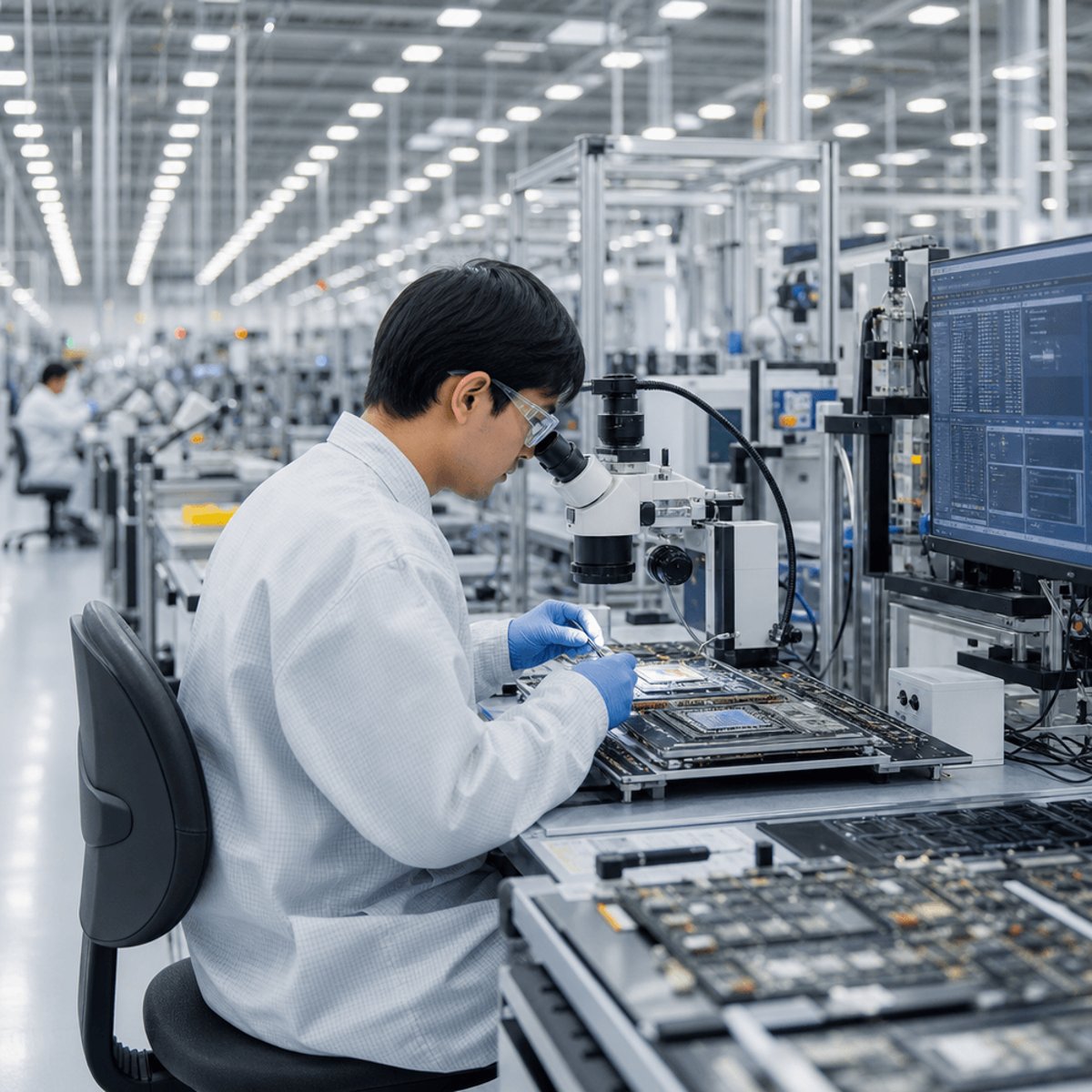
Wistron just flipped the switch on American AI manufacturing. The Taiwan-based electronics giant opened a massive 324,000-square-foot greenfield facility in Fort Worth today, marking its first U.S. production plant dedicated to building the superchips powering NVIDIA's most advanced AI systems. The move signals a major shift in AI infrastructure production as chip manufacturing continues its migration back to American soil amid supply chain pressures and geopolitical tensions.
Wistron isn't messing around with its American manufacturing debut. The company's 324,000-square-foot Fort Worth facility officially opened today, and it's already producing the superchips that power NVIDIA's cutting-edge AI systems. This isn't some token assembly operation - it's a full-scale greenfield plant built from the ground up to handle the complex manufacturing demands of modern AI hardware.
The timing couldn't be more strategic. As AI infrastructure demand explodes and supply chain vulnerabilities remain front of mind, major manufacturers are racing to establish production closer to their biggest customers. Fort Worth gives Wistron direct access to the booming Texas tech corridor while addressing growing political pressure to onshore critical technology manufacturing.
For NVIDIA, this facility represents another piece in an increasingly complex production puzzle. The chip giant has been working to diversify its manufacturing partnerships and geographic footprint as demand for its AI accelerators continues to outpace supply. According to NVIDIA's blog post, these advanced systems require sophisticated assembly and testing capabilities that few facilities can handle at scale.
Wistron's decision to plant its first U.S. flag in Texas makes perfect sense when you look at the state's growing semiconductor ecosystem. Texas Instruments, Samsung, and others have been pouring billions into Texas facilities over the past few years. The state offers favorable business conditions, available land, and an increasingly skilled workforce trained specifically for advanced electronics manufacturing.
The 324,000-square-foot footprint puts this facility in the substantial-but-focused category - large enough to produce meaningful volume but specialized enough to maintain the quality standards AI superchips demand. These aren't simple circuit boards. Modern AI systems require precision assembly, extensive testing, and careful integration of multiple complex components, all of which need controlled manufacturing environments.
What makes this particularly interesting is Wistron's manufacturing DNA. The company built its reputation as one of the world's most capable contract manufacturers, handling everything from smartphones to servers for tech giants. That expertise translates directly to AI hardware, where thermal management, power delivery, and component integration can make or break system performance.
The Fort Worth facility also reflects broader reshoring trends accelerated by recent supply chain disruptions and evolving trade policies. Companies that once concentrated manufacturing in Asia are now hedging their bets with North American production, especially for components tied to national security and critical infrastructure. AI chips definitely fall into that category.
For the Fort Worth region, this opening means high-skilled manufacturing jobs and deeper integration into the global tech supply chain. The facility will need engineers, technicians, and support staff trained in advanced electronics manufacturing - exactly the kind of jobs local economic development officials court.
But the real story here is capacity. Every new facility that can competently manufacture AI hardware helps ease the bottleneck that's been constraining AI deployment across the industry. NVIDIA has famously struggled to meet demand for its H100 and newer chips. More production partners in more locations means better ability to scale, even if each individual facility represents just a fraction of total need.
The greenfield approach - building from scratch rather than retrofitting existing space - gave Wistron the chance to design the facility specifically for AI component manufacturing from day one. That means proper power infrastructure, appropriate clean room specifications, and workflow optimized for these specific products rather than trying to adapt legacy manufacturing lines.
This also positions Wistron to capture more value from the AI boom. As demand for AI infrastructure continues climbing, manufacturing partners with proven capabilities and strategic locations will have significant leverage. The company's willingness to make a major U.S. investment signals confidence that AI hardware demand isn't just a temporary spike but a sustained long-term opportunity.
Wistron's Fort Worth facility opening is more than just another factory ribbon-cutting. It's a tangible example of how the AI infrastructure buildout is reshaping manufacturing geography and supply chains. As AI demand continues growing and geopolitical considerations push for domestic production of critical technologies, expect more announcements like this one. The question now is whether U.S.-based manufacturing can scale fast enough to keep pace with AI's appetite for hardware. Fort Worth is one answer. The industry will need dozens more.