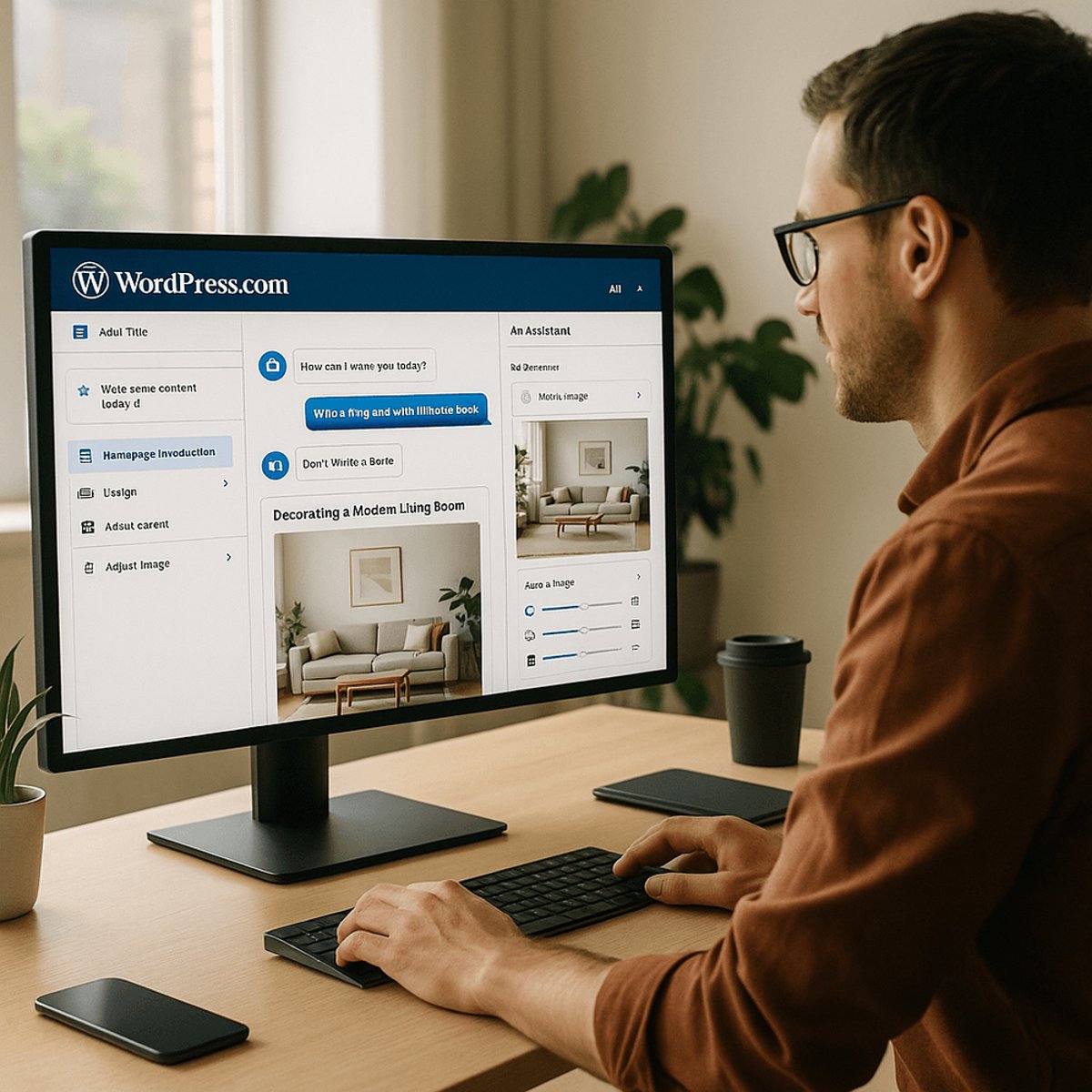
WordPress.com just launched a comprehensive AI Assistant that can edit content, adjust styles, and generate images - all without requiring precisely crafted prompts. The move brings conversational AI directly into the content management workflow for millions of website owners, marking one of the biggest AI integrations in the CMS space. According to TechCrunch, the assistant handles everything from text editing to visual design adjustments, potentially transforming how users build and maintain their sites.
WordPress.com is making its biggest AI bet yet. The company rolled out a new AI Assistant today that handles content editing, style adjustments, and image generation - all through conversational commands that don't require prompt engineering expertise.
The timing couldn't be more strategic. As AI-powered website builders like Wix and Squarespace race to integrate generative AI, WordPress.com - which powers over 40% of the web through its open-source and hosted platforms - is making a bold play to keep its massive user base from defecting to newer, AI-native competitors.
What sets this assistant apart is its accessibility. According to TechCrunch, users can issue natural language requests without worrying about precise prompt formatting. Need to change your site's color scheme? Want to generate a hero image? Looking to tighten up your blog post? The assistant handles it all conversationally, removing the technical friction that's kept many users from experimenting with AI tools.
This is a significant shift for Automattic, the company behind WordPress.com. The platform has long been known for its flexibility and power, but also for its learning curve. By embedding an AI assistant directly into the content management workflow, the company is betting it can retain both technical users and attract the growing wave of creators who expect ChatGPT-style interfaces everywhere.
The feature set spans the full content creation pipeline. Users can ask the assistant to edit existing text, adjust typography and layouts, modify color schemes, and generate images from scratch. It's essentially bundling multiple AI tools - think Jasper for content, Figma AI for design, and Midjourney for images - into a single interface that lives right inside the WordPress editor.
The competitive implications are massive. Wix has been aggressively marketing its AI website builder, while Webflow recently added AI-powered design suggestions. Squarespace rolled out AI content generation last year. WordPress.com's response is more comprehensive than any of them, potentially because it has more at stake - with millions of existing sites, the company can't afford to look behind the curve on AI.
There's also a broader play here around the future of content management. As generative AI becomes table stakes, the platforms that make it most accessible will likely capture the next wave of creators. WordPress.com is betting that conversational interfaces - not complex dashboards or plug-in marketplaces - will define the next generation of CMS tools.
The image generation capability is particularly interesting given the ongoing licensing debates around AI training data. While WordPress.com hasn't disclosed which AI models power the assistant, the company has historically been vocal about open-source principles. How they've approached training data and licensing could become a differentiator as creators grow more conscious of these issues.
For the millions of small businesses, bloggers, and portfolio sites running on WordPress.com, this launch means they can now compete with bigger brands that have dedicated design and content teams. A solo entrepreneur can ask the AI to refresh their site's look for a product launch, generate on-brand imagery, or polish their about page - all without leaving the editor.
The move also puts pressure on the broader WordPress ecosystem. The open-source WordPress.org platform, which WordPress.com is built on, will likely see plugin developers scrambling to offer similar AI capabilities. The difference is that Automattic can integrate these features natively, while the self-hosted community relies on third-party plugins that may not play nicely together.
WordPress.com's AI Assistant launch represents more than just another feature addition - it's a fundamental rethinking of how millions of users will build and manage websites. By making powerful AI tools accessible through natural language, the platform is betting it can democratize capabilities that previously required technical expertise or budget for multiple SaaS subscriptions. The real test will be whether the assistant delivers on its promise of not needing precisely crafted prompts, and whether it can match the quality of standalone AI tools users might otherwise pay for separately. For competitors and the broader CMS market, this launch is a clear signal that AI integration is no longer optional - it's the price of entry.