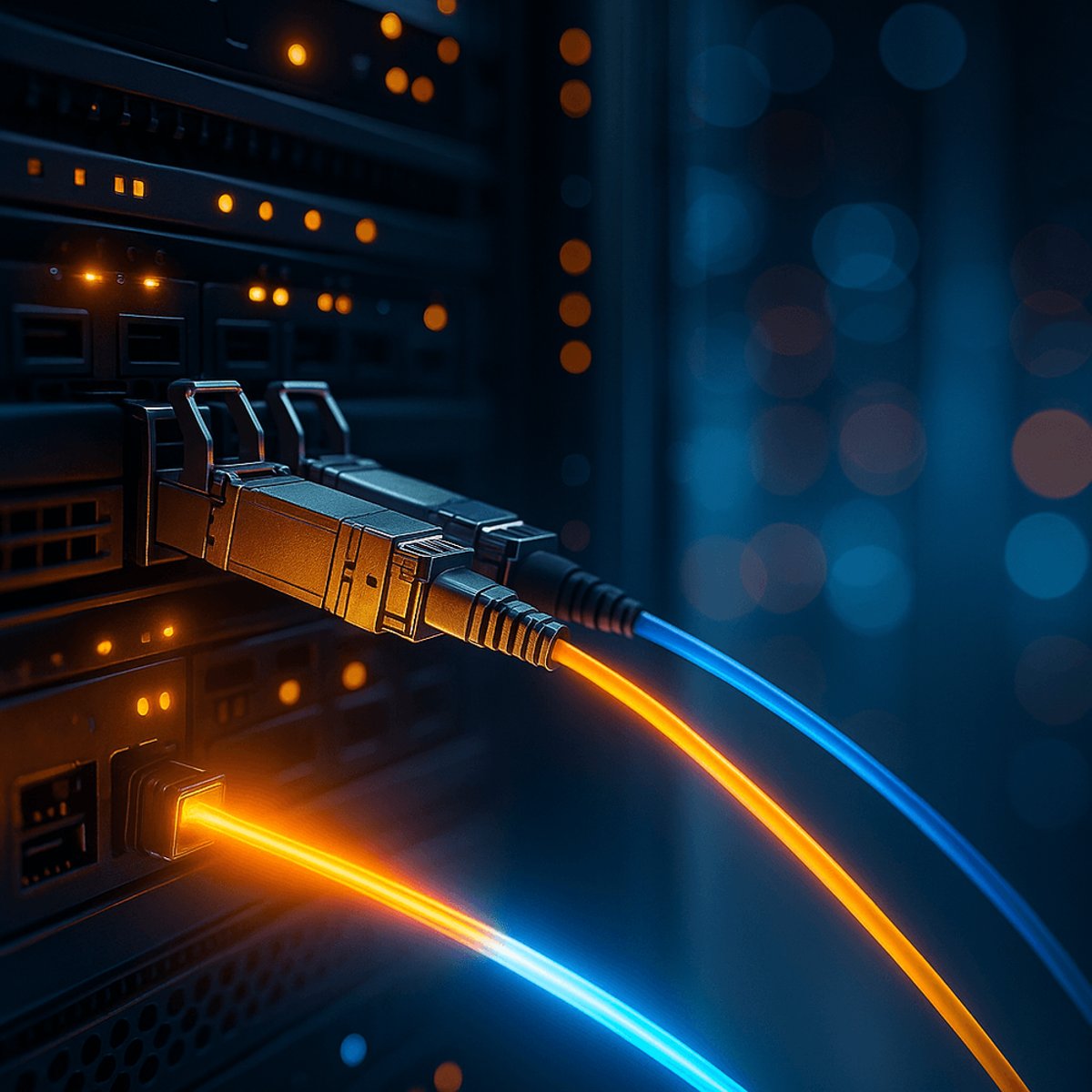
A team of former SpaceX engineers just closed a $50 million Series A to tackle one of AI's least sexy but most critical problems: getting data between chips fast enough. Mesh Optical Technologies is betting that optical transceivers - the hardware that connects servers inside massive AI data centers - will become the next infrastructure chokepoint as companies race to scale training clusters. While everyone fixates on GPUs and power grids, Mesh is building the pipes.
Mesh Optical Technologies just pulled in $50 million to solve a problem most people don't know exists. The Series A, led by Thrive Capital, funds the startup's mission to mass-produce optical transceivers - the unsung hardware that shuttles data between servers at light speed inside AI data centers.
The timing isn't accidental. As companies like OpenAI, Google, and Meta build ever-larger training clusters with tens of thousands of GPUs, the networking layer connecting those chips has become a serious bottleneck. You can have all the Nvidia Blackwell chips in the world, but if they can't talk to each other fast enough, your trillion-dollar AI bet grinds to a halt.
That's where Mesh comes in. Founded by veterans from SpaceX's Starlink satellite internet program, the company brings manufacturing expertise from building laser communications for space to the decidedly terrestrial problem of data center networking. According to TechCrunch, the team's background in high-volume production of optical systems gives them an edge in an industry still dominated by expensive, slow-to-ship components.
The market opportunity is massive. AI training runs require what's called high-bandwidth, low-latency networking - essentially, moving huge amounts of data between processors with near-zero delay. Traditional networking gear wasn't built for this. As model sizes explode and training clusters scale from hundreds to hundreds of thousands of GPUs, the demand for faster optical connections is outpacing supply. Industry analysts estimate the optical transceiver market for data centers will hit $15 billion by 2028, with AI infrastructure driving most of that growth.
Mesh isn't the only company chasing this opportunity. Incumbent players like Cisco, Arista Networks, and specialized optical firms like Coherent and Lumentum already supply transceivers to hyperscalers. But the SpaceX connection matters here - Starlink's playbook was all about dramatically reducing the cost and production time of advanced optical systems through vertical integration and manufacturing innovation. If Mesh can apply that same approach to data center hardware, they could undercut established players on both price and delivery timelines.
The $50 million round suggests investors believe that bet. Thrive Capital, known for backing enterprise infrastructure plays like OpenAI and GitHub, rarely leads Series A rounds in hardware without seeing a clear path to disrupting entrenched markets. The capital will fund Mesh's first manufacturing facility and scale production of its initial product line, which targets the 800G and 1.6T transceiver standards becoming industry requirements for next-gen AI clusters.
What makes this particularly interesting is the shift happening in AI infrastructure investment. For years, all the venture money flowed into chips, accelerators, and software. But as the AI boom matures, investors are waking up to the reality that compute is only part of the puzzle. You also need power infrastructure, cooling systems, and critically, networking gear that can keep pace. Companies building these unglamorous but essential layers are suddenly getting serious attention and capital.
Mesh's founding team didn't just bring technical chops from SpaceX - they also bring a healthy skepticism about overengineered solutions. In interviews, the founders have emphasized their focus on manufacturability and cost reduction over bleeding-edge specs. That's a smart play in a market where data center operators care as much about reliable supply chains and competitive pricing as they do about maximum performance.
The startup faces real challenges, though. Hardware is capital-intensive and unforgiving. Manufacturing delays, yield issues, or quality problems could burn through $50 million faster than a training run on GPT-5. And while the SpaceX pedigree opens doors, hyperscalers like Amazon Web Services, Microsoft Azure, and Google Cloud have deep relationships with existing suppliers and rigorous qualification processes that can take years to navigate.
Still, the fact that a hardware startup focused on data center plumbing just raised this much capital tells you where the smart money sees AI infrastructure heading. It's not just about bigger models or faster chips anymore. It's about the entire stack - and right now, the networking layer is looking like the next big constraint to crack.
Mesh Optical's $50 million raise is a signal that AI's infrastructure wars are moving beyond chips and into the less glamorous but equally critical world of networking hardware. As training clusters scale into the hundreds of thousands of GPUs, the optical transceivers connecting them become as important as the processors themselves. If the SpaceX veterans can bring their manufacturing magic from satellite lasers to data center pipes, they might just solve one of AI's next big bottlenecks - and build a serious business in the process. For now, all eyes are on whether they can actually deliver on the promise of faster, cheaper optical links at scale.