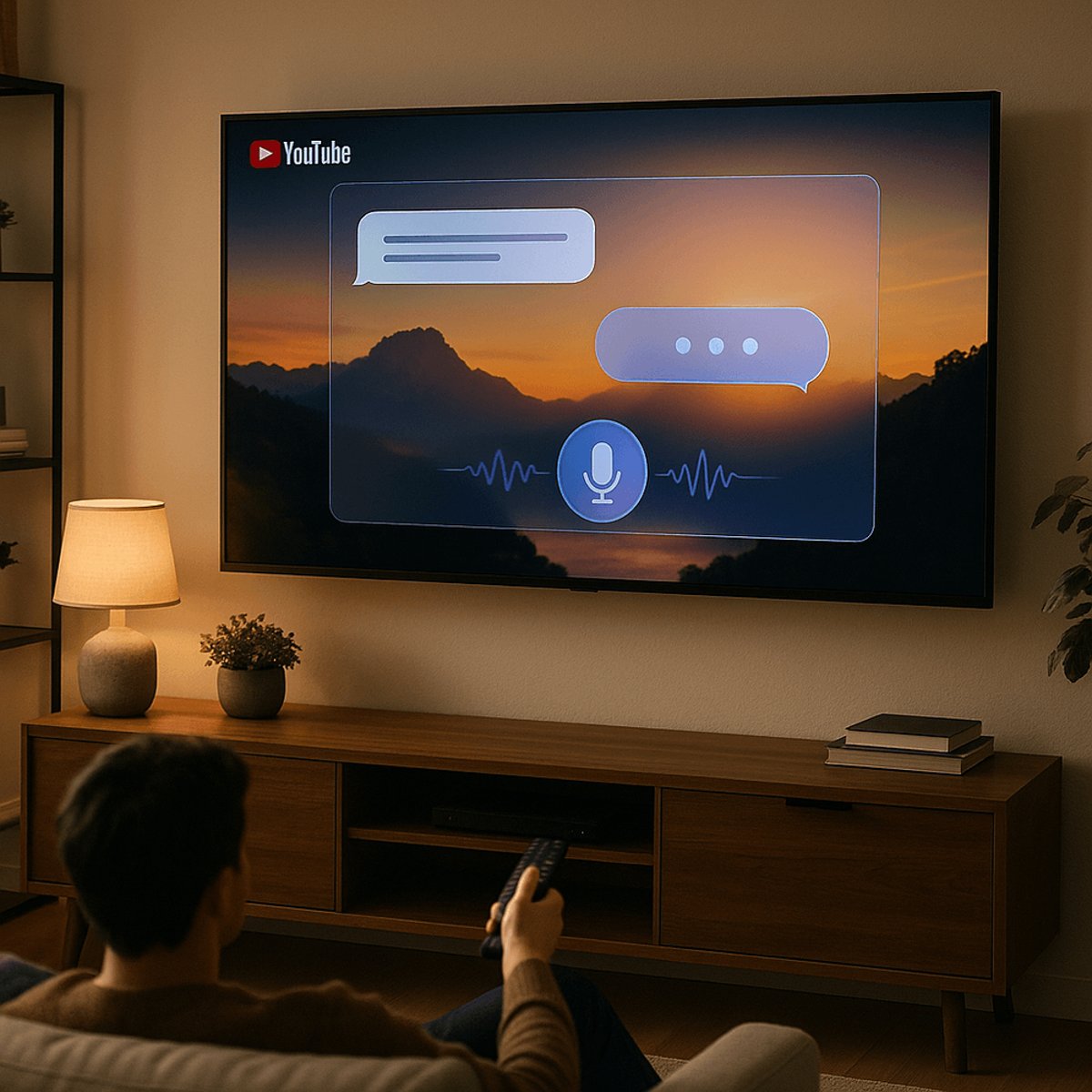
YouTube is pushing its conversational AI beyond mobile screens and into living rooms. The Google-owned video platform just launched an experiment that brings its AI assistant to smart TVs, allowing viewers to interact with an AI chatbot while watching content on the big screen. The move signals Google's broader strategy to embed AI across every surface where users consume content, transforming passive TV watching into an interactive experience.
YouTube just made your TV a lot smarter. The platform is testing a conversational AI feature on smart TVs that lets viewers ask questions and get answers about whatever they're watching, according to TechCrunch. It's the latest sign that Google isn't content to keep its AI tools confined to phones and computers.
The experiment brings YouTube's existing conversational AI assistant to the big screen for the first time. While the company has been testing similar features on mobile devices, expanding to TVs represents a strategic shift toward ambient computing - putting AI wherever users happen to be consuming content. For YouTube, that increasingly means the living room, where TV viewership has been quietly surging.
Here's how it works. Viewers can summon the AI assistant while watching videos on their smart TV and ask questions related to what they're seeing. Want to know more about a recipe ingredient in a cooking video? Ask. Curious about a historical fact mentioned in a documentary? The AI can explain. It's designed to enhance the viewing experience without forcing users to pull out their phones or pause what they're watching.
The timing isn't accidental. YouTube has been aggressively courting the living room for years, and it's paying off. According to Google's recent earnings disclosures, YouTube's TV viewership has grown substantially, with users now watching over a billion hours of content daily on television screens. That makes smart TVs prime real estate for AI integration, especially as Google races to embed its AI technology across every product it offers.
But this isn't just about answering trivia questions. The real play here is data and engagement. An AI assistant that knows what you're watching, what questions you ask, and how you interact with content creates an incredibly rich feedback loop. That information could help YouTube refine recommendations, serve more targeted ads, or even guide content creators on what viewers want to know more about.
The feature puts YouTube in direct competition with other smart TV platforms and voice assistants that have been pushing similar capabilities. Amazon's Fire TV already integrates Alexa, while Samsung and LG have their own AI assistants baked into their television operating systems. By bringing conversational AI to YouTube specifically, Google is ensuring it doesn't cede that territory to competitors.
There are obvious questions about privacy and data collection. Having an AI assistant listen to and respond to queries about viewing habits means Google will capture even more information about user behavior. The company hasn't detailed what data the AI collects or how it's used, though it's running this as an experiment with select users rather than a full rollout.
The test also highlights a broader trend in how we're interacting with entertainment. Passive watching is giving way to active participation, even if that participation is just asking an AI to clarify something you just saw. It's a shift that could fundamentally change how content gets made, with creators potentially optimizing videos for AI-assisted viewing.
For YouTube creators, this could be both opportunity and challenge. An AI assistant that can answer viewer questions might reduce confusion and increase watch time. But it could also mean viewers get information without watching the full video, potentially impacting retention metrics that determine algorithmic promotion.
The experiment comes as Google pushes AI integration across its entire product line, from search to Gmail to Google Photos. YouTube's conversational AI has been in testing on mobile for months, but expanding to TVs shows the company is serious about making AI a standard interface layer across all screens.
YouTube's smart TV AI experiment isn't just about answering viewer questions - it's about claiming territory in the living room before competitors do. As AI becomes table stakes for consumer tech, Google is ensuring YouTube remains the go-to video platform regardless of screen size. The real test will be whether viewers actually want to talk to their TVs, or if this becomes another AI feature that looks good in demos but doesn't stick in practice. Either way, expect YouTube to iterate quickly based on what it learns from this experiment.