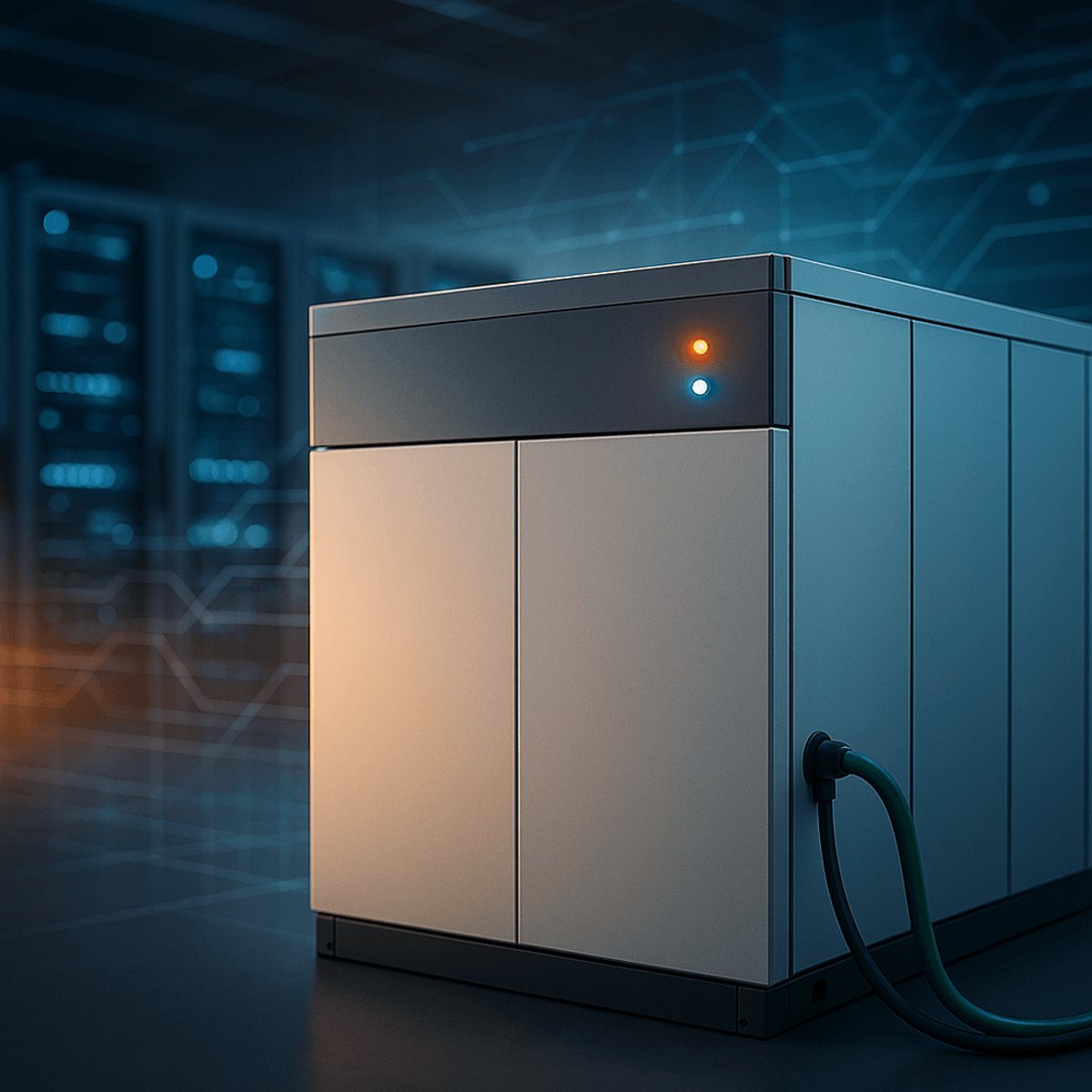
The AI data center explosion is creating an unexpected winner in the battery recycling space. Redwood Materials, the company founded by Tesla's former CTO JB Straubel, just revealed that its energy storage division has become its fastest-growing business unit, fueled entirely by surging demand from power-hungry AI infrastructure. The development marks a major strategic shift for a company previously known primarily for recycling EV batteries, and signals how the AI boom is reshaping the entire energy ecosystem.
Redwood Materials is riding an unlikely wave. The Nevada-based battery recycling company, founded by Tesla co-founder JB Straubel in 2017, built its reputation on closing the loop for electric vehicle batteries. But according to an exclusive report from TechCrunch, the company's new energy storage business has exploded past its core EV recycling operations to become its fastest-growing division.
The catalyst? An insatiable appetite for reliable power at AI data centers, where massive GPU clusters training large language models demand grid stability that traditional power infrastructure struggles to provide. Data centers running AI workloads can see power demands spike unpredictably, creating exactly the kind of load-balancing nightmare that battery storage systems were designed to solve.
Redwood's timing couldn't be better. The company spent years perfecting battery recycling processes that recover lithium, cobalt, and nickel from spent EV batteries. Those recovered materials now flow directly into new battery production for stationary energy storage - creating a circular supply chain that appeals to hyperscalers desperate to hit sustainability targets while scaling AI infrastructure.
The energy storage pivot represents a dramatic expansion beyond Redwood's original mission. The company operates North America's only large-scale battery recycling facility and has raised over $2 billion from investors including T. Rowe Price and Goldman Sachs. That war chest now funds a dual strategy: recycling batteries from the growing fleet of aging EVs while simultaneously manufacturing storage systems for an entirely different market.
Data center operators face a brutal math problem. Training frontier AI models can consume megawatts of power in concentrated bursts, but most electrical grids weren't designed for such volatile demand patterns. Battery storage systems act as shock absorbers, charging during off-peak hours and discharging when AI workloads spike. For data center developers racing to bring new facilities online, pairing renewable energy with storage has become table stakes for securing permits and power purchase agreements.
Redwood isn't alone in spotting the opportunity. Tesla's Megapack division has secured deals with multiple cloud providers, while startups like Form Energy and Energy Vault are pitching novel storage technologies. But Redwood's unique advantage lies in its vertically integrated supply chain - the company controls both the recycling feedstock and manufacturing, insulating it from the commodity price swings that have plagued battery makers.
The intersection of AI infrastructure and climate tech is creating strange bedfellows. Companies initially focused on decarbonizing transportation now find themselves essential to powering the next generation of artificial intelligence. It's a reminder that the AI boom's ripple effects extend far beyond chip makers and cloud providers, reshaping industries from energy to real estate.
For Redwood, the energy storage business validates a bet that battery technology would find applications beyond automotive. The company has long argued that recycling creates a domestic supply chain for critical minerals, reducing dependence on foreign sources. Now that thesis is playing out in real-time as data center operators seek reliable battery supplies amid geopolitical uncertainty around raw material access.
The speed of growth in Redwood's storage division also reflects just how quickly AI infrastructure demands are evolving. What seemed like a nascent market segment just 18 months ago has matured into a major revenue driver fast enough to outpace the company's core EV recycling business. That acceleration mirrors the broader AI infrastructure land grab, where companies are racing to secure power, real estate, and cooling capacity before competitors lock up available resources.
Industry observers see this as just the beginning. As AI models grow larger and training runs become more frequent, the energy storage market could dwarf even optimistic projections from a year ago. Data centers already account for roughly 2% of U.S. electricity consumption, and AI workloads are pushing that figure higher. Without massive deployments of storage to smooth demand curves, grid operators warn that AI growth could outpace available generation capacity in key markets.
Redwood's success also highlights a broader trend: climate tech companies pivoting to serve AI infrastructure needs. What started as a sustainability play has morphed into a critical infrastructure business, with margins and growth rates that rival pure-play tech companies. For investors who backed Redwood's environmental mission, the AI data center boom represents an unexpected but welcome accelerant.
Redwood Materials' energy storage boom is a microcosm of how AI is redrawing the entire tech landscape. A company founded to solve EV battery waste is now racing to power the infrastructure behind ChatGPT and Claude. It's the kind of second-order effect that separates hype from genuine transformation - when demand from one technological shift creates entirely new markets in seemingly unrelated industries. As AI continues its explosive growth, expect more climate tech companies to find themselves pulled into the infrastructure vortex, turning sustainability plays into mission-critical tech businesses overnight.