Meta just pulled the plug on its VR-first metaverse dream. The company is splitting Horizon Worlds away from its Quest VR platform and pivoting almost exclusively to mobile, marking one of the most significant strategic retreats since Mark Zuckerberg bet the company on virtual reality. The shift comes after Meta laid off 10% of its Reality Labs division, shuttered three VR studios, and discontinued its workplace metaverse - a tacit admission that the VR revolution isn't happening on Meta's timeline.
Meta is abandoning the core promise of its metaverse. After years of pushing virtual reality as the future of social connection, the company just announced it's shifting Horizon Worlds - the centerpiece of its metaverse vision - away from VR headsets and onto smartphones.
"We're explicitly separating our Quest VR platform from our Worlds platform and shifting the focus of Worlds to be almost exclusively mobile," Samantha Ryan, Reality Labs' VP of content, wrote in a developer blog post today. It's a stunning reversal for a platform that launched in VR in late 2021 as Meta's flagship metaverse experience.
The announcement caps a brutal few months for Meta's VR ambitions. The company laid off about 10% of its Reality Labs division earlier this year, closed three VR game studios including Twisted Pixel and Sanzaru Games, stopped producing new content for Supernatural (its popular VR fitness app), and discontinued Horizon Workrooms, its workplace metaverse product. Each cut felt like a small retreat. This one's different - it's a full strategic pivot.
Meta's new strategy positions Horizon Worlds as a direct competitor to Roblox and Fortnite, two platforms that have captured hundreds of millions of mobile users without requiring expensive VR hardware. While Meta spent years building virtual reality experiences that required a $300-500 Quest headset, Roblox quietly built a $45 billion company on smartphones and PCs. The writing was on the wall.
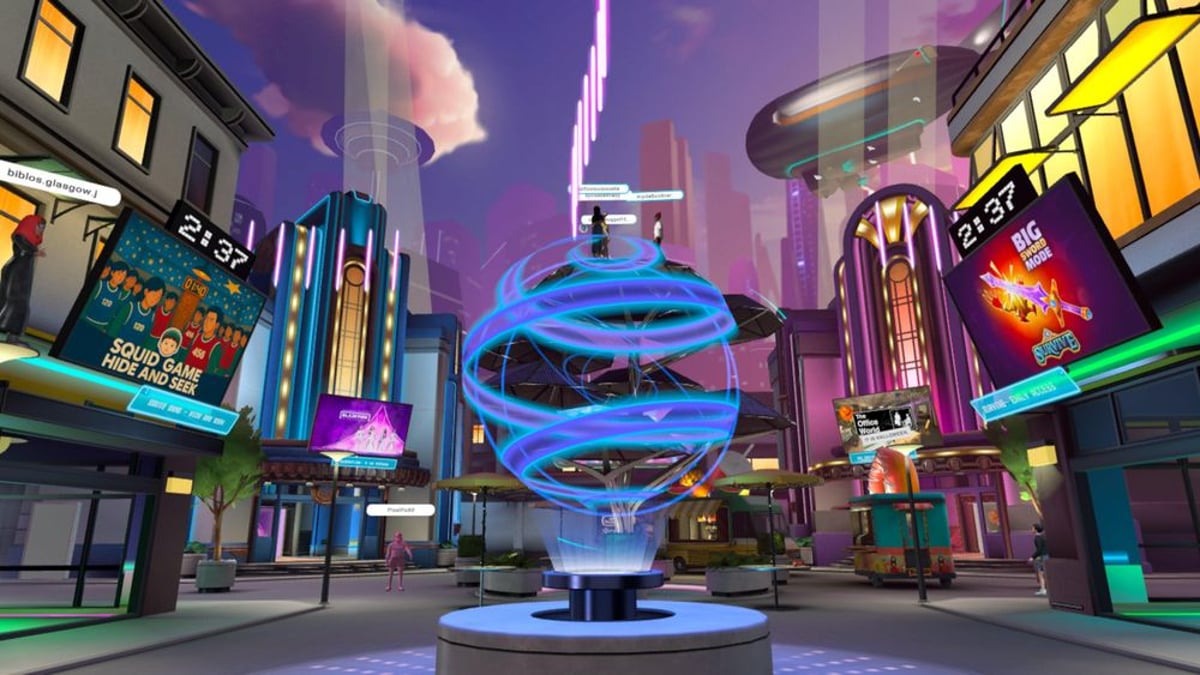
The company had already been experimenting with mobile access to Horizon Worlds since 2023, but that felt like an expansion of VR, not a replacement for it. This announcement makes clear that mobile is now the priority, with VR becoming a secondary concern. Horizon Central, the town square of Meta's metaverse, already runs on the company's new Meta Horizon game engine - infrastructure that's built to work across devices, not just headsets.
For developers who've been building VR experiences on Horizon Worlds, the shift raises uncomfortable questions. Meta has poured billions into Reality Labs - $58 billion in operating losses since 2020, according to the company's earnings reports - with relatively little to show for it. Quest headset sales have been decent but nowhere near the scale needed to justify that investment. Now those developers are being asked to pivot alongside Meta, rebuilding for mobile screens instead of immersive 3D spaces.
The move also represents a major philosophical shift for CEO Mark Zuckerberg, who famously rebranded Facebook to Meta in 2021 specifically to signal his commitment to the metaverse. At the time, he positioned VR as the next evolution of social networking, the successor to mobile. Three years later, Meta is retreating to mobile as its primary platform for the metaverse itself.
Industry observers have long questioned whether consumers actually want to spend hours in VR headsets for social experiences. While gaming in VR has found a dedicated niche, broader social adoption has been slow. Meta's own usage data for Horizon Worlds has remained closely guarded, but reports have suggested the platform struggled to retain users even as Meta spent heavily on content and features.
The timing of the announcement is notable. It comes as Apple continues pushing its Vision Pro headset as a premium mixed reality device, and as other tech giants explore spatial computing. But where Apple is betting on high-end AR/VR fusion at $3,500, Meta is now doubling down on the platform everyone already has in their pocket.
What remains unclear is what happens to Quest as a platform. Meta says it's separating Quest from Horizon Worlds, but didn't detail what that means for VR development more broadly. The company still sells Quest headsets and has games and apps in its VR ecosystem. But with Horizon Worlds - the social center of Meta's metaverse - pivoting to mobile, it's hard to see how VR remains a priority.
For Meta, this is about survival in the social platform wars. Roblox reported 79.5 million daily active users in its latest quarter. Fortnite doesn't disclose daily users but is estimated to have over 100 million monthly players. Horizon Worlds, by comparison, has never publicly disclosed user numbers that would put it in the same league. Mobile gives Meta a fighting chance to catch up.
Meta's pivot from VR to mobile for Horizon Worlds isn't just a platform shift - it's an acknowledgment that the metaverse Mark Zuckerberg promised won't arrive through expensive headsets. After $58 billion in Reality Labs losses and years of pushing VR as the future, Meta is betting its metaverse can compete with Roblox and Fortnite on the screens people already own. The question now isn't whether Meta can build a metaverse in VR, but whether it can catch up to competitors who've been building mobile-first social platforms all along. For developers and users who bought into Meta's VR vision, this feels less like evolution and more like starting over.