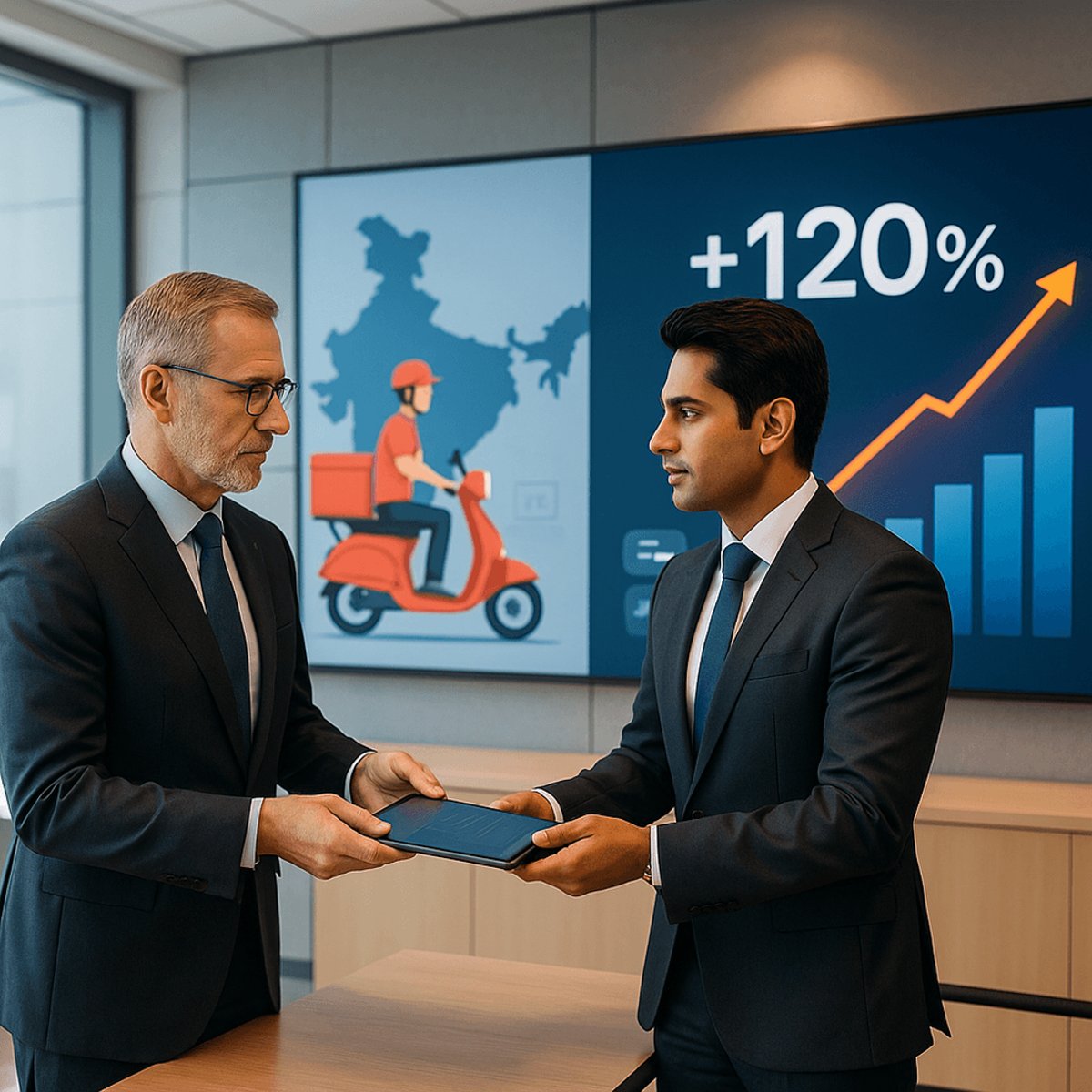
Deepinder Goyal just handed off the CEO crown at Eternal, Zomato's parent company, to Albinder Dhindsa, the CEO of its fast-growing quick-commerce division Blinkit. The move signals where the real momentum is right now. Goyal stays on as vice chairman to pursue 'higher-risk exploration,' including longevity research and brain-health wearables. It's a calculated step that reflects both Blinkit's explosive growth and Goyal's appetite for new bets beyond the established food delivery business.
Deepinder Goyal just stepped back from running Eternal, the holding company behind Zomato and Blinkit, to hand the CEO job to Albinder Dhindsa. The timing speaks volumes about where the action really is in Indian commerce right now.
Goyal's stepping down after building Zomato from a restaurant discovery app into a food delivery giant over nearly two decades. But he's not leaving the company entirely. He'll stay on as vice chairman, a role that lets him focus on what he calls "higher-risk exploration and experimentation" without the constraints of running a publicly listed company. "This is a change in title, not in commitment toward outcomes," Goyal said in a letter to shareholders. "Eternal remains my life's work."
What's driving this shift? Look at the numbers. Eternal reported third-quarter results that show quick commerce is eating lunch right now. Profit surged about 73% to ₹1.02 billion from a year earlier, while adjusted revenue hit ₹166.92 billion, up 190% year-over-year. That's the kind of growth trajectory that gets founder attention.
Blinkit, Eternal's quick-commerce arm that the company acquired for $568 million back in 2022, is the real star here. Net order value jumped 121% last quarter to ₹133 billion. That's not just growth, that's the entire market shifting directions. Quick commerce went from a buzzword to India's dominant e-commerce model almost overnight, and Dhindsa's been the architect of that expansion.
Goyal's background makes this transition less about inexperience and more about resource allocation. He co-founded Zomato with Pankaj Chaddah in 2008, launching as FoodieBay while both were grinding at Bain & Company. They went full-time in 2009, rebranded to Zomato in 2010 (after sorting out a naming conflict with eBay), and eventually built the food delivery empire. Chaddah departed in 2018, but Goyal stayed focused, acquiring Uber Eats' India business in 2020 and then Blinkit in 2022. Now he's pivoting.
Outside Eternal, Goyal's already running multiple bets. He's been working on Continue Research, a longevity-focused initiative, and Temple, an experimental brain-health wearable. He's also a co-founder at LAT Aerospace and does angel investing on the side. These are exactly the kinds of high-risk, early-stage projects that are hard to pursue when you're managing quarterly earnings reports and investor expectations.
The shift highlights something critical about Eternal right now. Quick commerce fundamentally changed the game in Indian retail. What started as an experimental delivery model has become the default. Customers now expect 10-minute delivery windows, ultra-cheap pricing, and instant gratification. That's not food delivery anymore, that's a different beast entirely. Blinkit's leadership taking the top spot signals that Eternal's strategic center of gravity has moved. Food delivery is the mature, predictable business. Quick commerce is where the growth is, and where the attention needs to be.
But there's a catch. India's labour ministry just asked quick-commerce platforms to drop their "10-minute delivery" marketing and implement stronger protections for gig workers. The sector employs thousands of delivery personnel working under intense time pressure, and regulators are watching. For Dhindsa stepping into the CEO role, managing growth while navigating increasingly complex labor regulations will be part of the job. Goyal's exit to pursue experimental ventures is well-timed from that perspective too.
The transition also reflects founder dynamics in Indian tech right now. The best founders aren't getting bored and selling off. Instead, they're staying involved while delegating operational roles to executives who proved they can execute. Dhindsa built Blinkit into the market leader. He knows the quick-commerce playbook inside out. Goyal gets to stay connected while chasing moonshot ideas. It's a smart structure for a company that's become complex enough to demand specialized leadership.
Goyal's transition from Eternal's CEO chair to Blinkit's Dhindsa marks a turning point for Indian commerce. Quick commerce isn't the future anymore—it's the present, and it's growing faster than anyone anticipated. By stepping into an exploration role while keeping influence through the vice chairman position, Goyal's playing a longer game. He gets to hunt for the next big thing while Dhindsa handles the execution of what's already working. For Eternal investors, it's a confidence signal that the company's leadership bench is deep enough to handle a transition. For everyone else in commerce and delivery, it's a reminder that market dynamics shift fast enough to demand leadership changes even at successful companies.