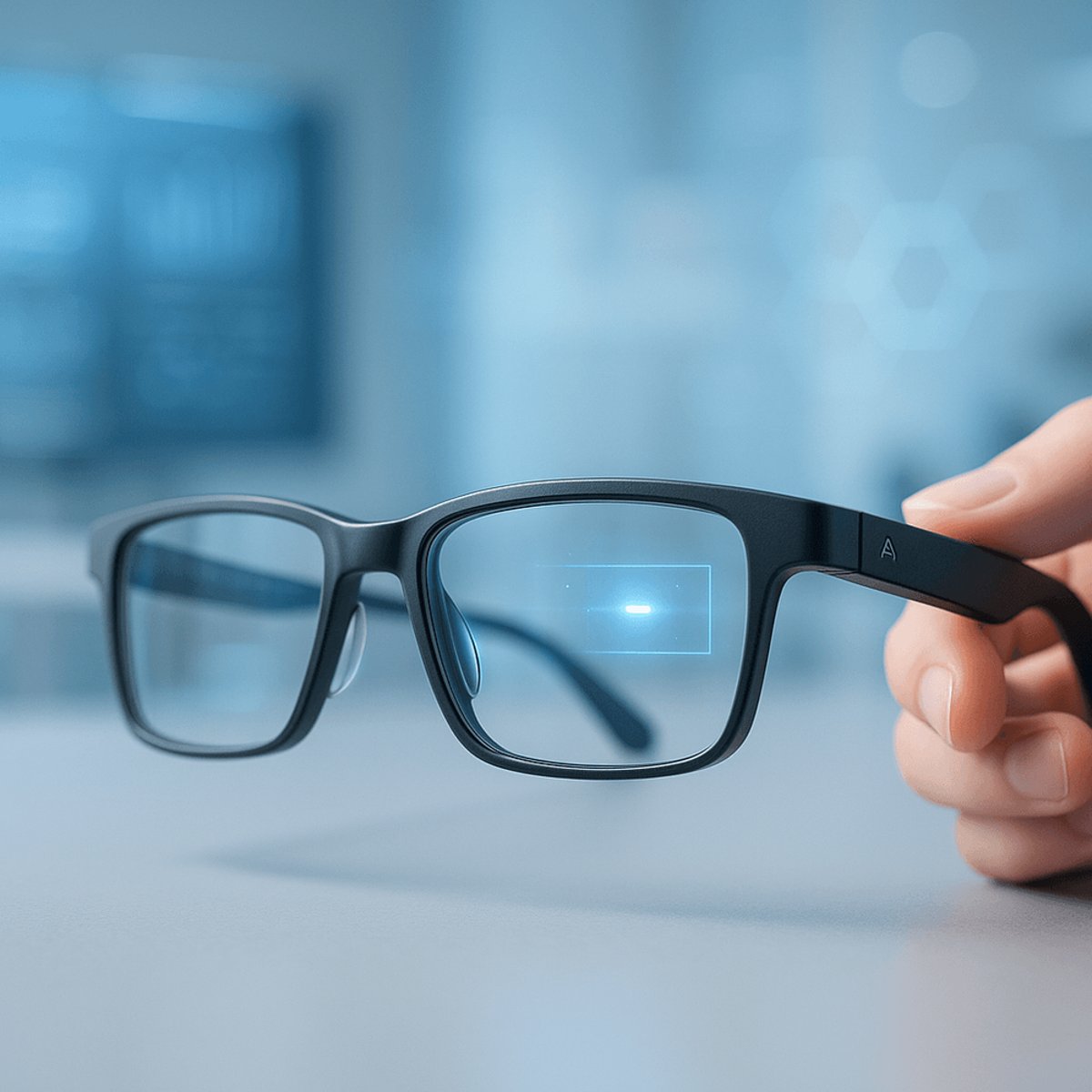
Mark Zuckerberg is going all-in on AI glasses. During Meta's Q4 2025 earnings call Wednesday, the CEO declared it's "hard to imagine" a future where most eyewear isn't AI-enabled, comparing the shift to flip phones becoming smartphones. The bold prediction comes as Meta pivots Reality Labs away from the metaverse disaster and doubles down on AI wearables, with sales tripling in the past year. But given Zuckerberg's track record of forecasting our digital future - remember when we'd all be hanging out legless in the metaverse? - a healthy dose of skepticism seems warranted.
Meta CEO Mark Zuckerberg thinks your next pair of glasses should be able to think. Speaking on the company's Q4 2025 earnings call Wednesday evening, Zuckerberg painted an ambitious picture of AI-powered eyewear becoming as ubiquitous as smartphones.
"Billions of people wear glasses or contacts for vision correction," Zuckerberg told investors, according to TechCrunch's coverage of the call. "I think we're at a moment similar to when smartphones arrived, and it was clearly only a matter of time until all those flip phones became smartphones. It's hard to imagine a world in several years where most glasses that people wear aren't AI glasses."
The proclamation marks a dramatic pivot for Meta's Reality Labs division, which has shifted away from metaverse investments after burning through tens of billions of dollars on virtual worlds that never caught fire. Now the company is betting its hardware future on something people actually wear every day - eyeglasses.
And the early numbers suggest momentum. Zuckerberg revealed that Meta glasses sales tripled within the last year, calling them "some of the fastest growing consumer electronics in history." The company currently sells several models in partnership with Ray-Ban, including a recently launched Oakley line designed for exercise - which TechCrunch found to be the most compelling use case for these devices so far.
But Zuckerberg's grand predictions deserve scrutiny. This is, after all, the same executive who insisted we'd all be working and socializing in the metaverse - legs optional - before slashing the division's budget by up to 30% when adoption flatlined. The company's Reality Labs segment has lost over $60 billion since 2019 chasing immersive computing dreams that consumers largely ignored.
Still, Meta isn't alone in sensing opportunity. The smart glasses race is heating up fast across Silicon Valley. Google is expected to launch its own AI glasses this year following a $150 million partnership with Warby Parker. Apple, meanwhile, has reportedly shifted resources to smart glasses development instead of building a lighter Vision Pro headset, according to Bloomberg.
Even Snap is making bold moves. The company announced Tuesday it's spinning its AR glasses, Specs, into a standalone subsidiary to allow for "greater operational focus and alignment." The restructuring signals Snap's belief that AR glasses deserve dedicated investment separate from its struggling social media business.
The enthusiasm extends beyond traditional hardware makers. OpenAI, which has never shipped consumer hardware, is reportedly exploring AI wearables - though the company seems more interested in AI pins or earbuds than glasses. Apple is also rumored to be developing an AirTag-sized AI device, hopefully with better results than the disastrous Humane AI pin.
What's driving this sudden convergence? Advances in AI models and miniaturization have made it feasible to pack meaningful computing power into lightweight frames. Meta's own AI models are central to the company's glasses strategy, powering features like real-time translation, visual search, and contextual assistance.
The smartphone comparison Zuckerberg invoked isn't entirely hyperbolic. When Apple launched the iPhone in 2007, plenty of skeptics questioned whether people needed computers in their pockets. But smartphones succeeded because they solved real problems - communication, navigation, photography - in ways that felt natural and immediate.
Smart glasses face a tougher challenge. Unlike smartphones, which created new capabilities, AI glasses must prove they're better than the device already in your pocket. The winning use cases so far tend to be hands-free scenarios - biking, running, cooking - where pulling out your phone is inconvenient or dangerous.
Meta is betting billions that this market will materialize, with Reality Labs now focused on AI wearables and the company's proprietary AI models. The strategy represents a more pragmatic approach than the metaverse moonshot, building on existing consumer behavior rather than trying to invent entirely new social paradigms.
Whether Zuckerberg's prediction comes true likely depends on factors beyond Meta's control - battery life, privacy concerns, social acceptance, and whether AI features prove genuinely useful in daily life. The tripling of sales suggests early adopters are intrigued, but mass adoption requires solving problems that matter to billions of people wearing regular glasses today.
The smart glasses arms race is real, with every major tech company placing bets on AI-powered eyewear. But whether this becomes the smartphone-scale revolution Zuckerberg envisions or another overhyped hardware category remains to be seen. Meta's advantage is being first to market with multiple models and rapidly growing sales, but Google, Apple, and Snap are all racing to catch up. The difference this time is that these companies are building on proven consumer behavior - wearing glasses - rather than asking people to adopt entirely new habits. That pragmatic approach might finally deliver the wearable computing future tech companies have been chasing for over a decade.