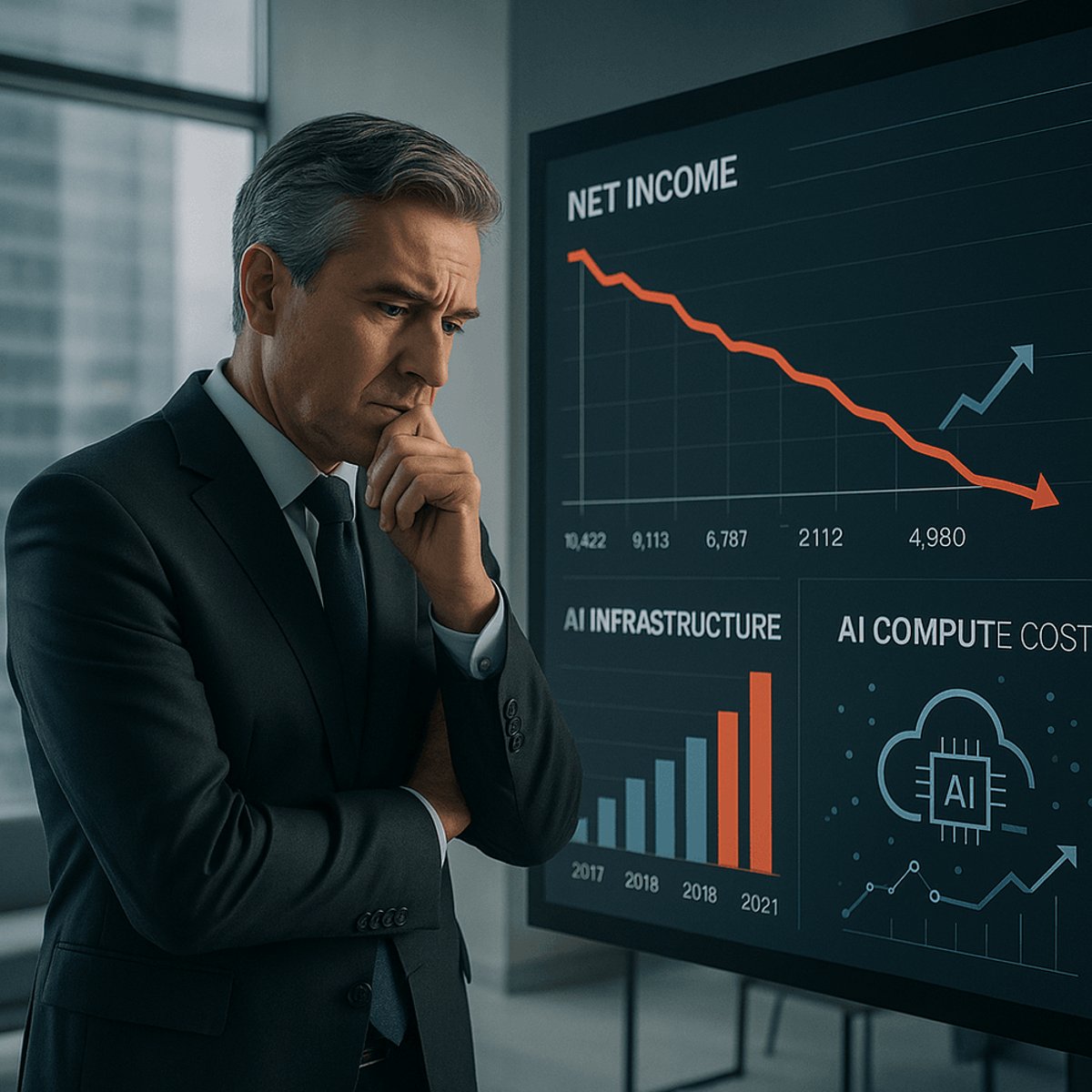
Alibaba just delivered a brutal wake-up call to investors. The Chinese e-commerce and cloud giant missed revenue estimates in its December quarter while net income cratered 66%, marking one of its worst quarterly performances in years. The culprit? An aggressive AI investment blitz as the company races to close the gap with U.S. rivals in the global AI arms race. According to CNBC, the earnings miss underscores the steep costs Chinese tech firms are absorbing to stay competitive.
Alibaba just reported one of its most challenging quarters in recent memory, and the culprit isn't consumer spending or regulatory pressure - it's the astronomical cost of staying relevant in AI.
The Hangzhou-based tech conglomerate missed Wall Street's revenue expectations for its December quarter while posting a staggering 66% drop in net income, according to earnings figures reported by CNBC. The miss marks a stark reversal for a company that once seemed unstoppable, and it reveals just how expensive the AI race has become for Chinese tech giants trying to keep pace with OpenAI, Google, and Microsoft.
The earnings shortfall isn't happening in isolation. Alibaba is one of several major Chinese AI firms pouring billions into infrastructure, talent, and research to close what many analysts describe as a widening technology gap with Silicon Valley. While U.S. companies like OpenAI and Google have captured global mindshare with ChatGPT and Gemini, Chinese players are scrambling to develop competitive large language models and AI services that can work within China's regulatory framework.
The investment surge is reshaping Alibaba's financial profile in real-time. Where the company once printed profits from its dominant e-commerce marketplace and cloud computing division, it's now channeling massive capital into AI compute resources, data center expansion, and model development. The 66% net income plunge suggests these investments are hitting the bottom line harder and faster than many anticipated.
For context, Alibaba isn't alone in this spending spree. Rivals like Baidu and Tencent are equally aggressive in their AI ambitions, creating a domestic arms race that's separate from - but parallel to - the U.S.-driven AI boom. Chinese companies face unique challenges including restricted access to cutting-edge Nvidia chips due to U.S. export controls, forcing them to develop workarounds and alternative architectures that often cost more and deliver less performance.
The revenue miss is particularly concerning because it suggests Alibaba's core businesses may be slowing even as AI costs accelerate. E-commerce growth in China has cooled considerably as consumers remain cautious about spending, while the cloud computing market faces intense competition and pricing pressure. Without robust top-line growth to offset AI investments, profitability takes a direct hit.
Investors are now facing a familiar dilemma: Should they view this quarter as a painful but necessary investment phase that will pay dividends later, or as evidence that Alibaba is overspending in a race it may not win? The answer likely depends on whether the company can demonstrate tangible progress in AI capabilities over the next few quarters and start converting those investments into revenue-generating products and services.
What makes this situation particularly tricky is the geopolitical dimension. Chinese AI firms aren't just competing for market share - they're operating in an environment where technological self-sufficiency is increasingly viewed as a national security priority. That means Alibaba and its peers may face continued pressure to invest heavily in AI regardless of near-term profitability concerns.
The broader Chinese tech sector is watching closely. If Alibaba's AI investments start showing returns in the form of new products, improved services, or competitive advantages in cloud computing, other companies will likely double down on their own spending. But if the costs keep mounting without clear payoff, we could see a recalibration of AI investment strategies across the industry.
For now, Alibaba is betting big that it can't afford not to invest in AI, even if it means sacrificing short-term profits. The December quarter results suggest that bet is costing more than expected, and the clock is ticking for the company to show it was worth it.
Alibaba's brutal December quarter lays bare the real cost of competing in AI - especially for Chinese tech giants playing catch-up with deep-pocketed U.S. rivals. The 66% net income collapse isn't just a bad quarter; it's a signal that the AI race is fundamentally reshaping how these companies allocate capital and measure success. Investors now face a waiting game: Will Alibaba's massive AI spending translate into competitive advantages and new revenue streams, or will it prove to be an expensive exercise in keeping up appearances? The next few quarters will be critical in answering that question, and the broader Chinese tech sector is taking notes.