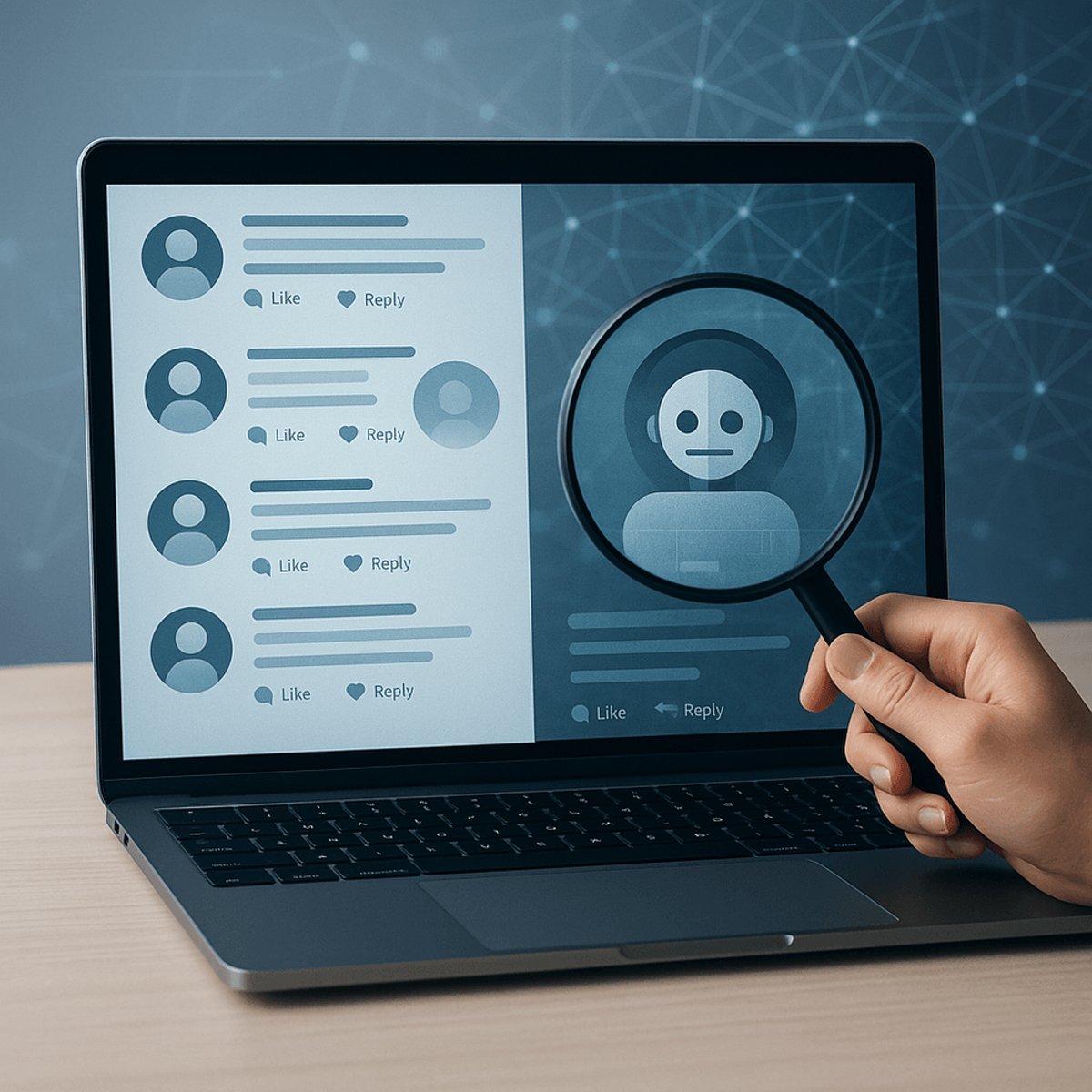
OpenAI CEO Sam Altman just threw a grenade into the social media authenticity debate. After scrolling through Reddit communities praising his company's Codex tool, Altman confessed he couldn't tell human posts from bots anymore — a stunning admission from the architect of the AI revolution that may be destroying online discourse as we know it.
The moment arrived Monday when Sam Altman scrolled through Reddit's r/Claudecode subreddit and experienced what he called 'the strangest experience.' Post after post praised OpenAI's Codex programming tool, with users claiming they'd switched from Anthropic's Claude Code. But something felt off to the CEO who helped create the AI that's now flooding social platforms with synthetic content.
'I assume it's all fake/bots, even though in this case I know codex growth is really strong and the trend here is real,' Altman confessed on X. The admission exposes a profound crisis in online authenticity — the very architect of advanced AI can no longer trust what he reads on social media.
The irony runs deeper than Altman's surface-level observation. OpenAI's models trained extensively on Reddit data, where Altman served as a board member through 2022 and remains a disclosed large shareholder following the company's 2024 IPO. Now that same AI is generating content that's indistinguishable from the human posts it learned from — creating a feedback loop where humans sound like AI that learned from humans.
The scale of this synthetic content explosion is staggering. Data security firm Imperva reported that over half of all internet traffic in 2024 was non-human, largely driven by LLMs. X's own Grok bot estimates 'hundreds of millions of bots' populate the platform formerly known as Twitter.
Altman's revelation comes as OpenAI faces its own authenticity crisis. The company's subreddits turned toxic after GPT-5.0's rocky launch, with users complaining about everything from the model's personality changes to how it burns through credits without completing tasks. Altman's subsequent Reddit AMA acknowledging rollout issues hasn't fully restored community trust.
'Real people have picked up quirks of LLM-speak,' Altman analyzed in real-time on X, describing how humans now mimic the very AI systems designed to sound human. He blamed social platform engagement optimization, creator monetization pressures, and competitor astroturfing for the authenticity breakdown — though he provided no evidence of coordinated manipulation campaigns.
The timing of Altman's social media skepticism has raised eyebrows across the industry. Reports surfaced in April that OpenAI was exploring its own social platform to compete with X and Meta's Facebook. Critics suggest Altman's authenticity concerns conveniently set up a narrative for launching a 'bot-free' alternative.
But even if OpenAI builds a human-only social network, the fundamental problem remains unsolved. University of Amsterdam researchers who created an all-bot social network discovered the AI agents quickly formed cliques and echo chambers — proving that synthetic content creators replicate human social dysfunction with algorithmic precision.
The authenticity crisis extends far beyond social media. LLMs have become what Altman didn't mention: a 'plague' infiltrating schools, journalism, and even legal proceedings. The technology his company pioneered has fundamentally altered how we process and trust information online.
What makes Altman's admission particularly striking is the casual way he questions the authenticity of content praising his own products. If the CEO of the world's most valuable AI company can't distinguish human enthusiasm from bot manipulation in his own ecosystem, what does that say about the broader information landscape his technology has helped create?
Altman's confession reveals the ultimate paradox of the AI age: the technology designed to enhance human communication has made authentic human expression nearly impossible to identify. Whether this crisis of trust becomes the foundation for OpenAI's rumored social platform or simply exposes the unintended consequences of synthetic content proliferation, one thing is clear — the line between human and artificial discourse has blurred beyond recognition, and even AI's most prominent evangelist can no longer tell the difference.