Amazon is supercharging its European operations with a sweeping expansion that blends cutting-edge robotics, lightning-fast delivery infrastructure, and a massive investment in human workers. The company just unveiled its next-generation Proteus autonomous mobile robot alongside plans to roll out more ultra-fast delivery hubs across the continent, while simultaneously committing $1 billion to upskilling its European fulfillment workforce. It's a dual bet on automation and people that signals Amazon's strategy to dominate logistics through technology without abandoning its massive human workforce.
Amazon is making its biggest European logistics bet yet, and it's happening on two parallel tracks that don't often run together. The company announced today it's deploying an upgraded version of its Proteus autonomous mobile robot across European warehouses while simultaneously pouring $1 billion into training programs for the very workers some fear robots will replace.
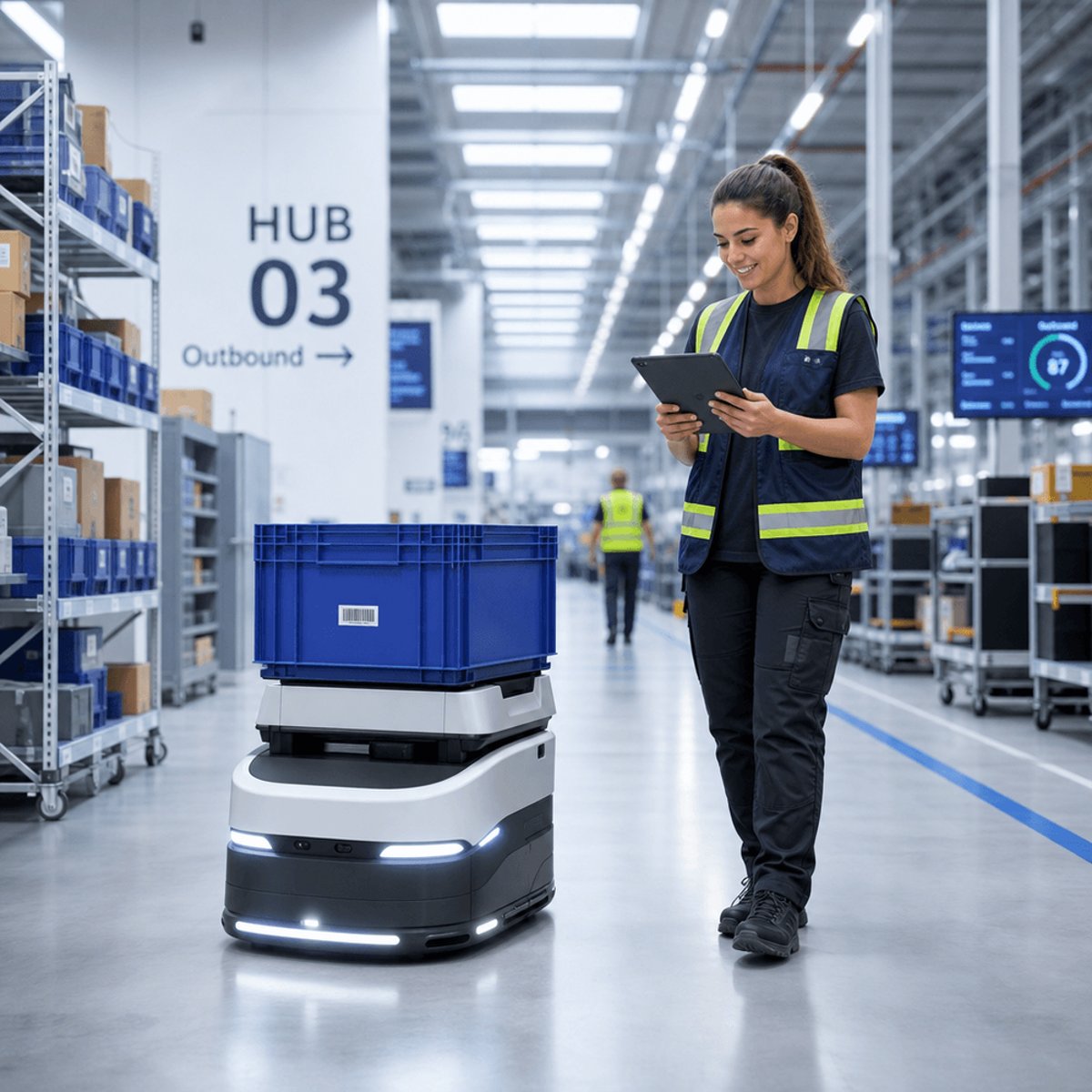
The next-generation Proteus robot represents a significant leap from the original model Amazon introduced in 2022. While the company hasn't released full technical specifications, Proteus robots are designed to navigate warehouse floors alongside human workers, autonomously moving carts and packages without requiring the safety cages that typically separate robotic systems from people. It's the kind of collaborative robotics play that enterprise automation companies have been chasing for years, and Amazon's got the scale to actually make it work.
But here's where it gets interesting - Amazon isn't just automating. The $1 billion workforce investment focuses specifically on upskilling programs for European fulfillment center employees, teaching everything from robotics maintenance to data analytics. It's a sharp contrast to the cost-cutting measures the company's been executing stateside, where recent rounds of layoffs have hit corporate divisions hard.
The ultra-fast delivery expansion is the third piece of this puzzle. Amazon's pushing to bring same-day and sub-same-day delivery to more European cities, a move that puts it in direct competition with local players who've traditionally had home-field advantage. According to industry logistics data, European consumers have been slower to adopt ultra-fast delivery compared to US markets, but that's changing rapidly as post-pandemic expectations solidify.
What's driving this European focus? The timing suggests Amazon sees an opening. While competitors like Alibaba focus on Asian expansion and US retailers battle over domestic market share, Europe's fragmented logistics landscape remains ripe for disruption. The combination of advanced robotics, faster delivery infrastructure, and a trained workforce creates a moat that's hard for regional players to match.
The Proteus deployment also signals where Amazon thinks warehouse automation is heading. Unlike the stationary robotic arms or fully segregated automated storage systems that dominated the last decade, collaborative mobile robots that work alongside humans represent a middle path - automating the repetitive transport tasks while keeping humans in roles requiring judgment and dexterity. It's basically Amazon admitting that full warehouse automation isn't economically viable yet, even for a company with its resources.
The $1 billion upskilling commitment deserves scrutiny too. Amazon's been under intense pressure from European labor unions and regulators over working conditions and wages. This investment could be genuine future-proofing of the workforce, or it could be strategic PR to soften regulatory pressure as automation accelerates. Probably both. European Works Councils have been more aggressive than their US counterparts in demanding worker protections around automation, and Amazon's clearly trying to thread that needle.
For the broader enterprise automation market, Amazon's approach is worth watching. The company's effectively running a massive real-world experiment on human-robot collaboration at a scale nobody else can match. If the Proteus rollout succeeds in Europe, expect the playbook to spread - not just within Amazon's global network, but across the entire logistics and warehousing industry that watches every move the Seattle giant makes.
The ultra-fast delivery piece also has ripple effects beyond Amazon. Every new micro-fulfillment center the company opens forces traditional retailers to either match the speed or find different ways to compete. That's accelerating investment in last-mile delivery technology across the board, from autonomous delivery vehicles to AI-powered route optimization systems.
What this really represents is Amazon placing a multi-billion dollar bet that Europe's logistics infrastructure is ready for a full-stack upgrade, and that the company can execute that upgrade faster than entrenched local competitors can respond. The robotics provide the efficiency, the delivery network provides the speed, and the trained workforce provides the adaptability to keep the whole system running as it scales.
Amazon's European expansion isn't just about deploying more robots or opening more delivery hubs - it's a coordinated strategy that recognizes automation alone won't win logistics wars. By combining next-gen robotics with massive workforce investment and ultra-fast delivery infrastructure, Amazon's building a system that's harder to replicate than any single technology could be. Whether this represents genuine commitment to worker development or strategic positioning against European regulators, the practical effect is the same: Amazon's raising the stakes for everyone competing in European e-commerce and logistics. The companies that can't match this kind of integrated investment - in both technology and people - are going to find themselves squeezed out of the fast-delivery game entirely.