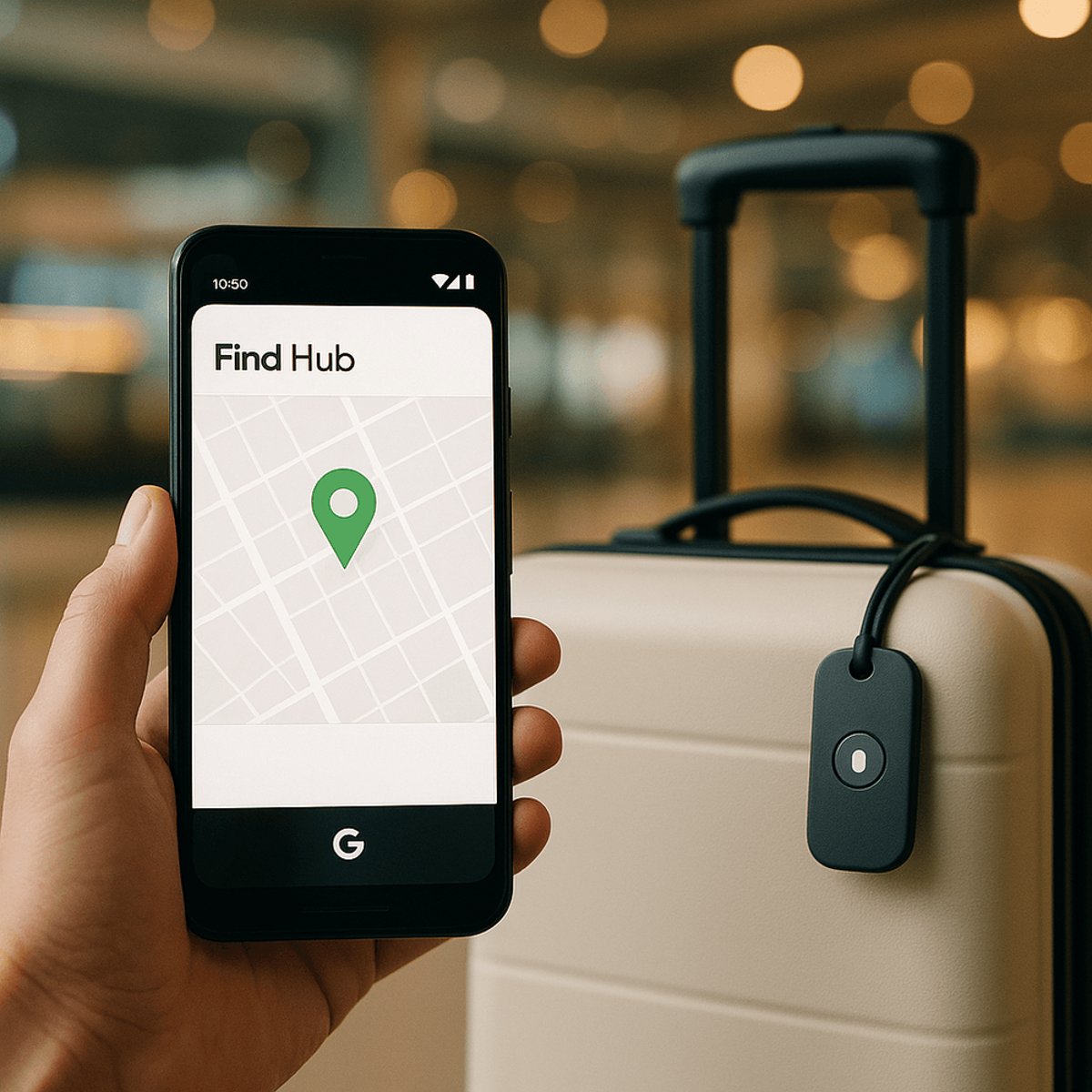
Android users can finally share their tracker tag locations directly with airlines when luggage goes missing. Google just announced that more than 10 global carriers now accept Find Hub location data as part of their baggage recovery process, bringing Android up to speed with Apple's AirTag sharing feature that launched for airlines last year. The move turns Android phones into legitimate travel companions for the millions of passengers who've had bags disappear into airport limbo.
Google is making a play for travelers' peace of mind. The company announced today that Android's Find Hub network now supports direct location sharing with airlines, letting passengers hand over real-time tracker data when their checked bags go missing. According to TechCrunch, more than 10 global airlines have already integrated the system into their baggage recovery workflows.
The timing isn't coincidental. Apple rolled out a nearly identical feature for AirTags back in 2024, partnering with major carriers like United, Delta, and British Airways to accept shared location links. That move turned AirTags into must-have travel accessories and left Android users scrambling for workarounds. Now Google's catching up with its own implementation built into the Find Hub platform that powers location tracking for compatible Bluetooth tags.
Here's how it works: When your bag doesn't show up at baggage claim, you open the Find Hub app on your Android device, select the tracker attached to your luggage, and generate a temporary shareable link. That link gives airline staff access to the tag's last known location and movement history without exposing your personal information or permanent access to your device network. The link expires after a set period, typically 24-48 hours, giving baggage teams enough time to locate your belongings without creating long-term privacy concerns.
The feature leverages Android's existing Find My Device network, which uses crowdsourced Bluetooth signals from over a billion Android devices worldwide to ping the location of lost items. When your tagged luggage passes near any Android phone with location services enabled, it sends an encrypted location update back to your account. It's the same technology that helps you find lost keys or backpacks, now adapted for the chaos of airport baggage systems.
Google hasn't publicly disclosed which specific airlines are participating in the launch, but the industry has been moving in this direction for months. Airlines have dealt with a surge in passenger complaints about lost luggage since 2023, with SITA's 2025 Baggage IT Insights report showing that 7.6 bags per thousand passengers were mishandled globally. Consumer tracking tags became an unofficial solution, with travelers posting viral videos of their bags sitting in random airports while airline systems claimed no knowledge of their whereabouts.
The adoption of official tracker sharing protocols marks a shift in how airlines handle baggage recovery. Instead of relying solely on internal scanning systems that can miss bags or fail to update in real-time, customer service teams can now see exactly where a passenger's belongings ended up. That could mean the difference between a bag stuck in a Dallas warehouse for three days and one recovered within hours because ground crews knew precisely which cart or storage area to check.
For Android users, this levels the playing field with iPhone owners who've enjoyed AirTag sharing since Apple's partnership announcements made headlines. Compatible trackers include devices that work with Google's Find My Device network, such as tags from Chipolo, Pebblebee, and Motorola. Samsung's SmartTag lineup, which uses a separate Galaxy Find network, operates its own airline sharing system through Samsung's ecosystem.
The rollout also highlights how consumer technology is reshaping travel industry practices. Five years ago, airlines discouraged passengers from using lithium battery-powered trackers in checked luggage, citing safety concerns. Now those same carriers are integrating tracker data into their operational systems and training staff to work with shared location links. The shift happened because passengers demanded it, social media amplified lost luggage horror stories, and the technology proved too useful to ignore.
Privacy safeguards are built into the system from the start. Shared links only reveal the tracker's location, not the user's home address, contact information, or other devices on their Google account. Airlines can't access location history beyond what's displayed in the shareable link, and they can't continue tracking the device once the link expires. Google designed the system to give travelers control while providing airlines with actionable data.
What comes next likely involves wider airline adoption and potential integration with baggage claim apps. If the Android rollout follows Apple's trajectory, we'll see announcements from specific carriers over the coming months, possibly including regional airlines and international partners beyond the initial 10+ participants. There's also room for deeper integration, where airlines could automatically request tracker access when a bag is reported missing instead of requiring passengers to manually generate links.
Google's Find Hub airline integration is the kind of practical update that actually solves real problems for travelers. It's not flashy, but it addresses the anxiety millions of passengers feel when their bags don't show up on the carousel. With over 10 airlines already on board and the precedent Apple set proving the concept works, expect this to become standard operating procedure across the industry within the year. Android users finally have a reason to attach a tracker to their luggage that goes beyond personal tracking, and airlines get better tools to fix their baggage handling reputation. Everyone wins except the bags that were never really lost, just temporarily misplaced in the system.