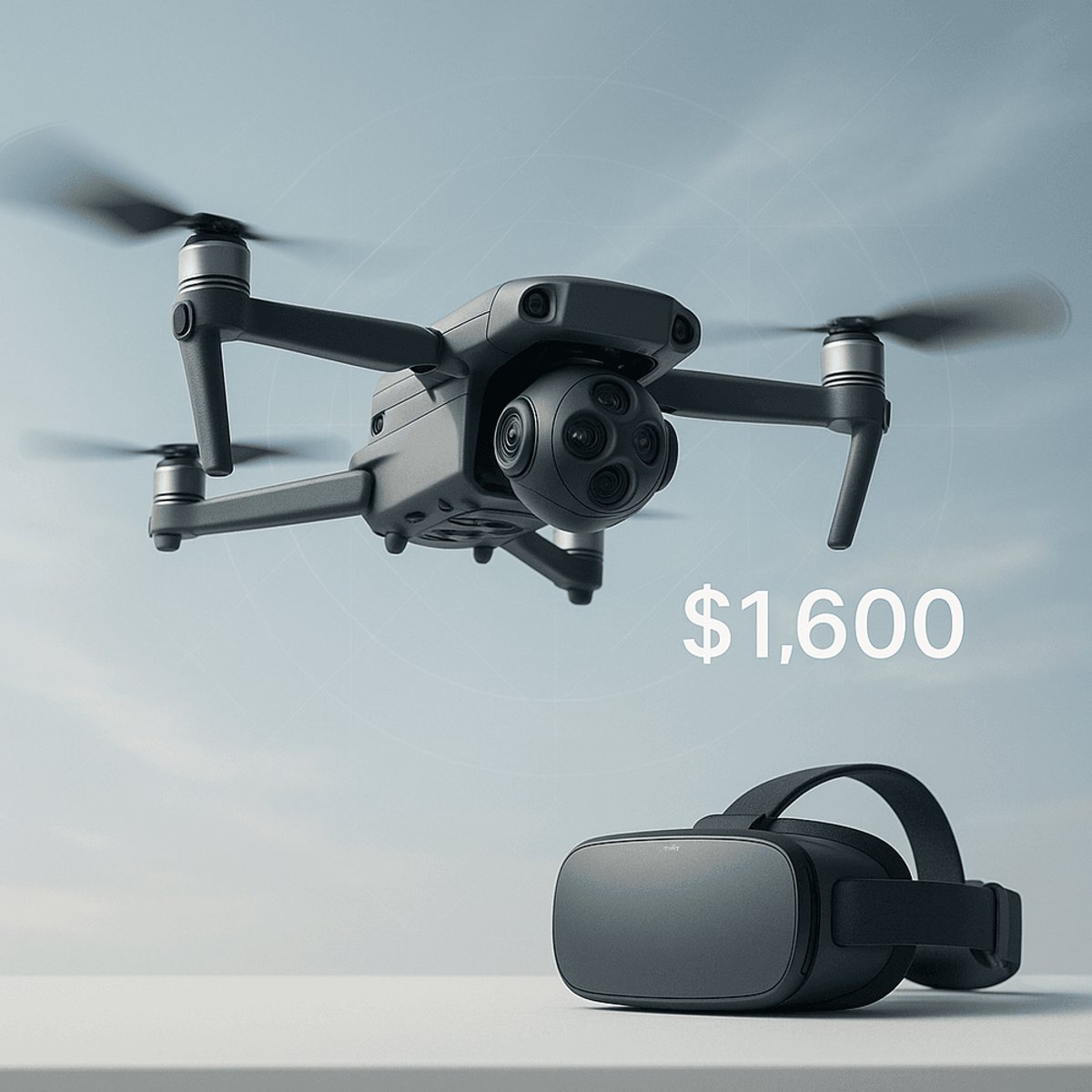
The world's first 360-degree drone just landed in reviewers' hands, and the verdict is mixed. Antigravity's A1 delivers on its promise of immersive aerial footage but demands a steep $1,600 price tag and mandatory goggle controls that complicate what should be simple flying sessions.
The drone industry just got its first real glimpse of 360-degree aerial cinematography, and it comes with some serious trade-offs. Antigravity's A1 drone represents a genuine technological breakthrough - capturing spherical video that lets viewers look in any direction during flight - but early hands-on testing reveals why innovation doesn't always mean adoption.
The most significant hurdle isn't the technology itself, but how you control it. Unlike every other consumer drone on the market, the A1 forces pilots into a goggle-based control system that fundamentally changes the flying experience. "The fact that you're forced into using this control method is the issue I have," WIRED's Sam Kieldsen wrote after extensive testing. "It means I need to bring a friend to act as a spotter every time I fly the drone."
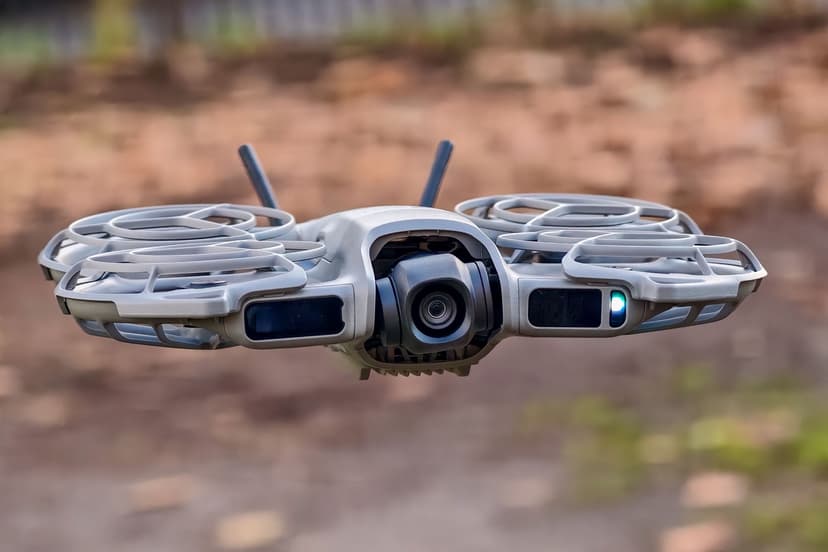
That mandatory setup creates a cascade of complications. Glasses wearers must remove their eyewear before putting on the goggles, which require their own separate battery pack. The controls themselves feel sluggish compared to standard twin-stick controllers that have defined drone flying for over a decade. It's a far cry from the plug-and-play simplicity of DJI's Mini 5 Pro, which can be airborne within minutes of leaving its case.
The pricing strategy makes these usability issues even more problematic. Starting at $1,599 in the US and £1,219 in the UK, the A1 costs nearly as much as DJI's Air 3S Fly More combo - a premium drone that includes dual pro-quality cameras, touchscreen controls, and industry-leading flight performance. While the Air 3S can't match the A1's 360-degree capabilities, its image quality and ease of use represent the current industry standard.
Antigravity is betting that immersive content creation will justify the premium. The A1's spherical video capture opens up entirely new possibilities for virtual reality content, social media posts, and cinematic storytelling. Early footage demonstrates the technology's potential - viewers can look around during flight as if they're sitting in the drone itself.
But the market reality is more complex. Consumer drone buyers have been trained by DJI's decade of dominance to expect immediate gratification and professional results without lengthy setup procedures. The A1's goggle requirement fundamentally changes that equation, turning spontaneous aerial photography into a planned production requiring multiple people and extended preparation.
Industry observers see this as a classic first-generation product challenge. The core technology works, but the user experience hasn't caught up to market expectations. "I would prefer an alternative control method of flying using a standard twin-stick controller with either its own built-in screen or a docked smartphone," Kieldsen noted, echoing feedback from multiple early adopters.
The competitive pressure from DJI's established ecosystem makes these limitations more pronounced. DJI's latest drones offer obstacle avoidance, automated flight modes, and professional-grade image stabilization at similar price points. While they can't capture 360-degree video, they excel at the fundamental task of creating stunning aerial content with minimal hassle.
Antigravity's challenge now becomes execution on future generations. The company has proven the technology works, but needs to address the usability gaps before mainstream adoption becomes possible. Industry insiders expect the second-generation A1 to offer multiple control options, potentially including standard controllers alongside the immersive goggle experience.
For now, the A1 occupies a unique niche - appealing to content creators specifically seeking 360-degree capabilities who can justify the premium price and extra complexity. But broader market success depends on Antigravity streamlining the experience while maintaining its technological edge.
The A1 represents a fascinating glimpse into drone technology's future, but it's arriving ahead of its time. While Antigravity deserves credit for pushing boundaries, the combination of high pricing and cumbersome controls limits its appeal to a narrow segment of content creators. The real test will come with future iterations - if the company can maintain its technological edge while addressing usability concerns, it could genuinely challenge DJI's market dominance. For now, it remains an intriguing proof of concept rather than a mass-market disruptor.