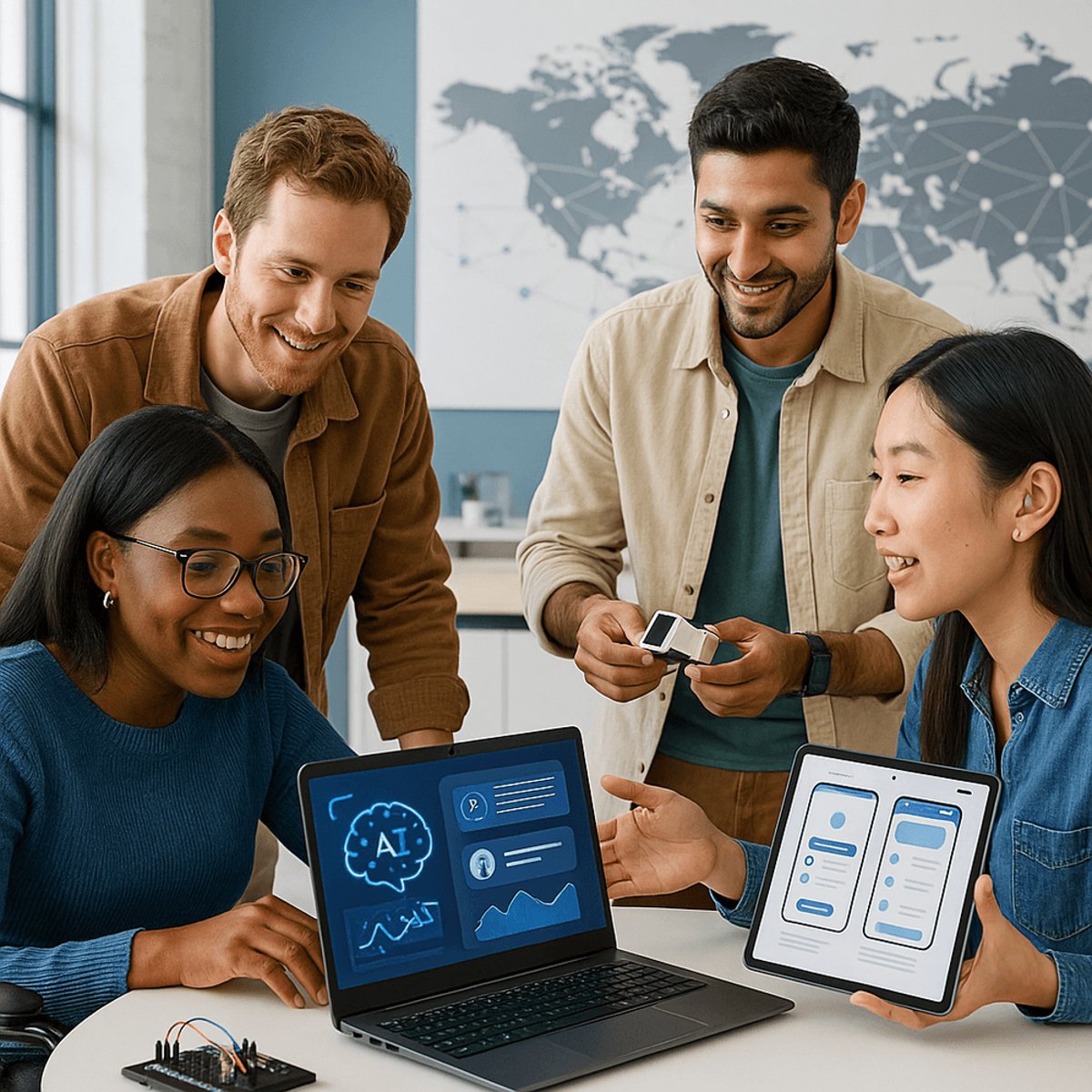
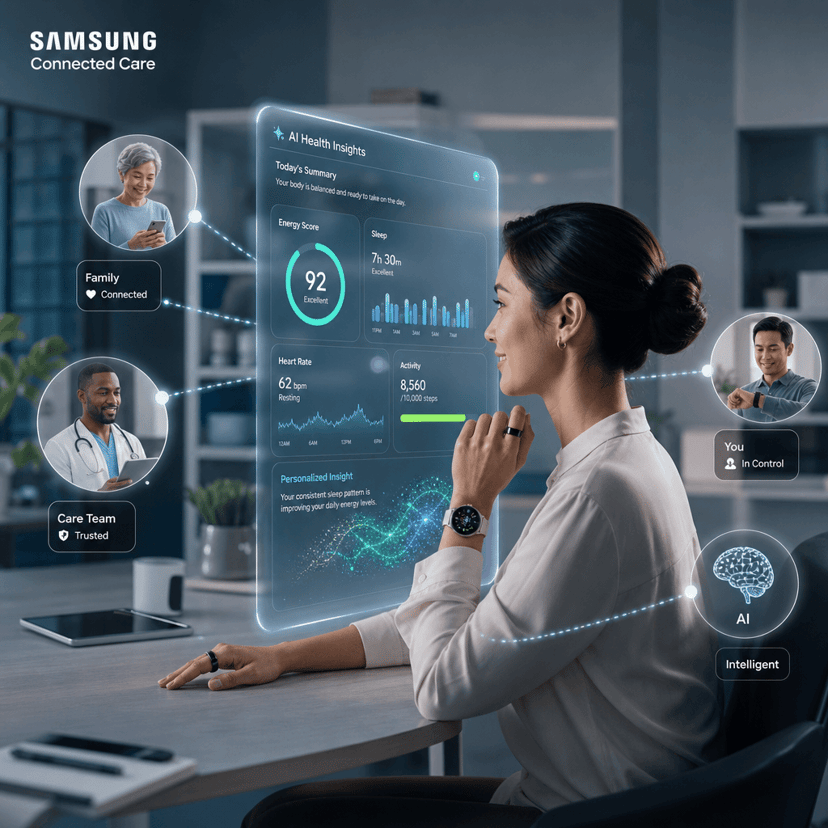
Samsung just announced 10 global ambassador teams from its Solve for Tomorrow program at the Milano Cortina 2026 Winter Olympics, backing young innovators tackling accessibility and environmental challenges with AI and tech. The teams - spanning Australia to the US - are building everything from AI-powered smart bandages to brainwave-controlled wheelchairs, each receiving up to two years of funding and Samsung support to scale their prototypes into real products. It's a rare corporate bet on youth-led innovation at a moment when AI accessibility tools remain largely overlooked by Big Tech.
Samsung is putting real money behind youth innovation. At the Winter Olympics in Milan, the tech giant unveiled 10 global ambassador teams from its Solve for Tomorrow program, each tackling accessibility and sustainability problems with AI-driven solutions. The announcement came during a three-day event running February 8-10 at Samsung House, with IOC President Kirsty Coventry and Samsung's Global Marketing Head Won-Jin Lee on hand to signal the company's commitment to youth-led STEM innovation.
The teams didn't just win a trophy. Each gets funding plus up to two years of Samsung mentorship to turn their prototypes into market-ready products. Five teams in the Sport & Tech category are being jointly supported by Samsung and the International Olympic Committee, while five others in Accessibility & Environment get Samsung backing. It's a corporate citizenship play, sure, but one with tangible resources attached at a time when accessibility tech remains a niche afterthought for most consumer tech companies.
The Sport & Tech winners show how AI can bridge gaps in athletic participation. Indonesia's Run Sight team built a wearable AI system that detects lanes and obstacles for visually impaired runners. Australia's TeamUp created an AI platform connecting people to local sports communities. From Great Britain, Curastep developed smart sneakers with sensors that detect early blister formation in diabetics, encouraging safer physical activity. The US team Storm Shield designed a protective headband that shields hearing aids during sports, addressing a problem faced by ambassador Danielle Yang herself.
"I joined Samsung Solve for Tomorrow to address the challenges I experienced in my daily life," Yang, who has a hearing disability, told attendees according to Samsung's announcement. "With the support of Samsung Electronics and the IOC, I'm truly honored to have the opportunity to share my idea with the world, even on the Olympic stage."
The Accessibility & Environment teams push even further into AI-powered medical and environmental tech. India's Paraspeak built a cloud-based AI solution converting unclear speech into clear pronunciation in real time for people with speech impairments. The US team Aqua-Gel created an AI-powered smart bandage monitoring wound healing and detecting early infection through sensor data. China's Furen Makers developed a brainwave-controlled wheelchair for people with ALS and physical disabilities, enabling mobility and sports participation through neural interfaces.
France's Team Liova, led by Simon Cénet, took a different angle: transforming discarded smartphone batteries into reusable power banks to cut e-waste. Türkiye fielded two teams, including Oilsorb, which uses wool-based oil absorption pads and drones to tackle marine oil spills. Ambassador İrem Erden said in Samsung's release, "Through Samsung Solve for Tomorrow, I gained the confidence that my idea can create positive change in society. As a selected ambassador, I'll strive to inspire more generations."
The ceremony itself leaned into Samsung's foldable tech for symbolic effect. During what Samsung called a "commitment moment," the composite logos of Samsung and the IOC were brought together by unfolding the Galaxy Z TriFold on stage, representing the expansion of ideas and potential. It's the kind of brand theater you'd expect, but the substance behind it - actual funding and multi-year support - sets it apart from typical CSR announcements.
"The projects are truly inspiring: full of creativity, imagination, and passion to make a real difference," IOC President Coventry said during the event, according to Samsung. "I'm especially excited to see the first-ever Sport & Tech winners - combining sport, technology, and problem-solving in ways that can truly change lives."
Samsung's Global Marketing Head Lee framed it as more than product development. "We're not only supporting innovation but also nurturing future leaders who will carry forward the values of excellence, respect, friendship - and creativity," he told the roughly 80 global stakeholders in attendance, including IOC Executive Board Member Jae Youl Kim and Olympism 365 Commission Chair Auvita Rapilla.
On February 9, the teams showcased their solutions at Milan's Smart City Lab and participated in an innovation workshop led by the IOC's Olympism365 Innovation Hub, focused on sustainable development in sports. The exhibition drew representatives from the IOC, the Milano Cortina 2026 Organizing Committee, and various Italian government agencies. On February 10, ambassadors visited the Olympic Village and participated in official Olympic activities, deepening their connection to the Games and the Olympic spirit.
Solve for Tomorrow isn't new - it's Samsung's long-running global platform supporting young people in developing STEM-based solutions to local and global challenges. But this year's cohort, selected from regional competitions worldwide through joint Samsung-IOC evaluation based on innovation, scalability, and social impact, represents a step up in visibility and support. The Olympic tie-in gives these teams a global stage and resources that most youth innovators never access.
What's notable is the focus on accessibility and inclusion. While Big Tech pours billions into generative AI and enterprise tools, Samsung's backing youth solutions for hearing aid protection, speech impairments, visual disabilities, and diabetes management. It's a reminder that AI's most meaningful applications might not be chatbots or productivity hacks, but tools that help people navigate daily life with dignity and independence.
The question now is whether these prototypes can survive the transition from student project to commercial product. Two years of Samsung support is significant, but scaling hardware solutions - especially in medical and accessibility tech - requires regulatory approval, manufacturing partnerships, and distribution channels that even well-funded startups struggle to secure. Samsung's involvement could open doors, but it's no guarantee of market success.
Samsung's backing of these 10 teams signals something beyond typical CSR optics. At a moment when AI development focuses overwhelmingly on enterprise and consumer productivity, these youth-led projects tackle accessibility gaps that major tech companies routinely ignore. Whether smart bandages, speech-clarity tools, or hearing aid protection, these solutions address real barriers faced by people with disabilities. The two-year funding commitment and Olympic platform give these teams a genuine shot at commercialization, but the real test comes when prototypes meet regulatory hurdles and manufacturing realities. If even a few of these projects scale successfully, Samsung will have demonstrated that corporate citizenship can drive innovation where venture capital won't go.