New York is taking a hard swing at the AI industry with two bills that could reshape how the technology operates in the state. The proposed legislation would force publishers to slap disclaimers on AI-generated news and slam the brakes on new data center construction for three years - a direct response to skyrocketing electricity bills that jumped 9 percent for Con Edison customers alone. It's one of the most aggressive state-level moves yet to regulate an industry racing faster than lawmakers can keep up.
New York lawmakers just dropped two bills that could fundamentally change how AI companies operate in the state - and they're not playing around. The proposals target both sides of the AI equation: what the technology produces and the massive infrastructure it demands.
The New York Fundamental Artificial Intelligence Requirements in News Act, mercifully shortened to the NY FAIR News Act, would mandate that any news content "substantially composed, authored, or created through the use of generative artificial intelligence" must carry a visible disclaimer. But it goes further than just labeling. The legislation would also require human editorial oversight before AI-generated content hits publish, forcing organizations to maintain what the bill calls "editorial control" over machine-written material.
The requirements don't stop at disclosure to readers. News organizations would have to tell their own employees exactly how and when AI is being deployed in their newsrooms. There's also a privacy component - the bill calls for safeguards preventing AI systems from accessing confidential information, particularly details about journalistic sources.
Meanwhile, the second piece of legislation, bill S9144, takes aim at the physical backbone of the AI boom. It would impose a three-year moratorium on permits for new data center construction across the state. The reason? Money - specifically, the astronomical energy costs these facilities are dumping onto everyday ratepayers.
The numbers tell the story. National Grid New York reports that requests for "large load" electrical connections have tripled in just one year. The utility is staring down at least 10 gigawatts of additional demand expected over the next five years. That's roughly equivalent to adding another New York City's worth of power consumption to the grid.
New York already has over 130 data centers operating within its borders, according to Data Center Map. But the AI explosion is pushing infrastructure to the breaking point. The state just approved a 9-percent rate increase for Con Edison customers spread over three years, with data centers playing a significant role in driving up baseline demand.
This isn't just a New York problem. Electric bills are climbing nationwide as AI data centers strain aging power grids. The issue has become increasingly bipartisan, with both red and blue states watching residential and commercial customers absorb costs generated by tech companies' insatiable appetite for computing power.
The NY FAIR News Act represents a different kind of regulatory frontier - one focused on transparency rather than outright prohibition. By requiring both reader-facing disclaimers and internal newsroom disclosure, the bill tries to thread the needle between allowing AI innovation and maintaining editorial accountability. The human oversight requirement is particularly notable, essentially codifying that machines can assist but not replace human judgment in news production.
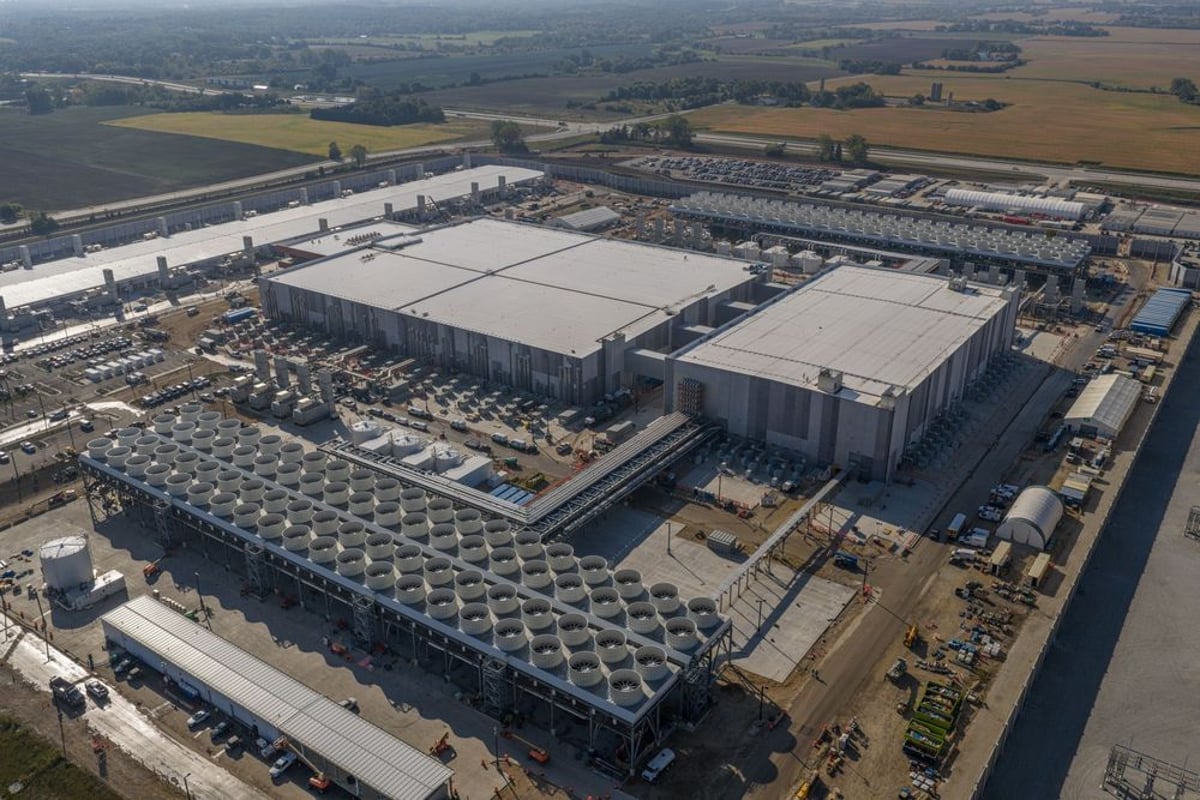
What's striking about these twin proposals is their timing. They arrive as Microsoft and other tech giants continue their breakneck expansion of AI infrastructure, with data centers like the company's Fairwater facility in Wisconsin becoming flashpoints for local energy debates. The three-year construction freeze would give New York breathing room to assess infrastructure capacity and potentially negotiate better terms with tech companies.
Both bills now face the legislative gauntlet in Albany. If passed, New York would join California and a handful of other states attempting to regulate AI at the state level - a patchwork approach that could force companies to navigate wildly different requirements depending on geography. Tech industry groups have already signaled opposition to state-by-state regulation, preferring federal standards that provide consistency across markets.
But with Congress still struggling to pass comprehensive AI legislation, states are stepping into the vacuum. New York's dual approach - targeting both AI outputs and the infrastructure enabling them - could serve as a template for other jurisdictions watching energy costs climb and AI-generated content proliferate without clear guardrails.
New York's double-barreled approach signals a new phase in AI regulation where states aren't waiting for federal action. The content labeling requirements acknowledge AI's role in media while demanding transparency, and the data center moratorium confronts the uncomfortable reality that AI's infrastructure boom is landing squarely on ratepayers' electric bills. Whether these bills pass or not, they're forcing a conversation the industry has largely avoided: who pays for AI's growth, and what accountability exists for what it produces? Other states watching their own energy costs climb will be taking notes.