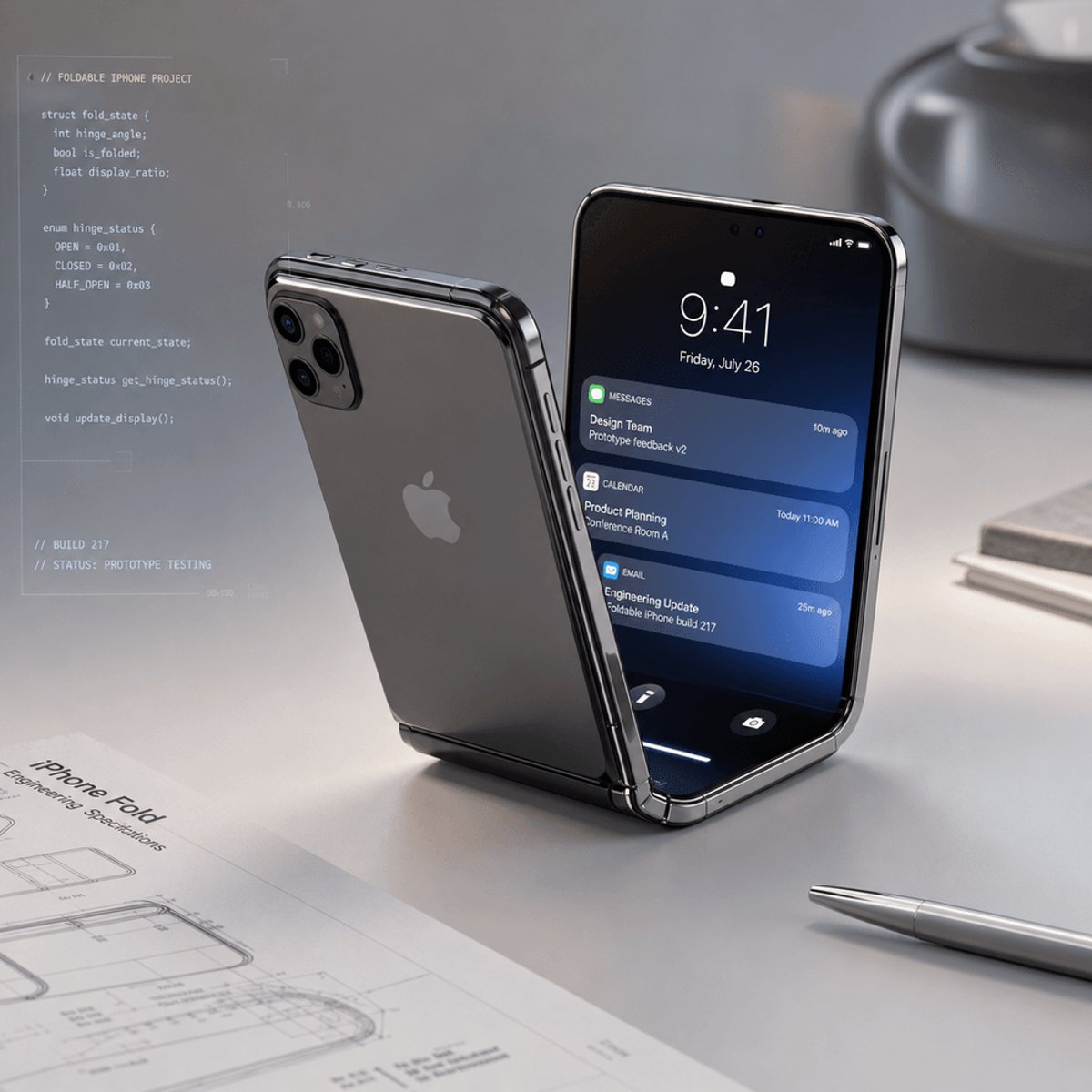
Apple just gave developers the strongest hint yet that a foldable iPhone is in the works. The iOS 27 developer beta, released during WWDC, includes code references to "fold state" and "screen angle" detection - technical indicators that the company is preparing its operating system for bendable displays. After years of rumors and patent filings, the evidence buried in Apple's latest software suggests the long-awaited foldable could arrive sooner than expected, potentially putting the company in direct competition with Samsung and other Android manufacturers who've dominated the foldable market since 2019.
Apple developers digging through the iOS 27 beta have uncovered what looks like the smoking gun for a foldable iPhone. The code includes explicit references to detecting a device's "fold state" and measuring "screen angle" - functionality that makes zero sense for current iPhone models but would be essential for a phone with a bendable display.
The discovery, first reported by TechCrunch, comes at a pivotal moment for Apple. The company has watched from the sidelines as Samsung iterated through five generations of Galaxy Fold devices, while Chinese manufacturers like Huawei and Oppo pushed foldable technology into the mainstream across Asia. Industry analysts estimate the foldable phone market will hit 25 million units this year, and Apple's absence has become increasingly conspicuous.
The iOS 27 code doesn't just hint at foldable support - it reveals Apple's thinking about how these devices should work. Screen angle detection suggests the phone could trigger different interface modes based on how far the display is opened, similar to how Samsung's Flex Mode optimizes apps for partially folded screens. This indicates Apple isn't just slapping iOS onto a bendable display but is rethinking the entire user experience around the form factor.
Apple's patent history backs up what the code is telegraphing. The company has filed dozens of foldable device patents since 2018, covering everything from self-healing display coatings to hinge mechanisms that prevent creasing. But patents are cheap - shipping actual products is hard. The fact that iOS 27 includes production-ready code for foldable detection means Apple has moved well beyond the research phase.
The timing aligns with supply chain reports from earlier this year. Display analyst Ross Young predicted Apple would begin foldable iPhone production in late 2026, with a possible launch in early 2027. If iOS 27 ships this fall as expected, developers would have roughly six to nine months to optimize their apps for foldable displays before hardware arrives - a timeline that matches Apple's typical product development cycle.
What remains unclear is which foldable form factor Apple will pursue. Samsung offers two distinct approaches: the book-style Galaxy Z Fold that unfolds into a tablet, and the clamshell Galaxy Z Flip that folds into a compact square. Supply chain sources have suggested Apple is testing both designs, but the company's obsession with device thinness and battery life may push it toward the larger format, which offers more internal space for components.
The competitive pressure is real. Samsung dominates the premium foldable market, but its devices still suffer from visible crease lines and durability concerns. Apple's entry could validate the entire category for mainstream consumers who've been waiting for the company's typically more polished execution. The question is whether Apple can solve the materials science challenges that have plagued every foldable phone to date - screens that crack, hinges that fail, and batteries that can't sustain all-day use.
Developers are already speculating about what foldable-optimized iOS apps might look like. The ability to detect screen angle opens possibilities for laptop-style interactions, where the bottom half of the display becomes a keyboard or trackpad. Apple's recent investments in multitasking and Stage Manager on iPad suggest the company has been building the software foundation for more complex screen configurations.
The iOS 27 discovery also raises questions about Apple's broader foldable strategy. Rumors have circulated for years about a foldable iPad or even a MacBook with a flexible display. Code that handles fold states and screen angles could theoretically apply to any of these devices, suggesting Apple might be developing a unified approach to foldable hardware across its product line.
For now, the code in iOS 27 offers the most concrete evidence yet that Apple is serious about entering the foldable market. Whether that translates to an actual product announcement this year or remains an insurance policy for future hardware remains to be seen. But developers who start thinking about foldable app experiences now will have a significant advantage when Apple inevitably makes its move.
The iOS 27 code discovery marks a turning point in Apple's foldable strategy. After years of patents and rumors, the company is now building the software infrastructure to support bendable displays. Whether this translates to a 2027 launch or a longer development timeline, developers and consumers finally have tangible evidence that Apple is committed to entering the foldable market. The real question isn't if anymore - it's when, and whether Apple can deliver the polished execution that justifies its fashionably late arrival to a category that competitors have been refining for half a decade.