Apple is betting big on devices again. John Ternus, the company's incoming CEO and longtime hardware engineering leader, signals a strategic shift back to what made Cupertino legendary - groundbreaking physical products. After years of services growth and AI catch-up, the leadership change suggests Apple's ready to remind the world why it revolutionized smartphones, tablets, and laptops in the first place.
Apple just made its biggest bet on hardware in over a decade, and it comes in the form of a person, not a product.
John Ternus, the company's incoming CEO, spent his entire Apple career in the trenches of hardware engineering. He's the executive who shepherded the transition to Apple Silicon, oversaw the MacBook renaissance, and personally championed projects that current CEO Tim Cook often presented on stage. Now he's getting the top job, and the timing tells you everything about where Apple thinks its future lies.
The appointment represents a stark departure from Cook's operational and services-focused tenure. While Cook transformed Apple into a $3 trillion company by expanding margins through App Store revenue and subscription bundles, Ternus made his name building the actual machines people hold in their hands. According to TechCrunch, this hardware DNA could put devices back at the strategic center of Apple's universe.
That shift matters because Apple's been playing catch-up in AI while competitors like Microsoft and Google raced ahead with cloud-based models and enterprise integrations. Ternus's approach appears different - build the AI into the silicon, into the devices themselves. It's classic Apple verticalization, but applied to the era of large language models and machine learning.
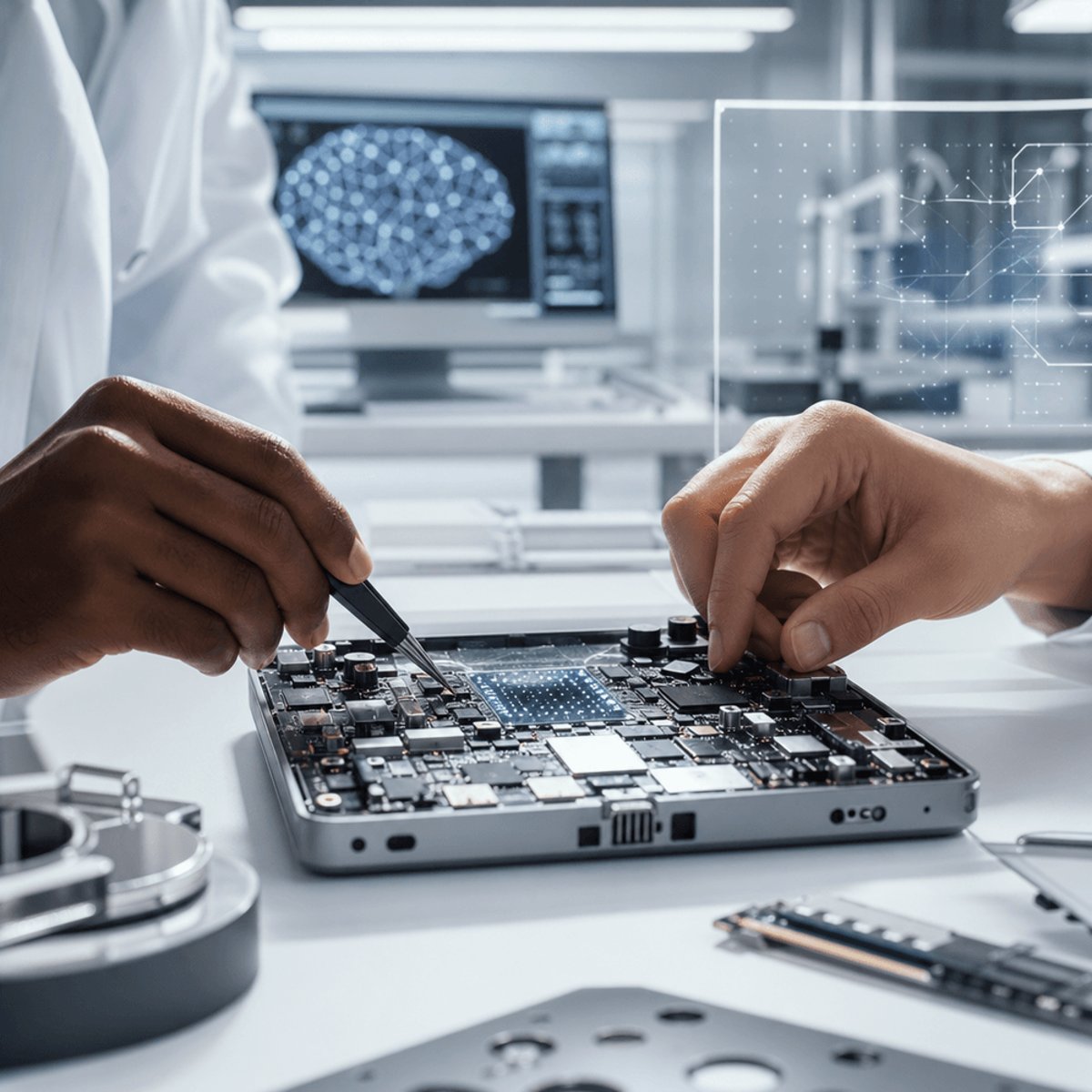
Ternus led the Apple Silicon revolution that started in 2020, replacing Intel chips with custom ARM-based processors that delivered performance gains competitors still can't match. That success proved Apple could out-engineer the entire chip industry when properly motivated. The M-series chips now power everything from MacBook Airs to Mac Studios, creating a unified architecture that makes AI acceleration built into every device.
Industry insiders expect Ternus to greenlight hardware moonshots that Cook's financially conservative approach might have delayed. Robotics projects, which Apple's been quietly developing for years, could finally see daylight. The company's long-rumored AR glasses - repeatedly pushed back under Cook - might get the resources and executive sponsorship needed to ship. Even the Vision Pro, currently a $3,500 developer kit masquerading as a consumer product, could see the focused iteration it desperately needs.
The competitive landscape demands this kind of hardware-first thinking. Meta ships millions of Quest headsets and just announced smart glasses with built-in AI assistants. Samsung continues dominating foldable phones while Apple watches from the sidelines. Tesla pioneered the idea of hardware that gets better through software updates, an approach Apple invented with the iPhone but hasn't fully exploited in newer categories.
Ternus also inherits Apple's manufacturing relationships, particularly the complex dependency on Chinese factories that produce most of its devices. His engineering background gives him credibility to push suppliers on capabilities and timelines in ways a finance-focused executive simply can't. When Ternus asks Foxconn for tighter tolerances or TSMC for custom chip features, they know he understands exactly what he's requesting.
What makes this succession particularly interesting is the AI angle. Rather than chasing OpenAI with cloud-based chatbots, Apple appears ready to embed intelligence into hardware at the silicon level. The Neural Engine in Apple's chips already handles Face ID, computational photography, and voice recognition without sending data to servers. Ternus could expand that philosophy into a full AI stack that runs locally, addressing privacy concerns while delivering the personalized experiences users expect.
The robotics piece deserves attention too. Apple's been developing home robots and exploring personal assistant hardware for years according to multiple reports. Under Ternus, these projects might finally escape the prototype lab. Imagine an Apple-designed robot with the build quality of an iPhone, the intelligence of Siri 2.0, and seamless integration across your devices. That's the kind of category-creating hardware play that defined Steve Jobs's tenure and largely disappeared under Cook's services expansion.
Gadget enthusiasts should pay close attention to Apple's next product launches. Ternus doesn't just approve spec sheets - he's known for obsessing over details like hinge mechanisms, thermal management, and the tactile feel of buttons. Products shipping under his leadership could feel noticeably different, more considered, more ambitious in their physical design even as they pack AI capabilities inside.
The market's already pricing in this shift. Apple's stock jumped on succession news as investors bet that hardware innovation could reignite growth in iPhone and Mac sales, which have plateaued in recent quarters. Wall Street loves the services narrative, but it also remembers that Apple's most explosive growth periods came when it redefined entire hardware categories.
Apple's choosing Ternus over services-focused executives sends an unmistakable signal - the next decade belongs to physical innovation powered by embedded intelligence. Whether that means robots in your home, glasses on your face, or devices we haven't imagined yet, the company that revolutionized personal computing is betting its future on hardware that thinks. The question isn't whether Ternus will push aggressive device innovation. It's whether the rest of the industry is ready for Apple to remember what it does best.