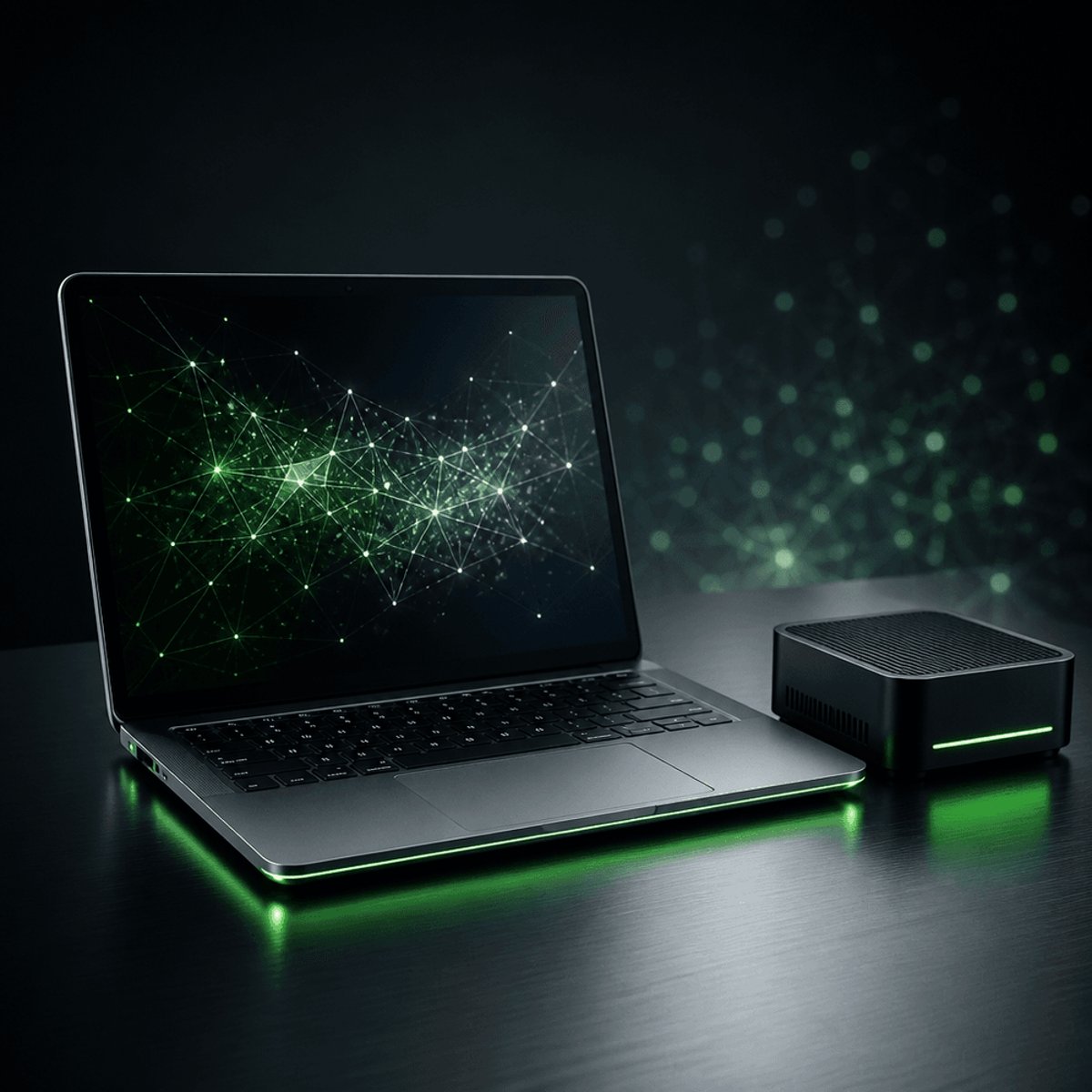
Nvidia just pulled back the curtain on its RTX Spark chip at IFA 2026 in Berlin, and with it, the first wave of laptops and mini PCs built to run AI models locally, no cloud required. The showcase, first reported by Wired, signals that the AI PC race is entering a new phase where the hardware finally starts to match the hype.
Nvidia isn't just chasing the AI PC trend anymore, it's trying to define it. At IFA 2026 in Berlin, the company and a handful of hardware partners pulled the wraps off the first laptops and mini PCs powered by its new RTX Spark chip, a piece of silicon designed from the ground up to run AI models right on your machine instead of shipping every query off to a data center somewhere. Wired's Luke Larsen got an early look at the lineup, and the framing is clear: this is Nvidia's opening move in a fight that's been building for years.
The pitch behind on-device AI processing is simple enough. Run the model locally and you cut latency, you cut cloud costs, and you keep sensitive data off someone else's server. It's the same logic that's driven Apple to build neural engines into its M-series chips and pushed Qualcomm to market its Snapdragon X series as an AI-first mobile processor. Nvidia, which has spent the last few years dominating the data center side of the AI boom with its H100 and Blackwell GPUs, is now making a real push to own the personal computing side too.
[Image: Nvidia RTX Spark laptop and mini PC lineup shown at IFA 2026]
That's a meaningful shift in strategy. For most of the generative AI wave, the heavy lifting happened in the cloud. You typed a prompt into ChatGPT or Gemini, and the actual computation ran on racks of GPUs thousands of miles away. RTX Spark is a bet that a growing chunk of that work, running smaller language models, image generation, video editing assists, can and should happen on the device sitting on your desk. It's a bet Nvidia can afford to make given how much of the underlying AI infrastructure it already controls.
The timing also isn't an accident. IFA has increasingly become a launchpad for AI-branded consumer hardware, and 2026's show is leaning even harder into the category than last year's. Laptop makers have spent two years slapping "AI PC" stickers on machines that, in practice, offered marginal on-device AI capability. RTX Spark looks like an attempt to make that label actually mean something, giving partner OEMs a chip that's purpose-built for running models rather than a repurposed graphics processor with an AI feature bolted on.
Competitively, this puts pressure on everyone building AI-capable silicon for personal computers. AMD has its own Ryzen AI lineup, Intel has been pushing Core Ultra chips with neural processing units, and both Apple and Qualcomm have multi-year head starts in shipping AI-optimized silicon at scale. Nvidia's advantage is brand recognition in AI circles and a software ecosystem, CUDA, TensorRT, and its broader AI toolchain, that developers already know. Whether that translates into consumer hardware wins is a different question, one that depends heavily on price, battery life, and whether the on-device AI features actually feel useful day to day rather than gimmicky.
Nvidia hasn't detailed full pricing or a firm retail launch window for the partner devices shown at IFA, and specifics on battery performance and real-world benchmarks are still thin. That's typical for a trade show reveal, the actual proof comes once these laptops and mini PCs land in reviewers' hands. But the direction of travel is unmistakable. Nvidia wants RTX Spark to be the chip that finally makes "AI PC" a category people actually care about, not just a marketing line on a spec sheet.
What happens next matters more than the announcement itself. If partner devices ship on schedule and deliver on the on-device AI promise, Nvidia could carve out a serious lane in personal computing that it's never really occupied before. If they don't, RTX Spark risks becoming another entry in the long list of AI PC chips that promised more than they delivered.
The RTX Spark reveal is less about a single product and more about where Nvidia sees the next phase of the AI race heading, out of the data center and onto the devices people actually carry around. For consumers, it means the next laptop upgrade cycle could come with a real reason to care about the AI PC label instead of shrugging it off as marketing. For the industry, it's a signal that the fight over who controls on-device AI is just getting started, and Nvidia just made clear it intends to be in the middle of it.