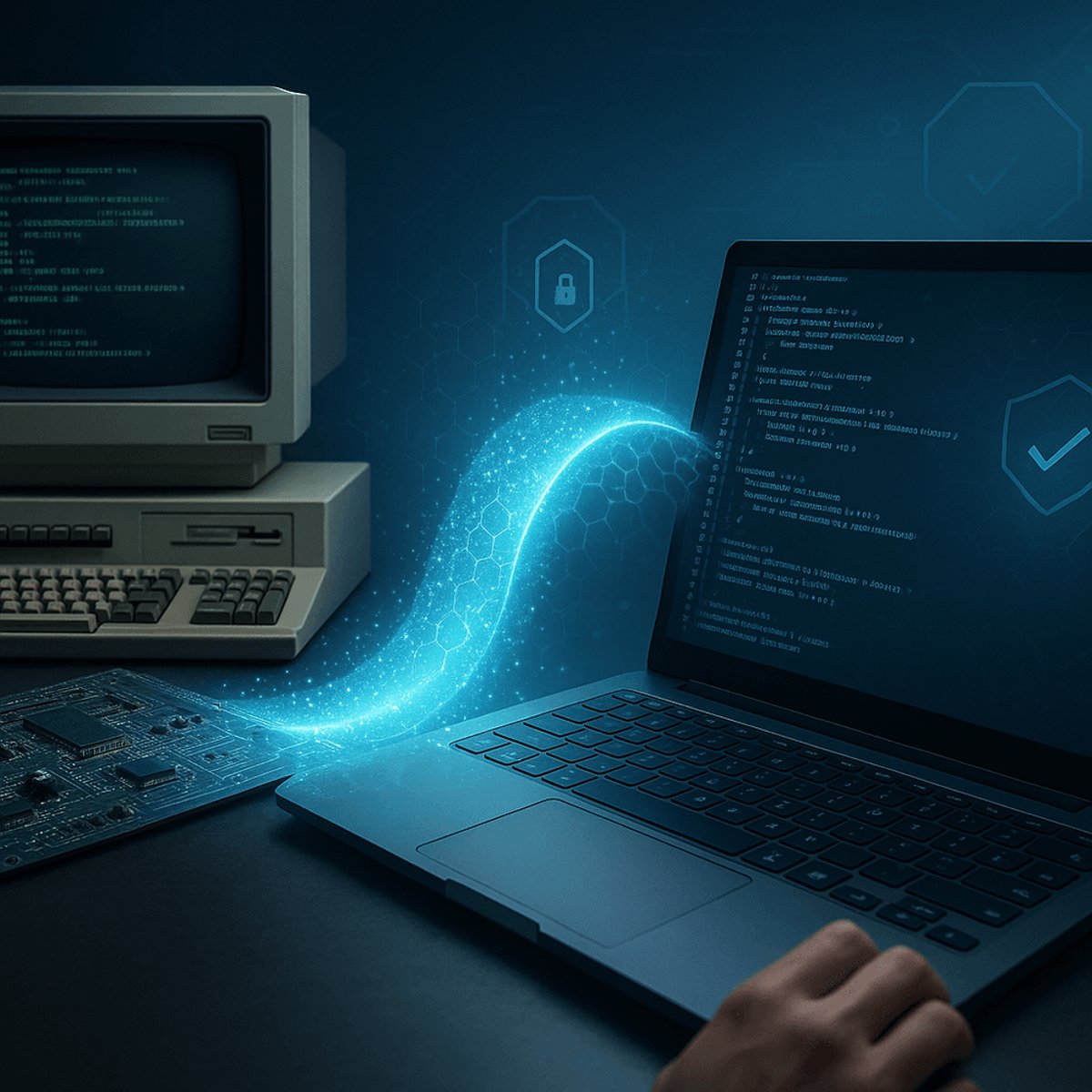
Code Metal, a Boston-based defense tech startup, just closed a $125 million Series B to tackle one of the Pentagon's biggest headaches: modernizing decades-old software that runs critical military systems. The company's AI-powered platform translates ancient code into modern languages while verifying every line to prevent bugs that could compromise national security. In an industry where F-35 fighters still rely on code written in the 1980s, Code Metal's approach could reshape how defense contractors handle software modernization.
Code Metal is betting $125 million that the Pentagon's software problem is actually an AI opportunity. The Boston startup announced its Series B today, drawing attention to a crisis most people don't see: the U.S. military runs on code that's older than most of its recruits.
The company uses AI to translate legacy software written in archaic languages like COBOL, Ada, and Fortran into modern equivalents like Rust and C++. But here's the twist that matters for defense applications - Code Metal doesn't just translate code, it formally verifies every conversion to mathematically prove the new version works identically to the original. In defense systems where a single bug could ground aircraft or compromise missile guidance, that verification step isn't optional.
"Modernization can't come at the cost of new bugs," Code Metal's approach acknowledges, according to Wired's coverage. The startup is tackling what defense insiders call "technical debt" - the accumulated burden of maintaining software that predates the internet but still controls everything from logistics systems to fighter jets.
The market opportunity is massive. Defense contractors spend billions annually just maintaining legacy code, with some estimates suggesting 60-70% of military software budgets go toward upkeep rather than innovation. The F-35 Joint Strike Fighter program alone operates on millions of lines of code, much of it written decades ago and requiring specialized programmers who are rapidly retiring.
Code Metal's timing aligns with mounting pressure on the Pentagon to accelerate software modernization. The Department of Defense has been pushing its "software-defined" initiative, recognizing that future conflicts will be won by whoever can update and deploy code fastest. But most AI coding assistants like GitHub Copilot or Anthropic's Claude focus on writing new code, not translating mission-critical legacy systems where mistakes could be catastrophic.
The Series B funding suggests investors see defense tech as a growth sector distinct from commercial AI applications. While consumer AI companies face uncertain monetization paths, defense contractors offer long-term government contracts and clear ROI calculations. Code Metal's verification-first approach differentiates it from competitors by addressing the risk-averse culture of military procurement.
Defense technology has emerged as a hot startup category, with companies like Anduril and Palantir proving that venture-backed firms can compete for Pentagon dollars. Code Metal fits into this wave but targets the unsexy backend infrastructure rather than autonomous drones or data analytics. The company's Boston location puts it near both MIT's computer science talent and the dense concentration of defense contractors in the Northeast corridor.
The verification component relies on formal methods - mathematical techniques that prove software correctness rather than just testing it. This approach has been used in aerospace and nuclear industries for decades but remained too expensive and slow for widespread adoption. Code Metal's innovation appears to be applying AI to automate much of the verification process, making it economically viable for broader modernization projects.
What defense contractors get is a path off ancient mainframes without rewriting millions of lines by hand. What the Pentagon gets is faster iteration cycles and access to modern developer tools and security practices. And what Code Metal gets is a customer base that plans in decades and pays for reliability.
The raise comes as defense budgets face scrutiny but software spending remains protected. Military leaders increasingly recognize that hardware superiority means little if software vulnerabilities create backdoors for adversaries. Code Metal's pitch essentially frames legacy code translation as a national security issue, not just a technical challenge.
Code Metal's $125 million raise highlights a fundamental shift in defense tech investment - the recognition that modernizing existing systems might be more valuable than building flashy new ones. As the Pentagon races to become more software-agile, startups that can safely migrate decades of battle-tested code into modern architectures have found a lucrative niche. The real test will be whether Code Metal's AI verification can handle the complexity of actual military systems at scale, but with this funding, they've got runway to prove the concept where it matters most: in production defense contracts.