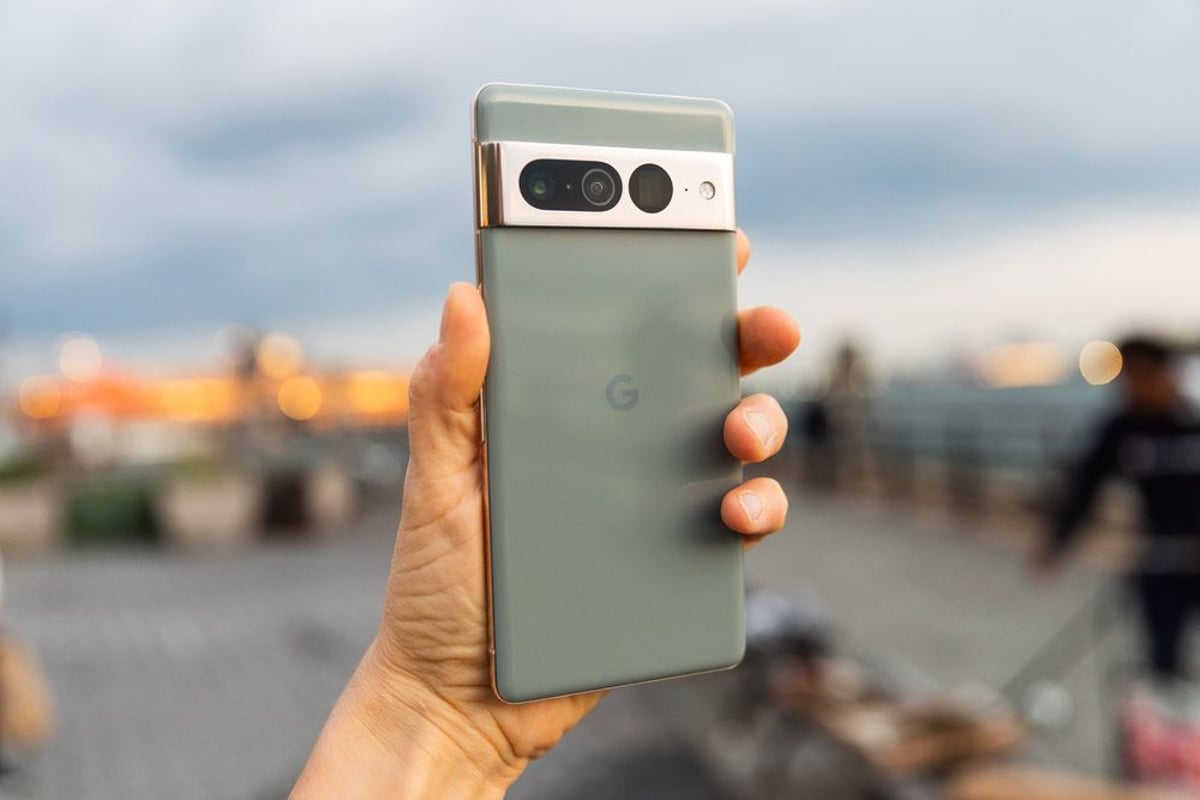
Google just confirmed a frustrating reality for older Pixel users: despite having the right hardware, the Pixel 6 Pro and 7 Pro can't use ultra-wideband precision tracking to locate lost items. The feature works only on Pixel 8 Pro and newer models, leaving millions of users with capable phones in the dark about why their $29 Moto Tags won't guide them to their keys with pinpoint accuracy.
Google just delivered some bad news to owners of older Pixel Pro phones, and it's the kind of arbitrary limitation that makes you wonder what's happening behind the scenes in Mountain View. The company confirmed to Android Authority that ultra-wideband precision tracking - the feature that guides you to lost items with room-scale accuracy - only works on Pixel 8 Pro models and newer. That leaves Pixel 6 Pro and 7 Pro owners out in the cold, despite both phones packing the necessary UWB chips.
The timing couldn't be more frustrating for users who've been struggling with Motorola's Moto Tag, currently the only Android-compatible tracker that supports UWB precision finding after Samsung discontinued its SmartTag Plus. The $29 device finally got its precision tracking update earlier this year, but now it turns out many Pixel users can't actually use it.
What makes this particularly maddening is that both affected Pixel models have the hardware. Google introduced UWB support with the Pixel 6 Pro back in 2021, marketing it as a key feature for the future of device interaction. The Pixel 7 Pro continued that support. Yet somehow, when it came time to flip the software switch for precision tracking, Google decided these phones weren't worthy.
The company hasn't offered any explanation for the limitation, which is quietly documented on a Google support page. The page notes that UWB precise finding works on a limited number of Android phones, including Samsung Galaxy S21 Plus and Ultra models and above, plus select Motorola Edge and Razr devices. But it doesn't explain why phones with identical UWB capabilities get different treatment.
This artificial restriction highlights a broader problem in Android's tracker ecosystem. While Apple's AirTags have worked seamlessly with precision finding since day one, Android users are stuck navigating a fragmented landscape where hardware capability doesn't guarantee software support. Google's Find My Device network only gained UWB support earlier this year, years behind Apple's implementation.
The situation gets worse when you consider the limited options for Android users. Samsung's SmartTag Plus was the early leader in Android UWB tracking, but Samsung quietly discontinued it, leaving Motorola's Moto Tag as the sole option. That tracker launched in June 2024 but didn't get its precision tracking firmware update until months later.
Industry observers suspect this could be related to computational requirements or battery optimization concerns, but Google isn't saying. The company's silence is particularly frustrating given that these are flagship phones that users paid premium prices for, expecting full feature support throughout their lifecycle.
This kind of artificial limitation threatens to undermine confidence in Android's tracker ecosystem just as it's trying to catch up to Apple. Users who invested in Pixel Pro phones specifically for their advanced features are now discovering that hardware promises don't always translate to software reality, even from Google itself.
This UWB limitation exposes the disconnect between Google's hardware capabilities and software priorities. Pixel 6 Pro and 7 Pro owners paid flagship prices for phones with UWB chips that can't actually do precision tracking - a feature that should be table stakes in 2024. As Android tries to catch up to Apple's seamless AirTag experience, these kinds of arbitrary restrictions only highlight how fragmented the ecosystem remains. Whether Google will eventually enable the feature on older Pro models or leave users hanging remains to be seen, but the company's silence isn't exactly inspiring confidence.