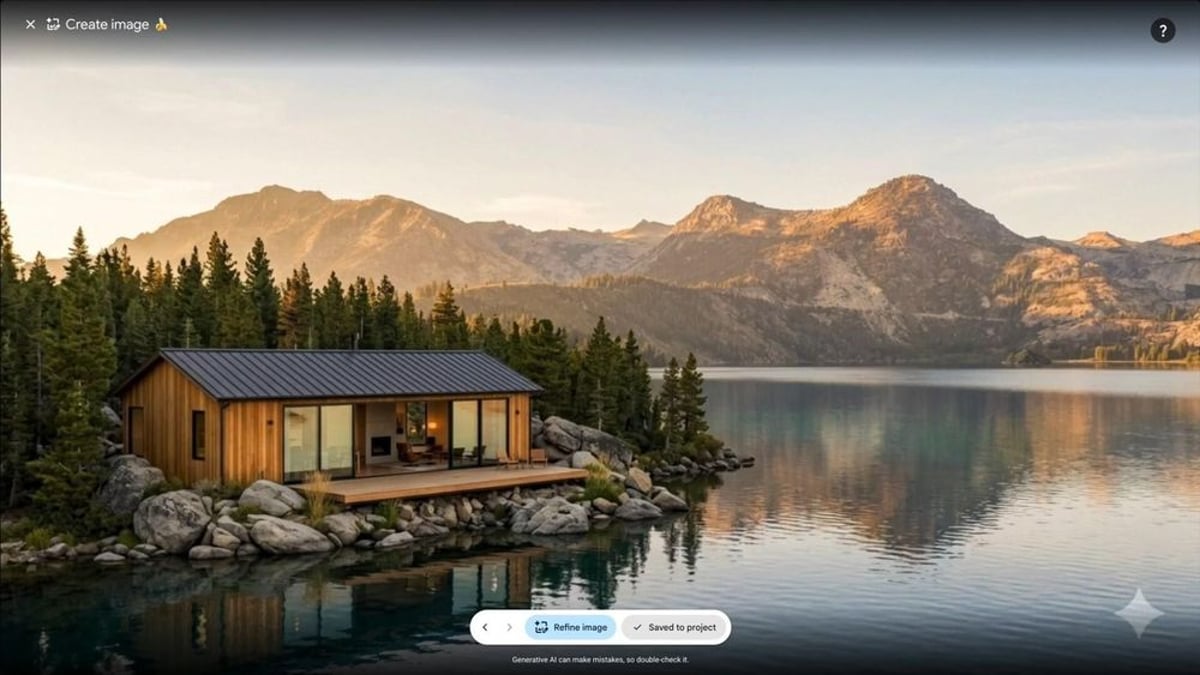
Google is facing backlash after adding an AI image generator to Google Earth that lets anyone create doctored satellite imagery with simple text prompts. Security researcher Henk van Ess demonstrated the risks by generating fabricated images showing refugees at the Mexican border and bomb craters near a Gaza hospital, prompting urgent questions about how the tech giant plans to prevent the spread of geographically-anchored misinformation that could fuel real-world conflicts.
Google just handed anyone with an internet connection the ability to fabricate satellite imagery that looks disturbingly real. The company's new Nano Banana feature, now integrated into Google Earth, uses AI to generate manipulated aerial and 3D imagery based on simple text descriptions, and security researchers are already sounding alarms about its potential for abuse.
Henk van Ess, founder of the investigative publication Digital Digging, wasted no time stress-testing the tool's capacity for harm. He generated images showing supposed refugees gathered near the Mexican border and fabricated bomb damage near a hospital in Gaza - exactly the kind of inflammatory visual content that could spark international incidents or fuel conspiracy theories. Both images looked convincing enough to fool casual observers scrolling through social media.
The timing couldn't be more sensitive. As conflicts rage globally and immigration remains a political flashpoint, the ability to manufacture seemingly authentic geographic evidence represents a dangerous new frontier in misinformation. Unlike typical AI-generated images, these fakes carry the implicit credibility of Google Earth's trusted satellite infrastructure.
Google responded to the demonstration by emphasizing its safeguards. "We take misinformation seriously - every image created with Nano Banana in Google Earth includes the SynthID digital watermark, so if someone is unsure about an image, they can ask the Gemini app or use Lens in Search to see if the image was AI-generated," the company said in a statement. The tech giant is banking on its SynthID technology, which embeds imperceptible watermarks into AI-generated content, to help users verify what's real.
But watermarking only works if people know to check. The @verifyai tag Google mentions requires users to actively question what they're seeing - a step many won't take when emotionally charged imagery confirms their existing beliefs. And while Gemini and Google Lens can theoretically detect these watermarks, that assumes bad actors will leave the images unmodified and that end users have the technical literacy to verify them.
The broader context makes this launch even more concerning. Google has been racing to integrate AI across its product lineup, competing fiercely with Microsoft, OpenAI, and Anthropic in the generative AI arms race. But while chatbots and text generators have dominated headlines, the manipulation of trusted geographic data represents a uniquely dangerous application. Satellite imagery has long served as ground truth for journalists, human rights investigators, and intelligence agencies. Polluting that ecosystem with convincing fakes undermines an essential verification tool.
Digital forensics experts have warned for years about the coming challenge of synthetic media, but most defenses have focused on detecting deepfake videos or audio clips. Geographic manipulation adds a new dimension. Bad actors could generate fake satellite evidence of troop movements, environmental disasters, or infrastructure damage - potentially influencing everything from stock markets to military decisions.
The feature does highlight Google's technical prowess. Creating photorealistic satellite imagery that properly accounts for terrain, lighting, and perspective is computationally complex. That Google can do this on-demand from text prompts shows how far generative AI models have advanced. But technical achievement doesn't equal responsible deployment.
Other tech giants have taken more cautious approaches. Microsoft hasn't added similar capabilities to Bing Maps, while Apple continues to focus its AI efforts on device-level features rather than content generation tools with obvious abuse potential. Even Meta, often criticized for moving fast and breaking things, has implemented stricter controls around AI-generated political content after past controversies.
The pushback Google faces echoes concerns that emerged when AI image generators first went mainstream. Tools like Midjourney and Stable Diffusion sparked debates about copyright, consent, and misinformation. But those typically generate fantasy scenes or artistic interpretations. Nano Banana's integration with real geographic data from Google Earth crosses into more sensitive territory - manipulating representations of actual places where real events unfold.
Google will need to demonstrate that its watermarking and verification tools actually work at scale, and that users can easily access them. The company's response to Digital Digging's demonstration suggests it's aware of the risks, but awareness isn't the same as prevention. As synthetic media becomes more sophisticated and accessible, the burden of proof shifts from "is this fake?" to "can you prove this is real?" - a dangerous reversal that erodes trust in all imagery.
The feature's launch also raises questions about Google's product review process. Who signed off on adding AI manipulation capabilities to a mapping tool used by millions? What risk assessments were conducted? And were outside experts consulted about potential harms before deployment? These questions have become standard in responsible AI development, but the answers remain unclear.
Google's decision to add AI image generation to Earth represents a critical test case for how tech companies balance innovation with responsibility. While SynthID watermarking offers one layer of defense against misinformation, the burden shouldn't fall entirely on users to verify what they see. As AI-manipulated geographic data becomes easier to create, the industry needs stronger guardrails - not just after-the-fact detection tools. What happens next with Nano Banana could set precedents for how other platforms handle the collision between generative AI and trusted information sources. The stakes extend beyond Google's reputation to the broader credibility of digital mapping and satellite imagery as evidentiary tools.