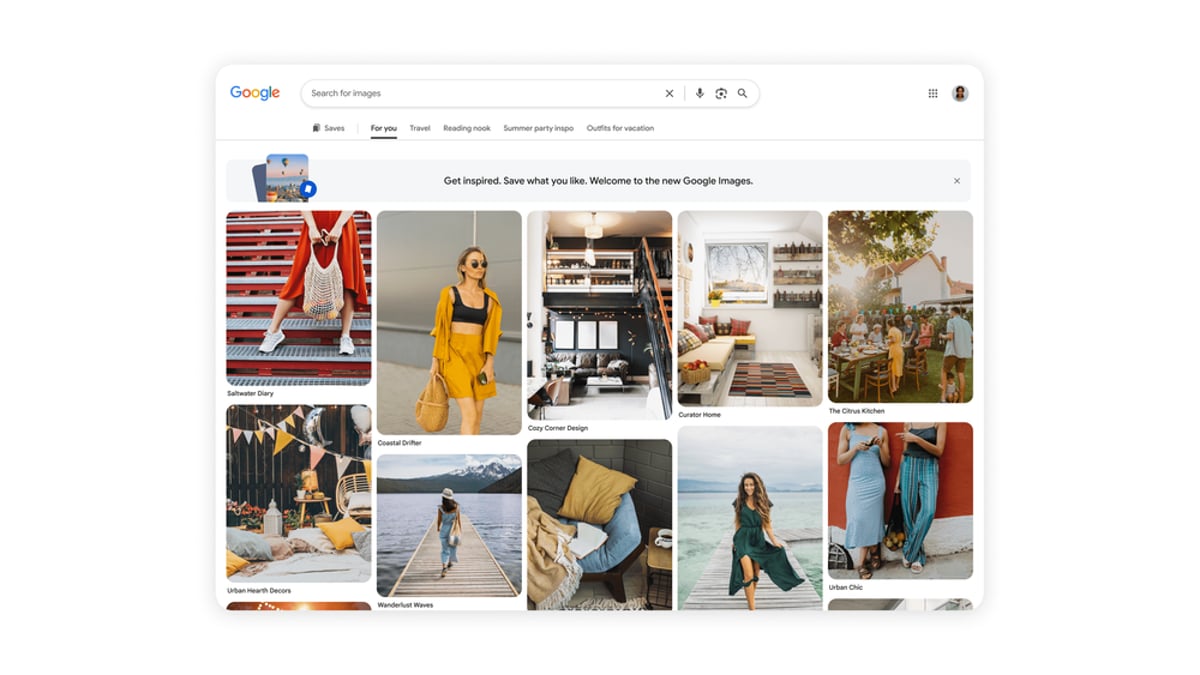
Google is flipping the script on image search. The company just announced it's replacing the iconic blank search page with an AI-powered feed of personalized images you can browse before typing a single word. The move, timed to Google Images' 25th birthday this week, transforms the service from a simple search tool into something closer to Pinterest or Instagram - a scrollable discovery platform that predicts what you want to see.
Google just killed the blank search box. The company announced it's replacing the minimalist Google Images homepage with an AI-powered visual feed that starts recommending photos the moment you land on the page. No search required.
The redesign marks the biggest overhaul to Google Images since the service launched 25 years ago this week. Instead of staring at empty white space and a search bar, users will now see what Google describes as a "dynamic, immersive gallery of images from across the web - updated in real time and intelligently tailored to your unique interests."
The new layout borrows heavily from Pinterest and Imgur, packing the homepage with a scrollable grid of images designed to keep you browsing. It's a dramatic shift in philosophy for Google, moving from search-first to discovery-first, and it reveals how aggressively the company is pushing AI personalization across every product.
The timing isn't coincidental. Google Images launched in July 2001 after actress Jennifer Lopez wore that green Versace dress to the Grammys and became the most-searched query Google couldn't handle well. Now, 25 years later, the service processes billions of image searches daily. But with competition heating up from AI-native visual search tools and social platforms eating into discovery time, Google needs to prove it can still own the visual web.
According to The Verge's coverage, the redesigned homepage uses Google's AI systems to analyze your search history, interests, and browsing patterns to populate the feed. The images refresh in real-time, presumably adjusting as you interact with the content. Google hasn't detailed exactly which AI models power the recommendations, but it's likely tapping into the same personalization engines that drive YouTube's homepage and Google Discover.
The move puts Google in direct competition with visual discovery platforms that have built entire businesses around endless scrolling. Pinterest has long dominated the "I don't know what I'm searching for yet" space, while Instagram and TikTok have trained users to expect algorithmic feeds that predict their interests. Google's trying to reclaim that behavior by meeting users where they already are - on its search properties.
But the redesign also raises familiar questions about filter bubbles and algorithmic curation. If Google's AI is choosing what images you see before you even search, how much control do users have over their discovery experience? The company hasn't announced whether users can disable the personalized feed or revert to the classic blank homepage. That could become a sticking point for users who prefer Google's traditionally utilitarian approach to search.
The update also has implications for content creators and publishers. A personalized homepage means Google's algorithms now have even more power to determine which images get discovered. If your photos don't align with what Google's AI thinks users want to see, they might never surface - even if users would have found them through traditional search. That's great for engagement metrics, but it could narrow the range of content that reaches audiences.
Google says the new homepage will roll out globally this week. The company hasn't specified whether it's a gradual rollout or an all-at-once launch, but users should start seeing the redesigned experience soon. It's launching on both desktop and mobile web, though the mobile experience will likely lean even harder into the vertical scrolling format that dominates app-based platforms.
This is the latest sign of Google's broader strategy to inject AI into every surface area of Search. The company has already rolled out AI Overviews in traditional web search results, added generative AI to shopping, and launched experimental features like Search Generative Experience. Now Images gets the AI treatment too, with personalization becoming the default rather than an opt-in feature.
The anniversary timing gives Google a narrative hook for what might otherwise be seen as a controversial change. Framing it as an evolution celebrating 25 years of innovation makes the redesign feel celebratory rather than reactive. But make no mistake - this is Google responding to a shifting landscape where users increasingly expect personalized feeds, not blank search boxes.
Google's redesigned Images homepage represents more than a cosmetic update - it's a fundamental rethinking of how search works. By putting AI-curated recommendations front and center, Google is betting users want discovery over utility, feeds over search bars. The move positions Google Images as a social platform competitor while deepening the company's reliance on algorithmic personalization. Whether users embrace the change or demand a return to the classic blank page will determine if this gamble pays off. For now, Google is making it clear: in the AI era, even search starts with a recommendation.