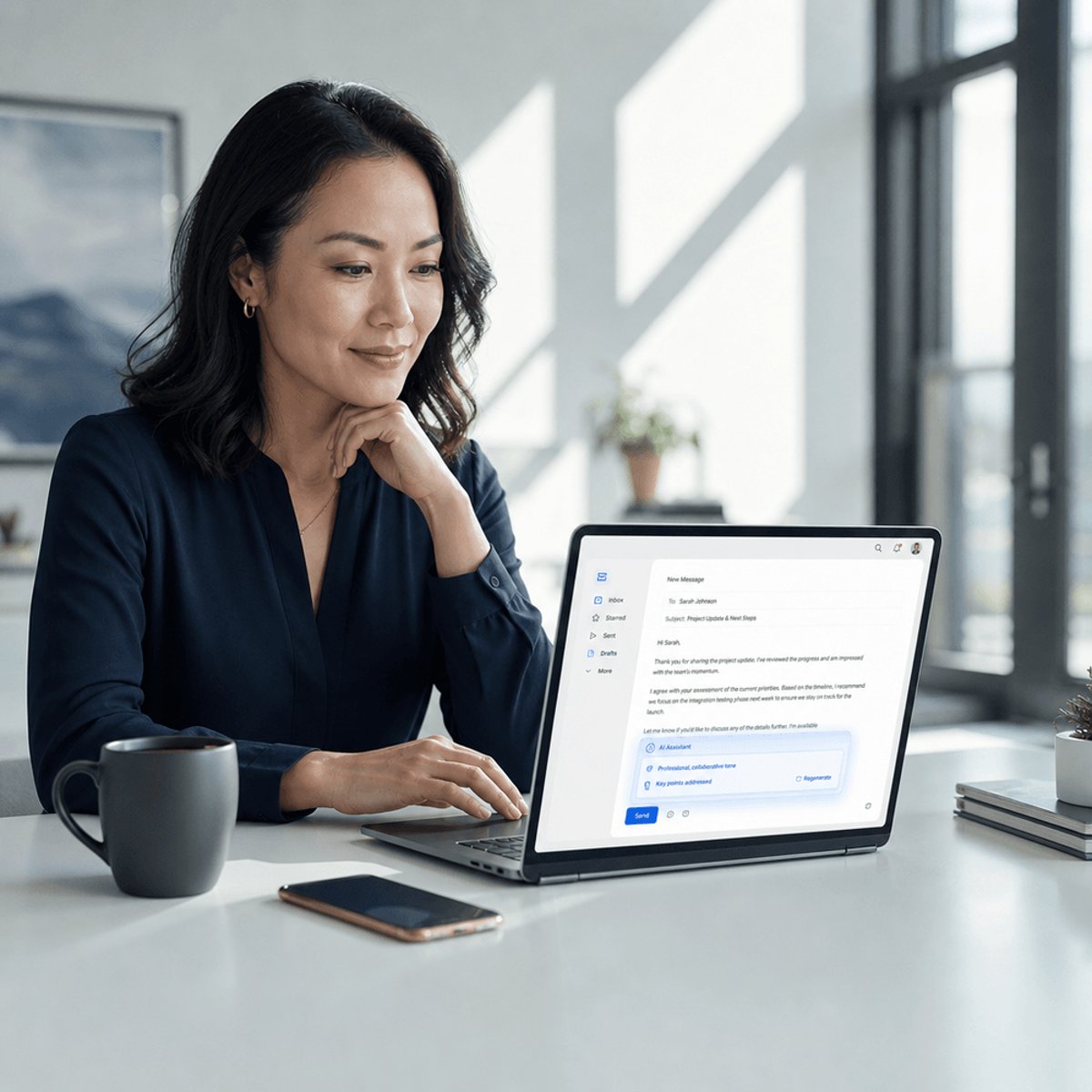
Superhuman just rolled out an AI email drafting feature that actually lives up to the hype. The premium email client's latest update generates responses so polished that TechCrunch reporters found themselves hitting send with little to no editing. It's the kind of practical AI implementation that could finally make automated email replies feel less robotic and more genuinely useful.
Superhuman just changed the game for AI-powered email. The company's new auto-draft feature doesn't just suggest replies - it generates complete responses that actually sound like you wrote them. According to TechCrunch's hands-on testing, the results were convincing enough to use with minimal tweaking, a rarity in the world of AI writing assistants.
The timing couldn't be better. Email remains the backbone of business communication, but it's also one of the biggest time sinks for knowledge workers. While AI email tools have existed for years, they've mostly felt like awkward experiments - too formal, too generic, or just plain wrong. Superhuman's approach appears to have cracked the code by understanding context and tone well enough to draft replies that don't immediately flag themselves as AI-generated.
What sets this apart from earlier attempts at AI email assistance is the execution. We've all seen smart reply suggestions that miss the mark or require so much editing that you might as well start from scratch. The TechCrunch review suggests Superhuman's system actually understands nuance - the difference between a quick acknowledgment and a detailed response, when to match someone's casual tone versus keeping things professional.
This launch comes as Superhuman continues building on its reputation as the premium email client for power users. The company has always positioned itself at the intersection of speed and intelligence, charging $30 per month for features that promise to make email feel effortless. Adding genuinely useful AI drafting capabilities reinforces that value proposition, especially as competitors race to integrate similar technology.
The broader implications stretch beyond one company's feature update. AI writing tools have been improving rapidly, but business communication remained a stubborn challenge. You can't afford to sound off-brand or miss critical context in professional emails. If Superhuman's auto-draft really works as advertised, it validates that AI has reached a threshold where it can handle nuanced, high-stakes writing tasks.
For the productivity software market, this raises the stakes considerably. Email clients from Google to Microsoft have been experimenting with AI-assisted writing, but results have been mixed. Smart Compose in Gmail helps finish sentences, while Outlook offers tone suggestions, but neither generates full replies with the confidence Superhuman apparently delivers. The pressure's now on bigger players to match this capability or risk looking behind the curve.
The technical achievement here shouldn't be understated. Training an AI to draft emails that feel personal requires understanding not just language, but professional norms, relationship dynamics, and individual writing styles. It needs to know when brevity works and when elaboration matters. Getting that right consistently, across different types of correspondence, represents a significant leap in natural language processing applications.
What makes this particularly interesting is the validation from actual usage rather than a controlled demo. TechCrunch's Ivan Mehta tested the feature in real-world scenarios and came away impressed - high praise from a tech journalist who's seen countless AI features overpromise and underdeliver. That kind of third-party verification matters more than any company announcement.
The competitive landscape just got more interesting. As AI capabilities become table stakes for productivity tools, the winners will be whoever makes the technology feel invisible. Users don't want to think about the AI - they just want their work done faster and better. Superhuman seems to understand that the best AI feature is one you barely notice because it just works.
This could also accelerate adoption of premium email clients. At $30 monthly, Superhuman has always been a tough sell for casual users. But if the AI drafting feature genuinely saves hours each week, the ROI calculation changes dramatically. Time saved on email means more time for high-value work, making the subscription cost easier to justify.
Looking ahead, the question isn't whether other email platforms will copy this - they will. The question is how quickly they can match the quality. First-mover advantage in AI features tends to be temporary, but nailing the execution builds user trust and loyalty. If Superhuman can maintain this edge while competitors play catch-up, they've got a serious moat.
Superhuman's auto-draft feature represents a meaningful inflection point for AI in productivity tools. When a skeptical tech reporter admits an AI feature "almost makes me like AI replies," that's not just a product win - it's validation that the technology has matured past gimmick status. The real test will be sustained performance across diverse use cases, but early signs suggest this could be the breakthrough that makes AI email assistance genuinely indispensable. For knowledge workers drowning in inbox overload, that's not just convenient - it's potentially transformative. Watch for competitors to respond quickly, because this just raised the bar for what AI-powered email should deliver.