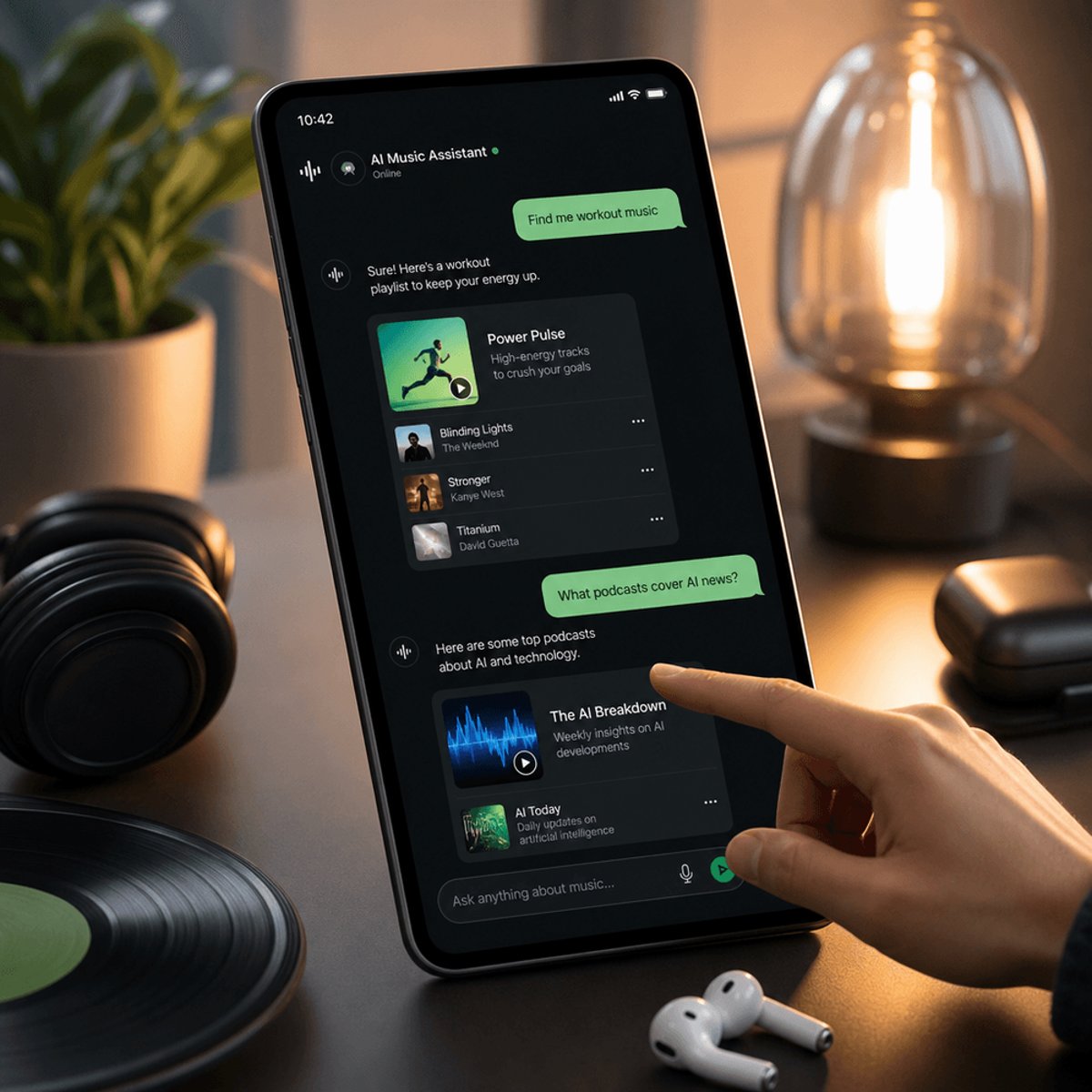
Spotify just made finding your next favorite song feel like chatting with a friend. The streaming giant is rolling out a conversational AI assistant exclusively for Premium subscribers, letting users ask questions and get personalized recommendations for music, podcasts, and audiobooks through natural language. The move positions Spotify squarely in the AI assistant race, bringing ChatGPT-style interactions to audio discovery just as competition heats up in the streaming wars.
Spotify is betting its next growth phase hinges on making discovery feel less like searching and more like conversation. The company's new AI-powered chat feature, launching today for Premium subscribers, lets users type or speak queries like "find me workout music that sounds like 90s hip-hop" or "what podcasts cover AI news" and get instant, personalized responses.
The timing isn't coincidental. Streaming music has become a features arms race, and Spotify has been steadily losing ground to Apple Music in premium subscriber growth. By wall-gardening its most advanced AI capabilities behind the Premium paywall, Spotify's creating a clear value distinction between its free and paid tiers at a moment when subscription growth has plateaued across the industry.
"We've been preparing for this shift in how people interact with audio content," a Spotify spokesperson told TechCrunch. The feature builds on Spotify's existing recommendation engine but adds a conversational layer powered by large language models that can understand context, follow-up questions, and nuanced preferences.
Under the hood, the assistant taps into Spotify's massive catalog of over 100 million tracks, 5 million podcast titles, and hundreds of thousands of audiobooks. But it's not just regurgitating search results. The system considers your listening history, time of day, and even mood indicators from your queries to surface suggestions that feel genuinely personalized.
The feature arrives as generative AI transforms how users expect to interact with apps. OpenAI, Google, and Microsoft have all pushed conversational interfaces into their core products over the past year. Now consumer apps like Spotify are racing to meet those same expectations. Users who've grown accustomed to asking ChatGPT anything are starting to expect every app to understand natural language.
For Spotify, there's a defensive element too. Amazon Music has been quietly testing its own AI discovery tools leveraging Alexa's conversational capabilities, while YouTube Music benefits from Google's AI infrastructure. Spotify's independence - it doesn't have a tech giant's resources backing it - means it has to move faster and smarter to compete.
The implementation reveals some strategic choices. Unlike some AI features that feel tacked on, Spotify's assistant lives directly in the app's search interface, suggesting the company sees it as a fundamental shift in how users will navigate content. The chat history persists across sessions, letting the AI build a deeper understanding of your preferences over time.
Early tests show users asking surprisingly specific questions: "Songs with saxophone solos from the 1980s" or "Podcasts about climate change hosted by scientists under 30 minutes." The system handles these niche queries by understanding multiple constraints simultaneously, something traditional search struggles with.
But Spotify's walking a careful line. The company hasn't disclosed which AI models power the feature or whether it's training on user conversations to improve accuracy. Privacy-conscious users might wonder whether their late-night guilty pleasure queries are feeding someone's training dataset. Spotify's terms indicate the feature processes queries to improve recommendations but stopped short of detailing data retention policies.
The Premium-only rollout also signals a broader strategy shift. Spotify's historically used its free tier as a massive acquisition funnel, then relied on ads and conversion tactics to drive upgrades. Now it's creating exclusive AI-powered experiences that free users simply can't access, betting that FOMO around cutting-edge features will drive more conversions than annoying ads ever did.
Industry analysts see the move as overdue. "Spotify's recommendation algorithm has always been its secret weapon, but the interface has felt stale for years," said one analyst familiar with the company's product strategy. "Conversational AI gives them a way to modernize discovery without alienating existing users."
The feature's also expanding into audiobooks, a category Spotify's aggressively pushed into despite resistance from publishers. Being able to ask "Find me mystery audiobooks narrated by British actors under 10 hours" could give Spotify an edge over Audible, which has been slower to integrate AI discovery tools.
Competitors are already responding. Sources indicate Apple is testing similar conversational features for Apple Music, likely powered by the same AI infrastructure driving improvements to Siri. The difference? Apple can integrate music discovery across its entire ecosystem, from HomePod to CarPlay to Vision Pro.
For now, Spotify's betting that being first to market with a polished conversational music assistant will cement user habits before competitors catch up. The company's not disclosing rollout timelines beyond "starting today," but Premium subscribers in the US appear to be getting access first, with international expansion planned for coming weeks.
Spotify's conversational AI assistant represents more than a feature update - it's a fundamental rethinking of how 600 million users might discover audio content. By making the feature Premium-exclusive, Spotify's gambling that AI-powered discovery is compelling enough to drive subscription growth in a saturated market. The real test comes when Apple, Amazon, and Google roll out their inevitable responses, turning audio discovery into the next front in the AI platform wars. For users, that competition should mean better tools to find exactly what they want to hear. For Spotify, it might mean the difference between leading the next era of streaming or becoming just another also-ran.