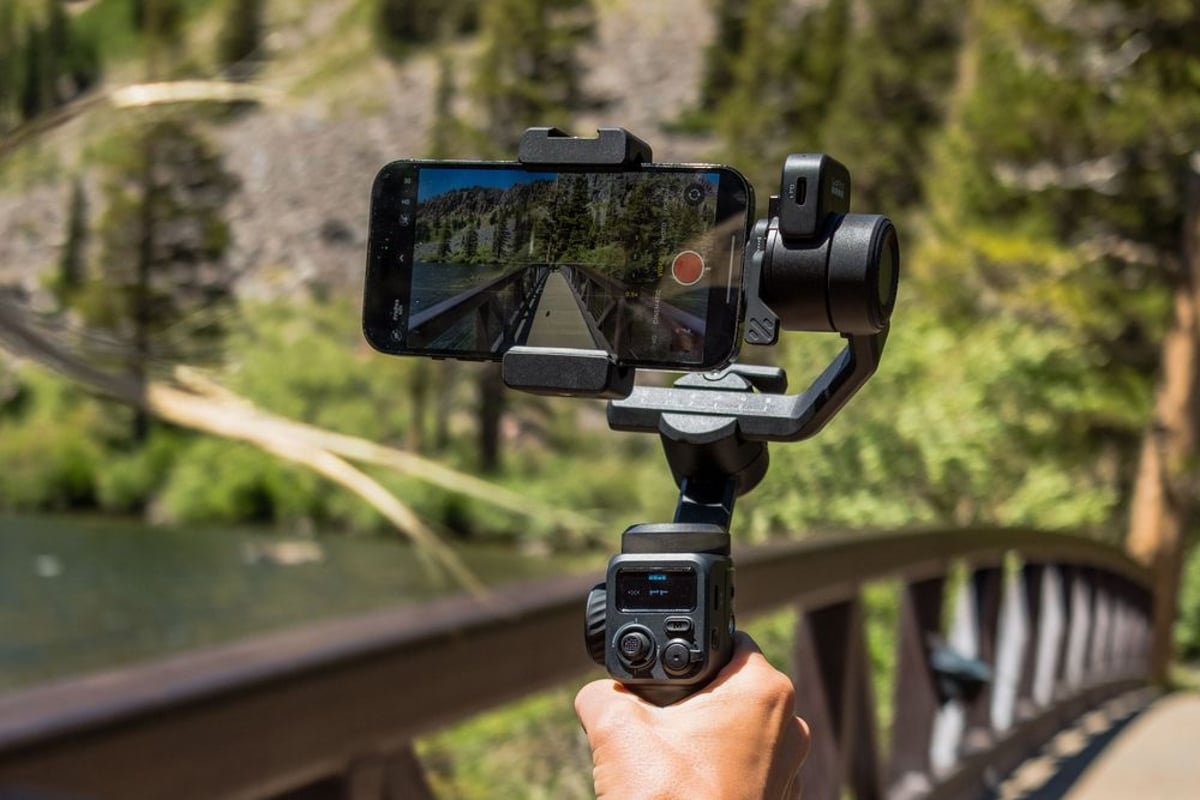
GoPro just broke its own playbook. The company's new Fluid Pro AI gimbal abandons the action camera-only approach that defined its previous Karma Grip, instead targeting the broader smartphone stabilizer market dominated by DJI and Insta360. At $229.99, it's betting that superior battery life and AI tracking can justify a premium price when it launches October 21st.
GoPro is making a play for content creators beyond its traditional action camera base. The company's new Fluid Pro AI gimbal represents a strategic shift from its 2016 Karma Grip, which only worked with GoPro devices. This time, the San Mateo-based company is gunning for the smartphone stabilizer market that DJI and Insta360 have dominated for years.
The timing couldn't be more critical. While GoPro's action camera sales have faced pressure from smartphone cameras and cheaper alternatives, the gimbal market has exploded. Content creators are increasingly demanding professional stabilization for social media, and GoPro wants its piece of that pie.
The Fluid Pro AI's 400-gram payload capacity puts it in direct competition with DJI's Osmo Mobile 7 Pro ($149) and Insta360's Flow 2 Pro ($159.99). But GoPro is betting on differentiation through battery life and build quality rather than undercutting on price.
"The $229.99 price point is aggressive for a company re-entering this space," according to market analysis from TechCrunch. GoPro is essentially asking consumers to pay a 50% premium over established alternatives, which suggests confidence in its feature set.
The standout specification is battery longevity. GoPro claims 18 hours of operation with tracking disabled, nearly doubling the 10-hour capacity of both DJI and Insta360 competitors. Even with AI tracking and the built-in LED fill light active, it maintains 6 hours of use - matching what rivals offer without those power-hungry features.
The AI tracking system mirrors what DJI and Insta360 have perfected: gesture recognition for remote control and automatic subject tracking via facial and body recognition. GoPro's mobile app provides manual tracking selection plus tools for panoramic shots and time-lapses, essentially matching the feature parity users expect.
Technical specs show 360-degree panning and 320-degree tilt range, which puts it in line with industry standards. The swappable mounting system with clamping mechanisms accommodates various smartphone sizes, while the integrated LED fill light addresses a common pain point for content creators shooting in low light conditions.
What's notable is what GoPro chose to omit. Unlike some competitors, the Fluid Pro AI lacks telescoping arms or pop-out tripod legs. Instead, the company prioritized battery capacity, suggesting they believe runtime trumps convenience features for their target market.
The release timing is strategic. October 21st puts the Fluid Pro AI on shelves ahead of the holiday shopping season, when content creation gear traditionally sees strong sales. It also gives GoPro a fresh product to promote alongside its Hero13 Black camera ecosystem.
For GoPro, this launch represents more than just product diversification. It's a test of whether the brand can successfully compete beyond its action camera comfort zone. The company's reputation for durability and build quality could resonate with creators tired of flimsy smartphone gimbals, but only if the AI tracking and battery life claims hold up in real-world use.
The broader question is whether there's room for a third major player in smartphone gimbals. DJI's ecosystem integration and Insta360's innovation track record have created strong user loyalty. GoPro will need to prove its premium pricing delivers correspondingly premium performance.
GoPro's entry into the smartphone gimbal market with the Fluid Pro AI represents a calculated risk. The company is betting that premium battery life and build quality can command a 50% price premium over established players. Success will depend on execution - if the AI tracking performs as promised and the 18-hour battery life holds up, GoPro could carve out a profitable niche among serious content creators. But if it stumbles on core features, the premium pricing will quickly become a liability in a market where DJI and Insta360 have already proven their capabilities.