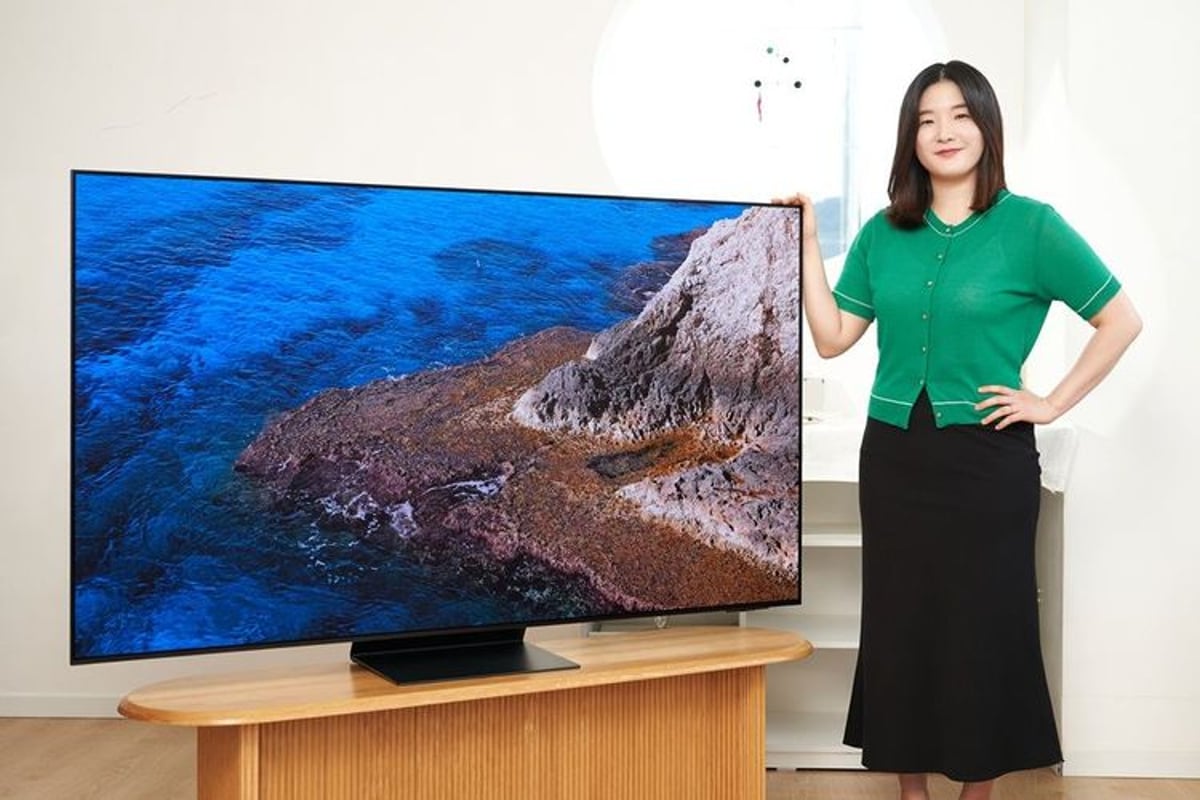
Samsung just pulled back the curtain on its biggest display breakthrough yet. The company's 2025 OLED lineup introduces AI-powered gamma adjustment that adapts in real-time to room lighting, plus a new anti-glare coating that cuts reflections by 25%. For gamers, there's an industry-first 165Hz refresh rate that pushes OLED's already lightning-fast response times into uncharted territory.
Samsung is making a bold play for the premium TV market with technology that solves OLED's biggest weakness. The Korean giant's 2025 OLED lineup tackles the age-old problem of screen reflections with a specially engineered low-reflection layer that disperses external light without compromising picture quality.
"This year's enhanced Glare-Free technology significantly lowers reflection rates and minimizes screen distortion, ultimately enabling the set to deliver outstanding picture quality in both bright and dark environments," Mirae Shin from Samsung's Picture Quality Lab told Samsung Newsroom. The improvement isn't just marketing speak - UL Solutions verified the technology meets strict Unified Glare Rating standards.
But Samsung didn't stop at hardware. The company's software engineers developed AI algorithms that analyze each scene's average brightness in real-time, then automatically adjust gamma values based on surrounding lighting conditions. It's like having a professional calibrator tweaking your TV constantly.
"For example, when watching dark content in a bright living room, the gamma value is adjusted so that shadowed areas on screen are brightened just enough to preserve detail," Shin explained. "Conversely, when watching bright content in a dark room, the gamma value is adjusted to minimize glare in bright on-screen areas and enhance contrast."
The timing couldn't be better. With LG and Sony pushing their own OLED innovations, Samsung needed something to differentiate its premium displays. The company found it in gaming performance - these new OLEDs support an industry-first 165Hz refresh rate that transforms how fast-paced games feel.
Gamers have been Samsung's secret weapon in the TV wars. While cinema purists debate color accuracy, gamers want responsiveness and clarity in bright rooms where most gaming actually happens. "Glare-Free technology allows dark scenes in games to be enjoyed in crisp detail, even in bright environments," Shin noted. "By combining those with a 165Hz refresh rate, we've unlocked the full potential of OLED panels."
The technical specs tell the competitive story. Samsung's 2025 panels are 30% brighter than previous generations, addressing OLED's traditional weakness against bright LCD competitors. Each pixel can still achieve perfect blacks through individual dimming, but now bright scenes pop with HDR content that rivals the best mini-LED displays.
What makes this launch particularly significant is Samsung's positioning against Apple's rumored TV ambitions and Google's growing presence in the living room through Nest Hub Max devices. Samsung is betting that superior display technology, not just streaming features, will keep it ahead of tech giants moving into its territory.
The AI gamma adjustment represents a broader trend in consumer electronics toward adaptive technology. Just as smartphones automatically adjust screen brightness, these TVs continuously optimize picture settings without user intervention. It's the kind of seamless experience that premium buyers expect but rarely get from traditional TV manufacturers.
Industry analysts see Samsung's OLED push as crucial for maintaining leadership against Chinese manufacturers like TCL and Hisense that are rapidly improving display quality while undercutting prices. Premium features like AI gamma adjustment and verified anti-glare performance give Samsung room to command higher margins.
For content creators and filmmakers, the improved gamma handling means their work appears as intended across different viewing environments. "The brighter the TV display, the more accurately it can convey a filmmaker or content creator's original intent," Shin emphasized, highlighting Samsung's focus on professional-grade color accuracy.
The 165Hz refresh rate isn't just about gaming bragging rights. It enables smoother motion handling for sports content and reduces judder in 24fps films when combined with Samsung's motion processing algorithms. It's future-proofing for content that doesn't exist yet but might soon.
Samsung's 2025 OLED lineup represents more than incremental improvements - it's a strategic bet on AI-driven display technology that adapts to real-world viewing conditions. With verified anti-glare performance, industry-leading refresh rates, and intelligent gamma adjustment, Samsung is positioning these TVs as the premium choice for both entertainment enthusiasts and serious gamers. The question isn't whether these innovations work, but whether consumers will pay premium prices for adaptive display technology they might not even notice.