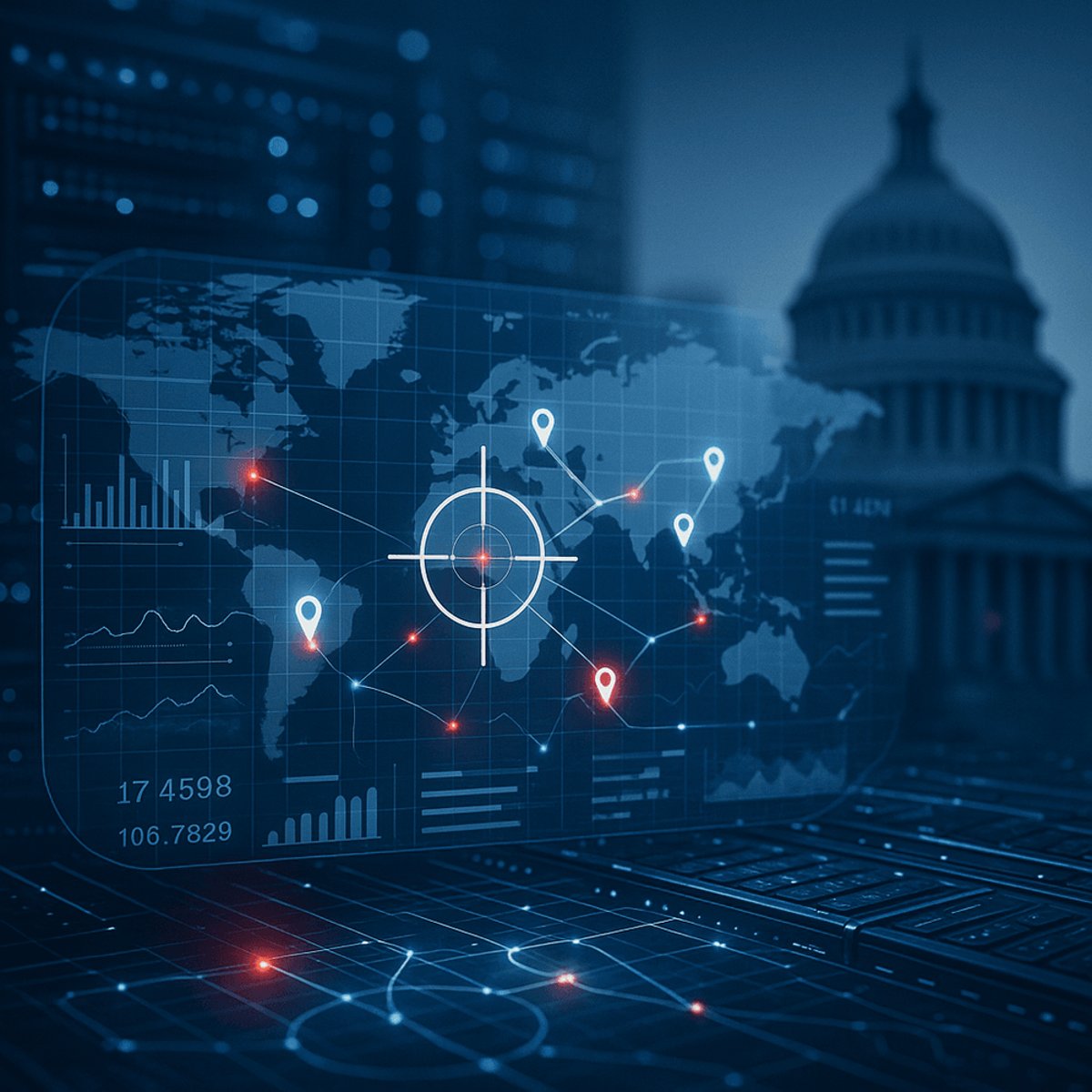
US Immigration and Customs Enforcement is shopping for commercial ad tech and big data tools to power its investigations, according to a request for information posted Friday in the Federal Register. The filing marks the first time ICE has explicitly referenced "ad tech" in federal procurement documents, signaling how tools built for digital advertising are crossing into law enforcement surveillance. It comes as privacy advocates sound alarms over government agencies buying location data that would otherwise require warrants.
Federal immigration enforcement just sent a clear signal to the ad tech industry: your surveillance tools are exactly what we need. ICE's Friday filing in the Federal Register doesn't mince words - the agency wants to know what "commercial Big Data and Ad Tech" products can "directly support investigations activities."
The timing is striking. As ICE faces scrutiny over enforcement tactics following a fatal shooting in Minneapolis, the agency is quietly expanding its technological arsenal. The request marks a watershed moment - it's the first time the term "ad tech" has surfaced in any ICE procurement document, contract solicitation, or justification in the Federal Register, according to searches by Wired.
What ICE is really asking for becomes clearer when you look at what it already uses. The agency says it's "working with increasing volumes of criminal, civil, and regulatory, administrative documentation from numerous internal and external sources." Translation: ICE is drowning in data and needs better tools to make sense of it all.
The filing specifically mentions "Ad Tech compliant and location data services available to federal investigative and operational entities." But here's where it gets vague - ICE doesn't spell out which regulations or privacy standards would apply, nor does it name specific vendors it's eyeing. The lack of detail is telling. It suggests ICE is casting a wide net, surveying what's available before committing to specific technologies.
ICE already has a robust surveillance infrastructure built on commercial tools. The agency maintains a contract with Palantir for its Gotham investigative platform, customized for ICE as the "Investigative Case Management" system. Within that ecosystem lives FALCON, a tool that lets agents "store, search, analyze, and visualize volumes of existing information" about investigations, according to Department of Homeland Security privacy assessments.
Then there's the location data pipeline. ICE has purchased access to Webloc, sold by Penlink, which hoovers up information about mobile phones in specific geographic areas during particular time windows. Users can filter results by how location was gathered - GPS, WiFi, or IP address - and by Apple and Android advertising identifiers, 404 Media reported. It's essentially dragnet surveillance packaged as an off-the-shelf product.
ICE has also been a customer of Venntel, a data broker owned by Gravy Analytics that collects and sells consumer location data. In a Federal Registry entry last year, ICE's Enforcement and Removal Operations division said it used Venntel's software "to access/gain information to accurately identify digital devices."
But Venntel's story illustrates the regulatory minefield ICE is navigating. The Federal Trade Commission alleged in 2024 that Venntel sold sensitive consumer location data without proper consent for commercial and government purposes. The FTC ultimately barred Gravy Analytics and Venntel from selling, disclosing, or using sensitive location data except in limited national security or law enforcement circumstances. Gravy Analytics didn't admit or deny the allegations.
That enforcement action hasn't stopped ICE from exploring the market. The latest filing suggests the agency is looking for alternatives or expansions to its current toolkit. The request mentions seeking products "comparable to large providers of investigative data and legal/risk analytics" - corporate-speak for wanting enterprise-grade surveillance capabilities.
Privacy advocates have long warned about this exact scenario. Tools developed to serve ads based on browsing habits or location patterns were never designed with civil liberties safeguards. When those same tools get repurposed for law enforcement, the privacy implications multiply. A warrant is typically required for law enforcement to track someone's location via their phone carrier. But buying that same data from a commercial broker? That's been a legal gray area that agencies have exploited.
The filing arrives during a tense moment for ICE. On Saturday morning in Minneapolis, a CBP officer shot and killed 37-year-old Alex Pretti during a joint ICE-CBP enforcement operation. Pretti may have been filming officers prior to the shooting. The incident has sparked protests against immigration enforcement tactics, putting additional pressure on federal agencies to justify their methods and tools.
Neither ICE nor the Department of Homeland Security responded to requests for comment from Wired about the procurement filing or what specific capabilities the agency is seeking.
What's notable is the breadth of what ICE is fishing for. The agency isn't just looking at location tracking - it wants "Big Data" tools that can connect disparate data sources, identify patterns, and support investigations at scale. That could mean anything from social network analysis to predictive analytics to real-time monitoring systems.
The commercial surveillance industry has matured rapidly over the past decade. Data brokers now aggregate information from thousands of sources - apps, websites, connected devices, public records. For advertisers, that data powers targeted marketing. For law enforcement, it offers investigative shortcuts that bypass traditional warrant requirements.
ICE's request for information signals that the convergence of commercial surveillance and law enforcement is accelerating, not slowing down. As the FTC cracks down on some data brokers, agencies are surveying the market for compliant alternatives. The filing raises fundamental questions about whether tools designed to sell sneakers should be repurposed to track people - and whether existing privacy laws can keep pace with how quickly that technology is evolving. What happens next depends on whether Congress acts to close the commercial data loophole before it becomes the standard playbook for federal investigations.