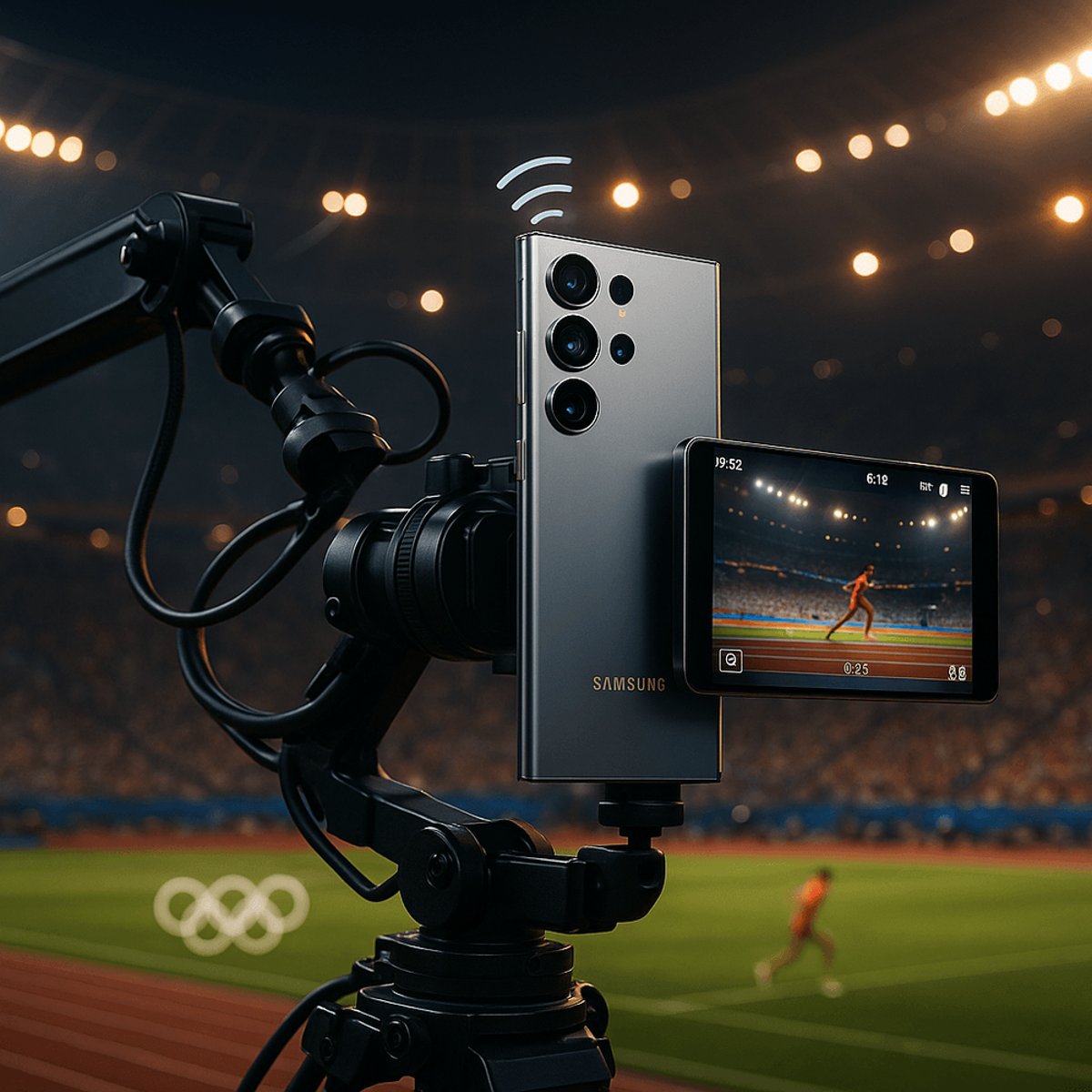
Samsung is turning its Galaxy S25 Ultra smartphones into live broadcast cameras for the Milano Cortina 2026 Olympic Winter Games Opening Ceremony on Feb. 6. Working with Olympic Broadcasting Services, the company's installing Galaxy devices on jibs, stadium stands, and athlete tunnels to capture angles traditional cameras can't reach - wirelessly streaming footage to over 75,000 spectators and millions watching globally. It's a bold experiment in how consumer tech can reshape professional broadcasting.
Samsung is gambling that smartphone cameras are ready for prime-time Olympic broadcasting. The company just detailed how it's weaving Galaxy S25 Ultra devices directly into the Opening Ceremony production workflow for Milano Cortina 2026, set to kick off Feb. 6 inside San Siro Stadium.
The deployment marks a shift from sponsor activation to technical integration. Galaxy S25 Ultra smartphones will be mounted on jibs above the field, positioned in stadium stands, and installed in athlete entrance tunnels - locations where traditional broadcast rigs can't easily go. The phones stream footage wirelessly via 5G, feeding directly into the live broadcast environment managed by Olympic Broadcasting Services without disrupting existing camera workflows.
"The Opening Ceremony embodies that spirit, and through our partnership with Samsung, we can capture dynamic perspectives that complement our core broadcast coverage," Yiannis Exarchos, CEO of OBS, told Samsung Newsroom. The setup will broadcast to over 75,000 spectators in the stadium and millions watching globally as 3,500 athletes from over 90 countries enter the arena.
But the Opening Ceremony is just the visible piece. Samsung's real test comes from the Games' geography. Milano Cortina 2026 is the most geographically spread-out Winter Olympics in history, with venues scattered across northern Italy. That's where on-device AI gets practical.
Volunteers across Olympic venues will carry Galaxy devices loaded with Interpreter, Samsung's AI-powered translation tool. The feature processes translations directly on the device rather than relying on cloud connectivity - critical when you're dealing with spotty network coverage across mountain venues. According to Samsung's announcement, this lets volunteers communicate naturally with athletes, officials, and visitors across language barriers without latency issues.
"Samsung's innovation is fundamental in bridging the distances between our venues, transforming the vast territory of Milano Cortina 2026 into a single, unified arena," Andrea Varnier, CEO of Milano Cortina 2026, said in a statement. The organizarion is treating technology not as a nice-to-have but as essential infrastructure for making dispersed venues feel connected.
Samsung's also deploying monitors across Short-Track Speed Skating disciplines for officiating and competition monitoring, though the company offered few technical details. Galaxy Charging Stations will be scattered throughout stadiums to keep spectator devices powered during long competition days.
The centerpiece of Samsung's ground presence is Samsung House, opening Feb. 4 in Milan's historic Palazzo Serbelloni. The invitation-only space will run through Feb. 22 during the Olympic Games, then reopen March 6-15 for the Paralympics. Inside, Samsung's hosting National Olympic Committee nights, live competition viewings, and displays of its Victory Profile portrait series. Michelin-starred Italian chef Enrico Bartolini is curating hospitality moments, adding local flavor to the tech showcase.
Samsung's been a Worldwide Olympic Partner since Nagano 1998, marking nearly 28 years of Olympic sponsorship. The partnership extends through Los Angeles 2028, covering wireless communications and computing equipment categories - now explicitly including devices with AI, VR, AR, and 5G capabilities.
The Milano Cortina deployment reveals how Samsung's positioning Galaxy AI as infrastructure rather than consumer features. On-device processing becomes critical when you can't rely on consistent connectivity. Smartphone cameras become broadcast tools when portability matters more than dedicated rigs. And translation features become essential when language barriers impact operations across dispersed locations.
Whether smartphone cameras can truly match broadcast quality under Olympic scrutiny remains to be seen. The Opening Ceremony will be the proof point - either validating Samsung's bet that mobile innovation can reshape professional broadcasting, or exposing the limits of consumer tech in high-stakes production environments.
Samsung's Milano Cortina deployment is less about Olympic sponsorship spectacle and more about stress-testing Galaxy AI and mobile cameras in high-stakes professional environments. If Galaxy S25 Ultra cameras can deliver broadcast-quality footage wirelessly from Olympic venues, it validates Samsung's push to position smartphones as serious production tools. If on-device AI translation works reliably across Italy's dispersed mountain venues, it proves the infrastructure value of local processing over cloud dependence. The Opening Ceremony on Feb. 6 will show whether consumer tech is ready to power the world's biggest sporting event - or if there's still a gap between marketing promises and professional demands.