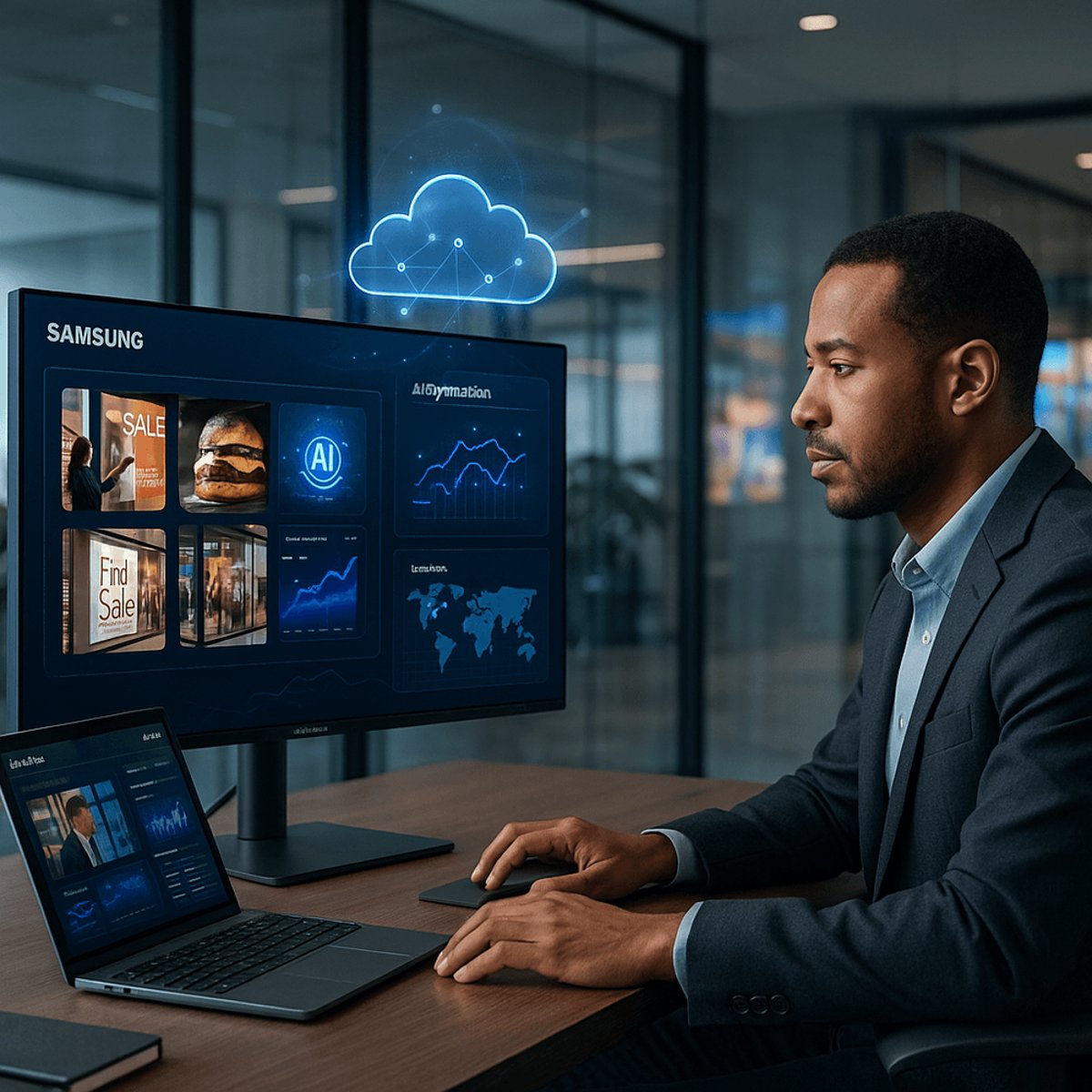
Samsung just rolled out AI Studio, an AI-powered content creation tool integrated into its VXT cloud platform, aimed at simplifying how businesses manage digital signage across multiple locations. The launch comes as the company maintains its 17-year streak as the world's number one commercial display provider, according to Omdia's Q3 2025 Public Display Report. The new AI features automatically optimize content for Samsung's Spatial Signage displays, making visuals feel more dimensional and immersive—a move that positions Samsung deeper into the enterprise SaaS market just as businesses scramble to manage increasingly complex digital signage networks.
Samsung is making a significant push into AI-powered enterprise software with the launch of AI Studio, a new feature embedded in its Samsung VXT cloud platform that promises to simplify how businesses create and manage digital signage content across multiple locations. The announcement positions the electronics giant squarely in the enterprise SaaS market, leveraging its hardware dominance to build a software ecosystem that keeps customers locked into its commercial display infrastructure.
The timing couldn't be more strategic. Digital signage has evolved from simple promotional screens to complex, multi-location networks that demand sophisticated content management. Businesses now juggle hundreds or thousands of displays across retail stores, hotels, corporate offices, and public spaces. Samsung VXT aims to solve that headache by centralizing content creation, scheduling, and device management into a single cloud-based platform accessible from desktop and mobile devices.
What sets AI Studio apart is its integration with Samsung's Spatial Signage hardware. The AI automatically optimizes content to enhance depth and spatial presence, making visuals appear more dimensional and immersive without requiring manual adjustments from marketing teams. For store managers and IT administrators who aren't design experts, this automation could be a game-changer. According to Samsung's official announcement, the platform is specifically designed for marketing managers, store managers, and IT managers who need easier ways to create, update, and manage signage at scale.
But Samsung isn't stopping at retail. The company's LYNK Cloud platform targets the hospitality sector, helping hotel IT managers control in-room TVs, on-screen services, and guest-facing content from a centralized dashboard. The platform also collects data on how guests interact with in-room TV services, giving hotels insight into viewing patterns that could unlock new revenue streams or improve service offerings. It's a smart play in an industry that's increasingly data-driven and looking for ways to personalize guest experiences while cutting operational costs.
Samsung has held the title of world's number one commercial display provider for 17 consecutive years, according to Omdia's Q3 2025 Public Display Report. That hardware dominance gives the company a massive installed base to upsell software subscriptions to, and AI Studio represents the latest effort to monetize that customer relationship beyond the initial hardware sale. As enterprise customers increasingly demand cloud-based management tools, Samsung's software ambitions look less like a side project and more like a critical revenue stream.
The platform's architecture mirrors what we've seen from other enterprise SaaS players—centralized management, mobile accessibility, and AI-powered automation that reduces the need for specialized skills. Samsung VXT combines content creation and management with remote device control, eliminating the need for businesses to cobble together multiple tools from different vendors. The all-in-one approach appeals to IT departments tired of managing fragmented software stacks.
AI Studio will roll out globally in the first half of 2026, though Samsung warns that the feature may incur additional costs depending on usage. That pricing model suggests Samsung is treating AI Studio as a premium add-on rather than a standard feature, which could limit adoption among cost-conscious small and medium-sized businesses. VXT itself is sold separately from Samsung's display hardware, and feature availability varies by region—a common friction point for global enterprises that want consistent capabilities across all their locations.
The competitive landscape is heating up. LG, Sony, and a wave of specialized digital signage software providers are all racing to offer similar cloud-based management platforms with AI features. Samsung's hardware leadership gives it an edge, but software is a different game that rewards agility and rapid feature development. The company will need to prove that AI Studio delivers measurable ROI through faster content creation, reduced IT overhead, or increased engagement metrics that translate to higher sales.
For businesses already invested in Samsung's commercial display ecosystem, AI Studio and VXT represent a natural next step—assuming the pricing is reasonable and the AI features actually save time. For those evaluating new digital signage deployments, Samsung's integrated hardware-software approach could simplify vendor management but also creates potential lock-in that might complicate future migrations.
The broader trend here is clear: hardware manufacturers are becoming software companies, and cloud platforms are becoming the glue that keeps customers attached long after the initial display purchase. Samsung's 17-year hardware reign won't mean much if competitors build better software ecosystems that work across any brand of display.
Samsung's AI Studio launch signals a clear strategic shift from hardware sales to recurring software revenue in the commercial display market. For enterprise customers, the promise of AI-powered content creation and centralized cloud management could simplify operations and reduce costs—but only if Samsung's pricing model and feature rollout match the hype. The real test will come when businesses compare AI Studio's capabilities against standalone digital signage software that works across multiple hardware brands. Samsung's betting that its installed base and hardware dominance will keep customers in its ecosystem, but in the cloud software game, loyalty is only as strong as the last feature update.