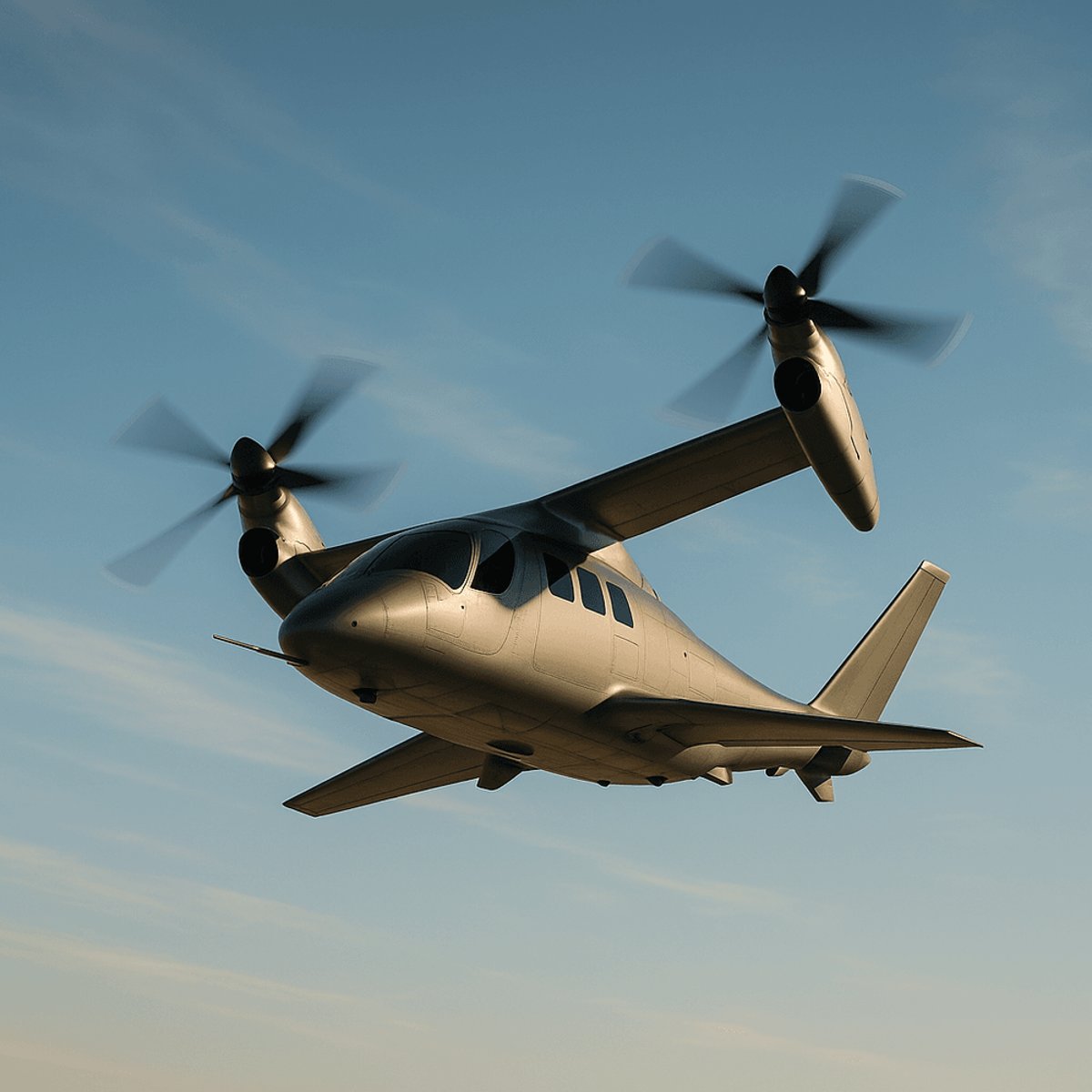
Joby Aviation just completed its first test flight of a hybrid military aircraft developed with defense contractor L3Harris, marking a pivotal moment in the race to deploy autonomous technology for defense applications. The successful November 7 flight at Joby's Marina, California facility demonstrates how eVTOL companies are rapidly pivoting from commercial air taxis to military contracts worth billions.
Joby Aviation just proved that the future of military aviation isn't just about bigger jets - it's about smarter ones. The company's hybrid defense aircraft completed its maiden test flight on November 7, three months after partnering with government contractor L3Harris on what could become a game-changing military asset.
The flight at Joby's Marina, California facility wasn't just another test - it's validation of how quickly defense contractors can pivot from concept to reality. "The flight showcases Joby's ability to quickly move from concept to demonstration to meet growing military needs," Chairman Paul Sciarra told CNBC following the announcement.
This isn't happening in a vacuum. The Trump administration has been aggressively investing in autonomous and AI-powered defense technology, including plans for a massive $175 billion "Golden Dome" missile defense system. The timing couldn't be better for companies like Joby that can bridge commercial innovation with military applications.
"The defense landscape is really changing," Sciarra observed, pointing to conflicts like the Russia-Ukraine war "where commercial technologies are being rapidly deployed." That rapid deployment mindset is exactly what's driving this partnership between a Silicon Valley aviation startup and a traditional defense giant.
Joby's pivot to defense makes strategic sense. While the company races toward FAA certification for its commercial eVTOL air taxis, military contracts offer immediate revenue opportunities without the regulatory hurdles that plague civilian aviation. The company's stock has already doubled this year, riding the wave of eVTOL optimism sparked by President Trump's June executive order creating an eVTOL pilot program.
The broader eVTOL market is heating up fast. Archer Aviation, tapped as the official air taxi provider for the 2028 Los Angeles Olympics, has seen its stock surge 86% over the past year. Meanwhile, Amazon-backed Beta Technologies made its NYSE debut earlier this month, signaling institutional confidence in the sector.
But Joby's military approach offers something different. The hybrid aircraft developed with L3Harris can operate both autonomously and with human pilots, providing flexibility that pure autonomous systems can't match. This dual-mode capability could prove crucial as military leaders balance the efficiency of AI with the strategic thinking of human operators.
Sciarra hinted that the military technology could eventually benefit commercial customers too. "We think there is great opportunity for a hybrid version of this aircraft in the commercial context that can compete with single aisle regional transport today," he said. That cross-pollination between defense and commercial applications has historically driven some of aviation's biggest breakthroughs.
The company isn't just betting on the U.S. market either. Joby recently signed agreements to bring its air taxis to Saudi Arabia and is working with the United Arab Emirates, positioning itself as a global player in the emerging eVTOL landscape. These international partnerships provide additional testing grounds and revenue streams as the company scales.
What's particularly striking is the speed of execution. From announcing the L3Harris partnership in August to completing the first test flight in November represents just three months - lightning fast by traditional defense contractor standards. This agility could become Joby's competitive advantage as military customers increasingly demand rapid innovation cycles.
The next milestone comes in 2026 when government agencies and departments will start testing these vehicles in real-world scenarios. Success in those trials could unlock significant defense contracts and validate Joby's strategy of building dual-use technology that serves both military and commercial markets.
Joby's successful military aircraft test represents more than just another milestone - it signals how the eVTOL industry is maturing beyond consumer applications into serious defense contracts. With government testing set for 2026 and the potential for commercial spin-offs, Joby has positioned itself at the intersection of three major trends: autonomous military technology, commercial aviation innovation, and the Trump administration's aggressive defense spending. The company's ability to move from concept to flight in just three months suggests this is only the beginning of a much larger transformation in how we think about both military and civilian aviation.