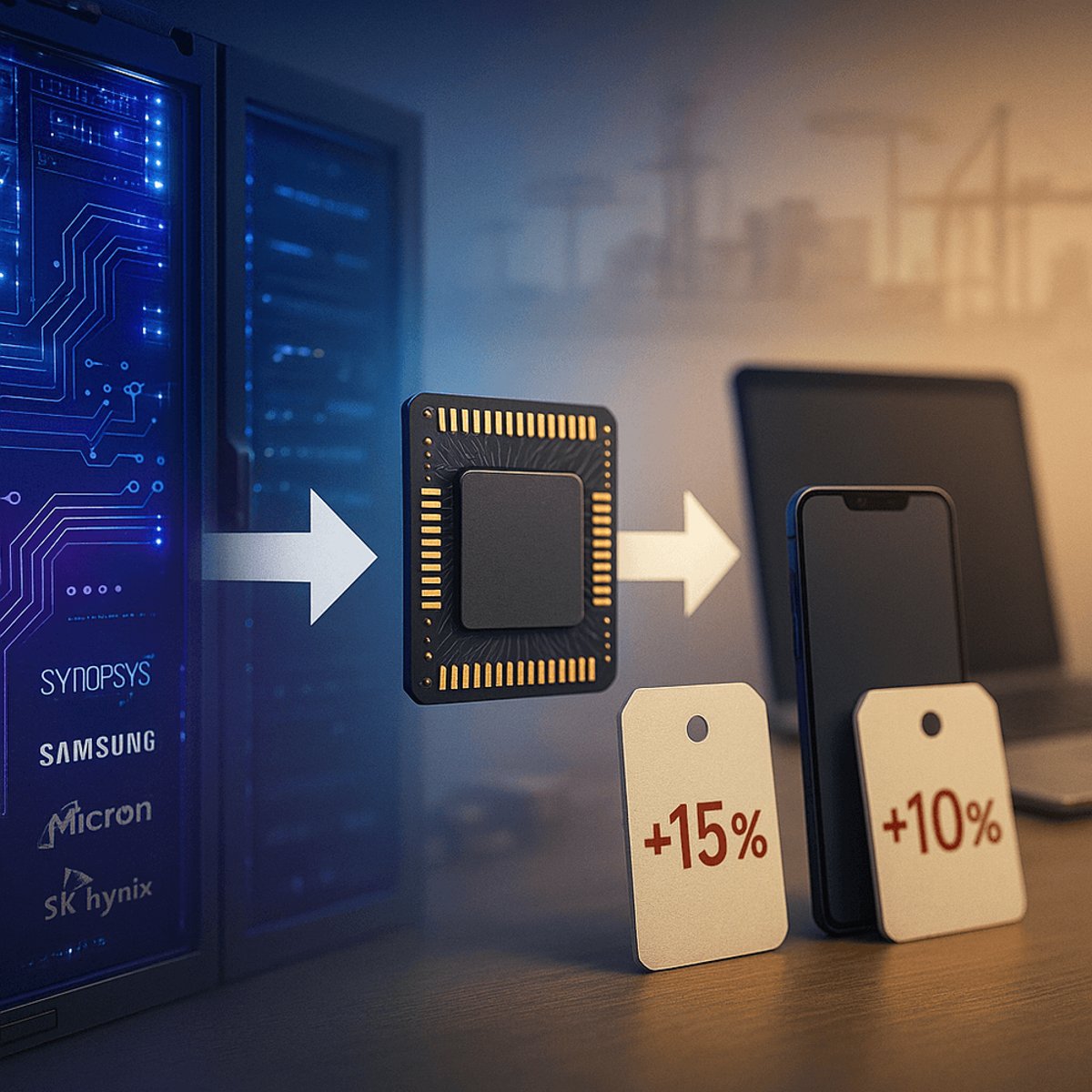
The AI infrastructure gold rush just triggered a memory chip crisis that won't end anytime soon. Synopsys CEO Sassine Ghazi told CNBC the shortage will stretch through 2027, with prices already climbing as hyperscalers gobble up supply for data centers. The crunch is hitting everything from smartphones to laptops, and consumer electronics companies are warning that price hikes are coming. With memory manufacturers needing at least two years to bring new capacity online, the semiconductor industry is facing what analysts are calling a "super cycle" - and everyday devices are about to get more expensive.
The AI boom just created a memory problem that's about to hit your wallet. Synopsys CEO Sassine Ghazi dropped a warning last week that should concern anyone planning to buy a smartphone or laptop soon - the memory chip shortage gripping the industry won't ease until 2027, and prices are climbing right now.
"Most of the memory from the top players is going directly to AI infrastructure, but many other products need memory, so those other markets are starved today because there is no capacity left for them," Ghazi told CNBC in an interview. The semiconductor design tool company sits at the center of chip development, giving Ghazi a clear view of the supply crunch unfolding across the industry.
The math is brutal. Tech giants are pouring tens of billions into AI data centers, and those facilities need high-bandwidth memory chips to power the servers running large language models. Samsung, SK Hynix, and Micron - the three biggest memory manufacturers - are directing virtually all their output to AI infrastructure. That leaves smartphone makers, PC manufacturers, and other electronics companies fighting over scraps.
Memory chip prices have historically cycled between shortage and glut, but this time feels different. Industry analysts are calling it a "super cycle," and Ghazi agrees. "Now it's a golden time for the memory companies," he said. The shortage isn't just theoretical - it's already pushing prices up across the supply chain.
Lenovo, the world's largest PC maker, is watching the situation closely. CFO Winston Cheng told CNBC last week that "we will see memory prices going up," noting the fundamental imbalance between high demand and constrained supply. His assessment: Lenovo is "very confident that the cycle would be such that we could pass on the cost" to consumers.
The price hikes are already happening, according to Ghazi, contradicting earlier industry predictions that increases wouldn't hit until later in 2026. Chinese smartphone giant Xiaomi warned last year that mobile phone prices would rise in 2026, but the timeline is accelerating faster than expected.
Why can't manufacturers just make more chips? Because adding memory production capacity is painfully slow. Ghazi said it takes a "minimum" of two years from the decision to expand manufacturing until new capacity actually comes online. That two-year lag explains why the shortage will persist through 2027 even as companies race to build new fabs.
Lenovo is better positioned than most to weather the storm. Cheng pointed to the company's "diversified" global supply chain with 30 manufacturing plants worldwide as a buffer against supply shocks. But even Lenovo can't escape the fundamental supply-demand imbalance reshaping the industry.
The shortage is creating clear winners and losers. AI infrastructure gets first priority on memory supply, while consumer electronics companies scramble for what's left. Cheng noted that the consumer device segment is "also hurting a little bit in terms of price demand," acknowledging that price increases will "start hitting the lower end" of the electronics market first.
There's a silver lining for PC makers - the Windows 11 upgrade cycle is still playing out, four years after Microsoft released the operating system in 2021. "I think that replacement cycle is very real," Cheng said, suggesting PC demand will remain strong even as prices rise. But budget-conscious consumers looking at entry-level laptops or smartphones should expect sticker shock.
The memory shortage reveals a fundamental tension in the tech industry's AI-first strategy. Every dollar spent on AI data centers creates ripple effects across the semiconductor supply chain, and right now those ripples are turning into waves. High-bandwidth memory has become the bottleneck constraining both AI development and consumer electronics production.
Samsung, SK Hynix, and Micron are the gatekeepers of this constrained supply, and they're prioritizing the customers willing to pay premium prices for AI infrastructure. That makes business sense for the memory manufacturers - data center operators will pay top dollar and order in massive volume. But it leaves consumer electronics makers in a tough spot, unable to secure enough supply at reasonable prices.
The situation also highlights how quickly AI demand has overwhelmed semiconductor supply chains. Just two years ago, the industry was worried about memory oversupply and falling prices. Now it's a seller's market, with memory companies enjoying what Ghazi called "a golden time" of pricing power and sold-out production capacity.
For consumers, the message is clear: if you're thinking about upgrading your phone or laptop, the price probably won't be better next year. The memory shortage is real, it's already pushing prices up, and it's not going away until 2027 at the earliest.
The memory chip shortage is about to get personal for consumers. What started as an AI infrastructure land grab is now a supply crisis that will stretch through 2027 and push up prices on everything from budget smartphones to high-end laptops. With memory manufacturers maxing out capacity and new production at least two years away, the semiconductor industry is entering uncharted territory. The winners are clear - Samsung, SK Hynix, and Micron are enjoying unprecedented pricing power. The losers? Anyone shopping for affordable electronics over the next two years. The AI revolution has a price tag, and consumers are about to start paying it.