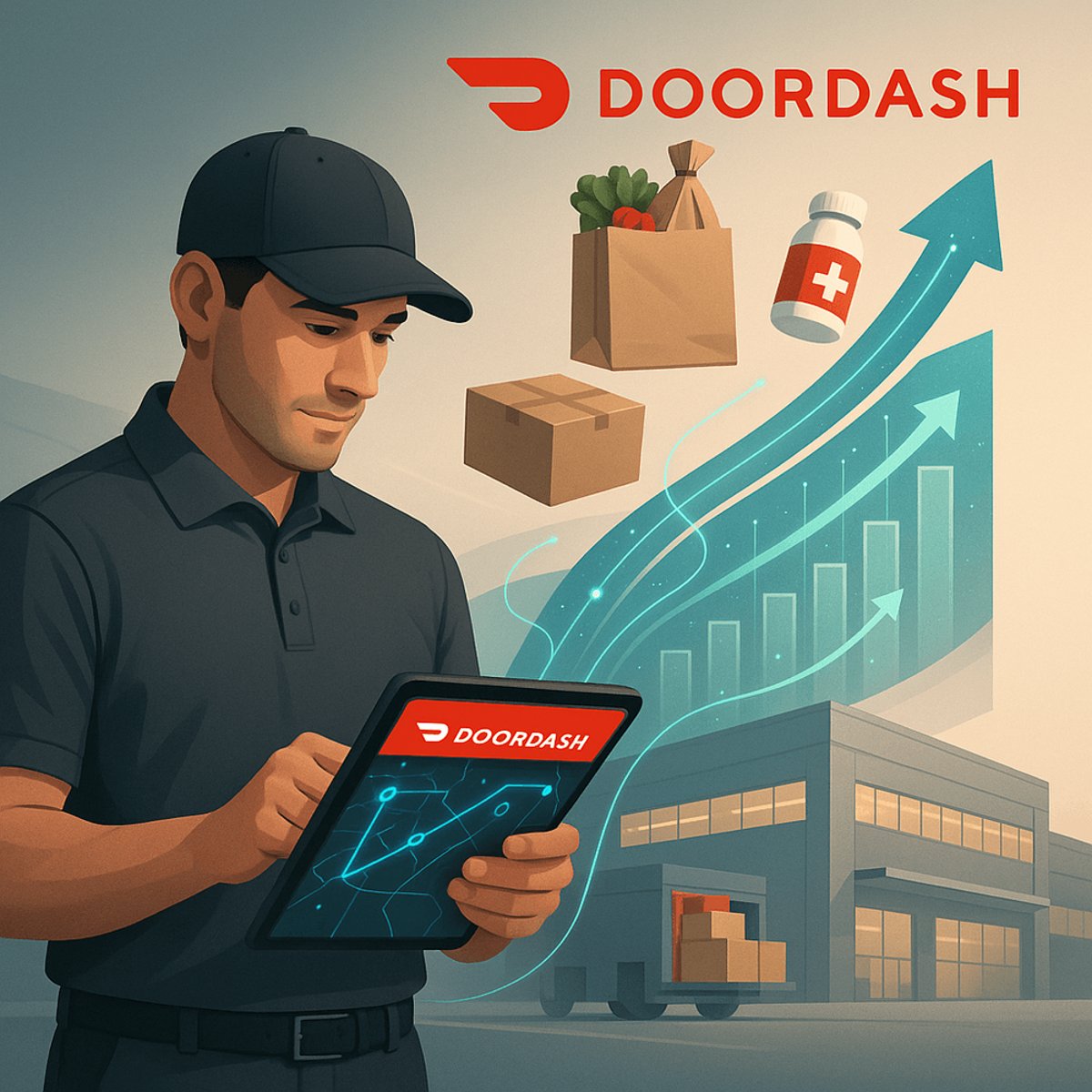
DoorDash shares are climbing as Wall Street validates what the company's been betting on for months - its aggressive push beyond restaurant delivery is finally showing up in the numbers. Analysts are pointing to meaningful improvements in unit economics across grocery and retail, suggesting the delivery giant's heavy investments in AI routing and logistics infrastructure are starting to pay off. The rally marks a notable shift from the volatile reaction that followed the company's latest earnings report.
DoorDash is having a moment. The stock's climbing as analysts dig into the numbers and like what they're seeing - particularly in the company's newer businesses like grocery and retail delivery. It's a validation of sorts for a strategy that's required billions in investment and hasn't always impressed Wall Street.
The enthusiasm centers on unit economics, that crucial metric that shows whether each delivery is actually making money. According to analyst notes via CNBC, DoorDash is seeing real improvement in how profitable each order becomes, especially outside its core restaurant business. That's significant because it suggests the company's infrastructure investments - particularly in AI-powered routing and logistics - are translating into actual efficiency gains.
DoorDash has been playing a longer game than many investors initially had patience for. The company's spent heavily on expanding beyond restaurant meals into groceries, convenience items, and retail goods. It's also poured resources into AI technology designed to optimize delivery routes, predict demand, and match drivers more efficiently. These bets don't pay off overnight, and the market's been skeptical at times about whether they'd pay off at all.
But the latest data points tell a different story. Grocery delivery, once considered a difficult category with thin margins and high operational complexity, is showing signs of becoming a genuine profit contributor. Retail delivery is following a similar trajectory. The improvements suggest DoorDash is figuring out how to make the economics work in categories that Amazon and Walmart have also been racing to dominate.
The stock rally is particularly notable because it represents sustained momentum rather than a quick pop. Earlier reactions to the company's earnings were more volatile, with investors trying to parse mixed signals about growth rates versus profitability improvements. This time, analysts seem more convinced that the fundamentals are heading in the right direction.
What's driving the improvement? A lot of it comes down to density and scale. As DoorDash adds more grocery and retail partners in each market, it can route drivers more efficiently. Someone delivering a restaurant order can grab a grocery run on the way back. The AI systems get better at predicting when and where demand will spike. Drivers spend less time idle and more time earning, which makes the platform stickier.
There's also the competitive angle. While Uber Eats and Instacart are fighting for the same turf, DoorDash's focus on building out its logistics backbone appears to be creating some separation. The company's invested in its own prediction algorithms and fulfillment technology rather than just being a marketplace connecting customers to stores.
The grocery opportunity is massive if DoorDash can crack it. Americans spend far more on groceries than restaurant meals, and the pandemic proved that consumers will pay for delivery convenience. But making it profitable at scale has been the challenge. Early movers struggled with everything from order accuracy to keeping delivery costs reasonable. DoorDash's improving unit economics suggest it's solving some of these operational puzzles.
Retail is the other frontier. Delivering items from convenience stores, pharmacies, and other retailers requires different logistics than food delivery. Products don't spoil as quickly, but customers expect different service levels. DoorDash has been building partnerships with chains like CVS and testing various fulfillment models. The analyst commentary indicates these experiments are starting to work.
The AI investments deserve particular attention. DoorDash has been using machine learning to predict everything from restaurant prep times to optimal driver positioning. These might sound like incremental improvements, but they add up. Shaving a few minutes off average delivery time or reducing empty miles driven directly impacts profitability. The company's reported that its AI systems are getting meaningfully better at these predictions, which flows through to those improving unit economics.
Wall Street's warming up to the story, but questions remain. Can DoorDash maintain these margins as it scales further? Will competition force price cuts that erode profitability? How much more investment is needed before these new verticals truly hit their stride? The current rally suggests investors think management has credible answers, but the proof will come in subsequent quarters.
DoorDash's stock rally reflects more than just positive analyst sentiment - it signals a potential turning point where years of infrastructure investment start converting into sustainable profitability. The improvements in grocery and retail unit economics validate the company's bet that delivery can work across categories beyond its restaurant core. But the real test is whether these gains hold up as competition intensifies and the company pushes into new markets. For now, Wall Street seems willing to believe that DoorDash has figured out something important about making on-demand logistics profitable at scale.