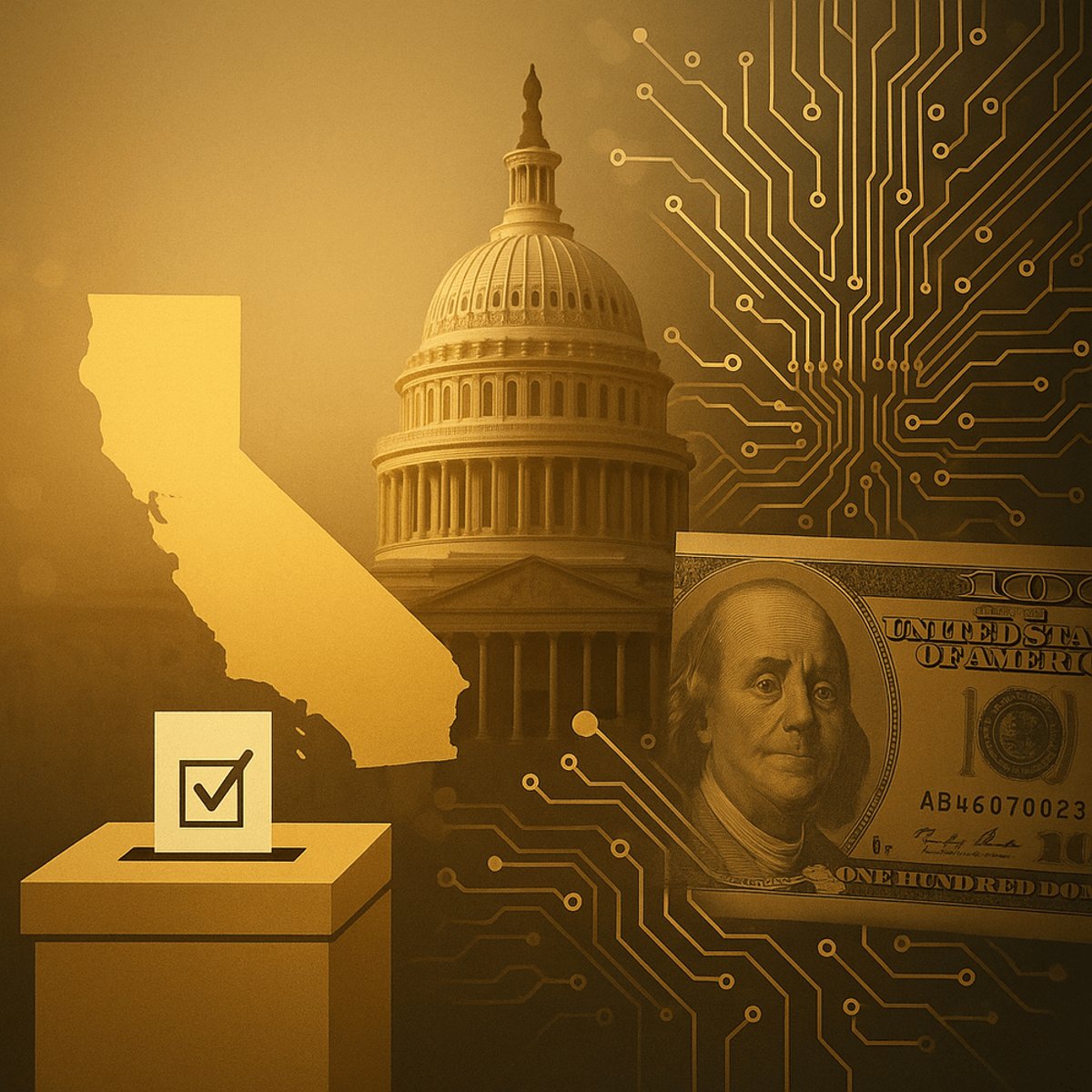
Meta is launching a multi-million dollar super PAC to shape California's AI regulatory landscape, marking a decisive escalation in Silicon Valley's political influence campaign. The "Mobilizing Economic Transformation Across California" fund targets the 2026 governor's race and signals Meta's determination to counter what it sees as innovation-stifling regulations threatening the state's tech dominance.
Meta just fired the opening salvo in what's shaping up to be Silicon Valley's most expensive political influence campaign yet. The social media giant is pouring tens of millions into a new California super PAC designed to elect candidates who'll take a hands-off approach to AI regulation, according to a Politico exclusive breaking this afternoon.
The timing couldn't be more strategic. Just yesterday, Andreessen Horowitz and OpenAI's Greg Brockman pledged $100 million for their own pro-AI super PAC, creating a coordinated lobbying blitz targeting the 2026 election cycle. What we're witnessing is tech's political evolution from reactive defense to proactive offense.
"Mobilizing Economic Transformation Across California" – Meta's deliberately wonky PAC name – represents CEO Mark Zuckerberg's bet that electoral politics, not just traditional lobbying, holds the key to preserving Silicon Valley's regulatory freedom. Brian Rice, Meta's VP of public policy who's leading the effort, has been vocal about Sacramento's "regulatory environment that could stifle innovation, block AI progress, and put California's technology leadership at risk," according to Politico's reporting.
The PAC launch comes after a year of aggressive behind-the-scenes maneuvering. Meta's lobbying machine spent months this year targeting Senator Scott Wiener's SB-53 bill, which would mandate AI companies publish safety protocols and incident reports. The company's political operatives argued such transparency requirements would handicap American AI development against Chinese competitors.
That legislative battle exposed the deepening fault lines in California politics around AI governance. Progressive lawmakers like Wiener are pushing for preemptive regulation before AI systems become too powerful to control effectively. Meanwhile, tech companies are leveraging economic anxiety about maintaining California's innovation edge to build a coalition of business-friendly politicians.
Meta's political track record shows this isn't just about future threats. Last year, the company helped kill the Kids Online Safety Act that was widely expected to pass, demonstrating how targeted lobbying can derail even popular child safety measures when they conflict with platform business models.
The 2026 governor's race represents the ultimate prize. California's next governor will either accelerate AI regulation or pump the brakes, influencing national tech policy for the next decade. With Governor Gavin Newsom termed out, both parties are fielding candidates with vastly different visions for tech oversight.
What makes this political moment unprecedented is the money involved. When Andreessen Horowitz commits $100 million and Meta adds tens of millions more, we're looking at potentially hundreds of millions flowing into California races from tech interests alone. This dwarfs traditional political spending in state elections and could fundamentally reshape how campaigns are funded and run.
The strategic calculus is clear: spend big now on friendly candidates, or face years of costly compliance with regulations that could hamper AI development. Meta has already been donating to down-ballot candidates from both parties, testing which political messages resonate with voters worried about both innovation and AI safety.
For voters, this represents a crucial test of democratic institutions. Can elected officials maintain independence when facing such concentrated corporate spending, or will policy effectively be outsourced to the highest bidder? The answer will likely determine not just California's AI future, but America's position in the global technology race.
Meta's super PAC launch marks a inflection point where Silicon Valley stops playing defense and starts buying offense. With hundreds of millions now flowing into California politics from tech interests, the 2026 elections will test whether democratic institutions can withstand corporate capture or if AI policy will effectively be determined by whoever writes the biggest checks. The stakes couldn't be higher – California's regulatory decisions will ripple nationwide, potentially determining America's competitive position in the AI race for the next decade.