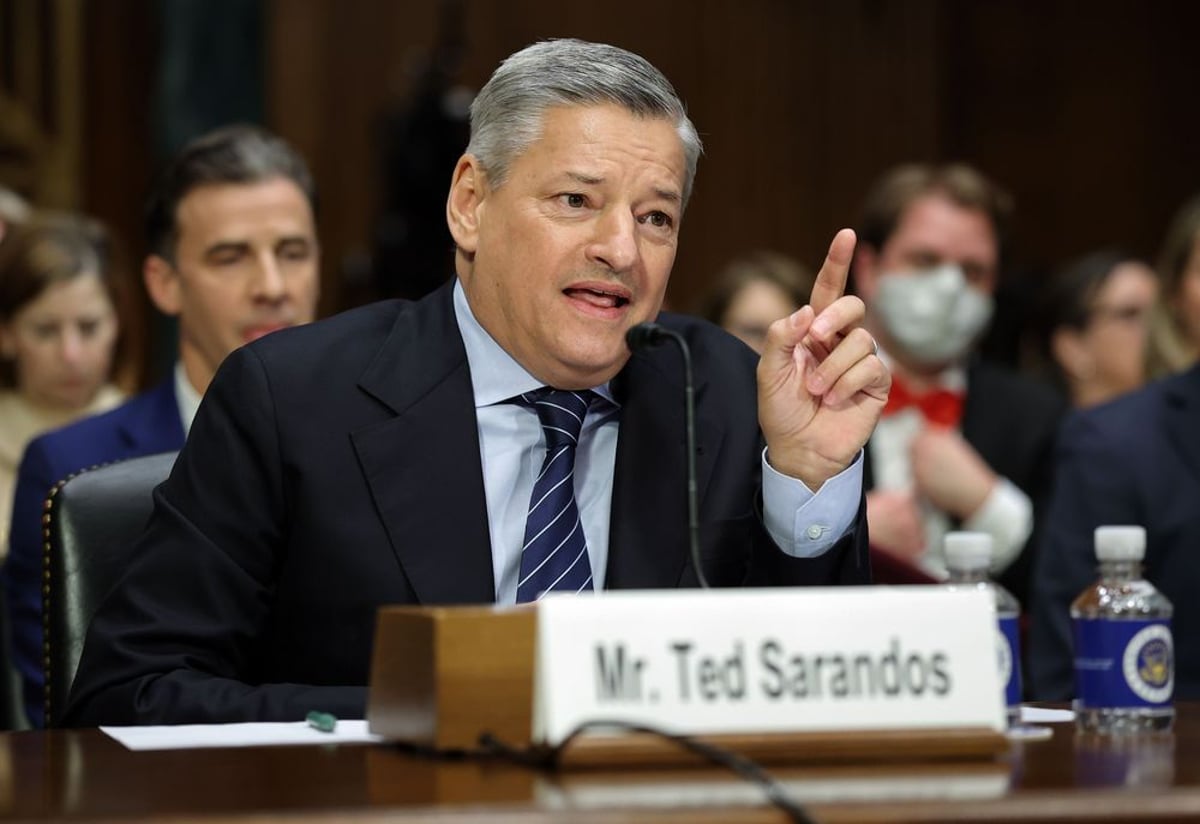
What was supposed to be a straightforward antitrust hearing about Netflix's Warner Bros. acquisition turned into political theater on Tuesday. Republican senators blindsided co-CEO Ted Sarandos with culture war attacks about "woke" ideology in children's programming, while YouTube - the actual streaming giant with 12.7% of US viewership versus Netflix's 9% - walked away without a single question.
Netflix co-CEO Ted Sarandos walked into a Senate office building Tuesday expecting tough questions about market concentration. What he got instead was a masterclass in political theater that completely missed the actual streaming elephant in the room.
The hearing, ostensibly about Netflix's proposed acquisition of Warner Bros. Discovery, quickly devolved into what The Verge described as a "performative Republican attack" on the platform's content choices. Sen. Josh Hawley (R-MO) kicked things off after some initial questions about residual payments: "Why is it that so much of Netflix content for children promotes a transgender ideology?"
The claim - that "almost half" of Netflix's kids' programming contains what Hawley called "transgender ideology" - echoed a months-old pressure campaign from Elon Musk, who'd urged X users to cancel their Netflix subscriptions over what he termed a "transgender woke agenda." Never mind that the shows Musk cited had been canceled years ago.
"Our business intent is to entertain the world," Sarandos responded calmly during the hearing. "It is not to have a political agenda." But the Republican senators weren't done. Ashley Moody (R-FL) and Eric Schmitt (R-MO) piled on, dredging up Netflix's 2020 statement following George Floyd's murder and the French film Cuties, which sparked conservative outrage years back. Ted Cruz (R-TX) even veered into Grammy Awards territory, asking Sarandos about Billie Eilish's "no one is illegal on stolen land" comment.
"My concern is that you don't share my values or those of many other American parents, and you want the United States government to allow you to become one of the largest - if not the largest - streaming monopolist in the world," Hawley said. "I think we ought to be concerned about what content you're promoting."
Here's what makes the whole spectacle bizarre: if lawmakers were genuinely worried about streaming content reaching American kids, they were grilling the wrong company.
Nielsen's December 2025 data tells the real story. Netflix captured 9% of total TV and streaming viewing in the US. Warner Bros. Discovery's services? Just 1.4%. Combined, the proposed mega-streamer would control 10.4% of viewership. Concerning from an antitrust perspective, sure.
But YouTube - owned by Google parent Alphabet - sat at 12.7% of US viewership. And it didn't receive a single question. "YouTube is not just cat videos anymore," Sarandos told the subcommittee, stating what should've been obvious. "YouTube is TV."
The comparison gets more stark when you look at the business models. Netflix spends billions on production costs and licensing fees to maintain a curated library of professionally produced content. It needs to justify a monthly subscription fee. YouTube, meanwhile, operates as a free service with an infinite stream of user-generated content that costs the platform virtually nothing to acquire.
YouTube doesn't need to worry about churn rates or subscriber counts. Anyone with a browser or smartphone can access it instantly. That frictionless access creates a self-perpetuating content engine - more viewers mean more creator incentive, which means more content, which attracts more viewers.
And unlike Netflix's professionally produced shows that go through development, scripting, and review processes, YouTube's content moderation operates at impossible scale. The Verge has documented how the platform's algorithm rewards inflammatory content, while YouTube Kids has struggled with questionable material slipping through.
Then there's YouTube Shorts, the platform's TikTok competitor. Industry reports show it averages 200 billion daily views - the kind of engagement Netflix can't touch, even with its own vertical video experiments.
So why did senators spend their time hammering Netflix about a handful of shows while giving YouTube a complete pass? The optics matter here. Netflix makes an easy target - it's a subscription service people actively choose, with a CEO sitting right there to answer questions. YouTube feels ubiquitous, almost infrastructural. Going after it means confronting Google's broader ecosystem, a far more complex political calculation.
The irony is that the hearing was supposed to address legitimate antitrust concerns. Does Netflix acquiring Warner Bros. Discovery consolidate too much market power? How will it affect content licensing for smaller competitors? What happens to HBO Max subscribers? Those questions got buried under culture war grandstanding.
Sarandos made one point that cut through the noise: if people don't like Netflix's content, they can cancel their subscriptions. That's how subscription services work. You vote with your wallet. YouTube, by contrast, is free and nearly impossible to avoid if you want to participate in modern digital life.
The hearing revealed a fundamental disconnect in how lawmakers approach tech regulation. They focus on visible, politically convenient targets while the actual dominant platforms operate with far less scrutiny. If senators genuinely cared about what content reaches American children, they'd be asking hard questions about YouTube's algorithmic recommendations, its moderation failures, and its massive viewership advantage.
Instead, they recycled years-old controversies about Netflix shows most people have forgotten, rehashed Elon Musk talking points, and treated a merger hearing like a Fox News segment.
The Warner Bros. Discovery deal still faces serious regulatory questions about market concentration, pricing power, and content exclusivity. Those are worth serious examination. But Tuesday's hearing showed that when senators would rather score political points than engage with the actual structure of the streaming market, the public loses.
The Senate hearing that was meant to scrutinize Netflix's Warner Bros. acquisition instead became a case study in misplaced regulatory priorities. While senators recycled culture war talking points about Netflix's curated content library, YouTube continues operating as the actual streaming giant with minimal oversight, 200 billion daily Shorts views, and algorithmic content recommendations that dwarf anything Netflix produces. If lawmakers want to seriously address concerns about streaming content and market power, they need to look beyond politically convenient targets and confront the platforms that actually dominate American viewership. Until then, hearings like Tuesday's remain little more than theater - performative outrage that ignores the real questions about how tech platforms shape what we watch.