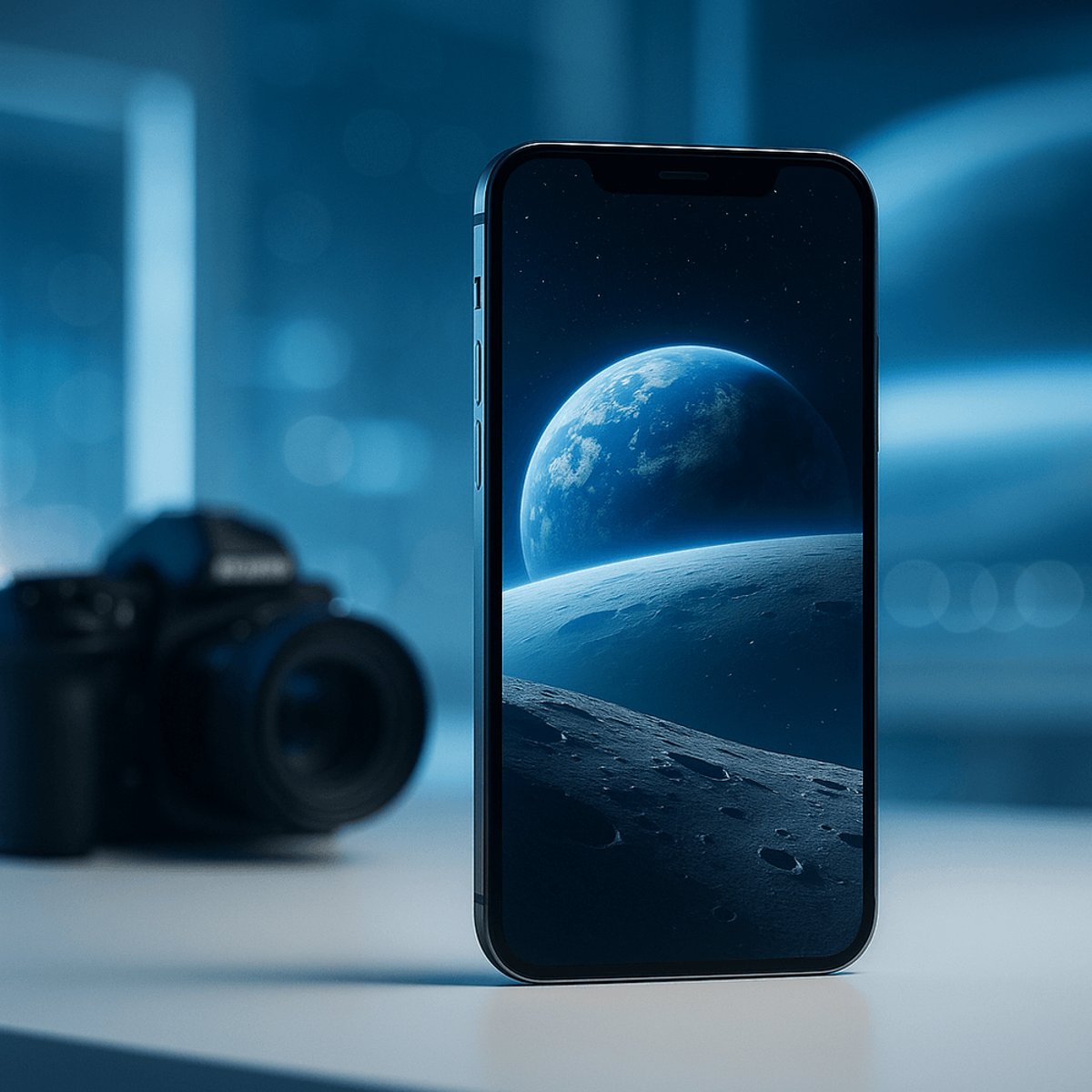
NASA just did something it hasn't allowed in over 60 years of human spaceflight - it's letting astronauts bring their personal smartphones into space. Starting with next week's Crew-12 mission to the International Space Station and the delayed Artemis II lunar flyby in March, iPhone and Android devices will officially replace the decade-old Nikon DSLRs and GoPros that have been the agency's standard imaging gear. The shift marks a surprising pivot for an agency notorious for slow hardware approval cycles, potentially transforming how space exploration gets documented for millions back on Earth.
NASA is finally catching up with the rest of us. For the first time in the agency's history, astronauts will carry their personal smartphones on missions - starting with Crew-12's launch to the International Space Station next week and the Artemis II lunar flyby scheduled for March.
The policy reversal comes after decades of NASA restricting astronaut photography equipment to certified hardware that often lagged years behind consumer technology. Until this announcement, the newest cameras approved for spaceflight were 10-year-old Nikon DSLRs and GoPros, according to Ars Technica.
"We are giving our crews the tools to capture special moments for their families and share inspiring images and video with the world," NASA administrator Jared Isaacman wrote on X, signaling what could become some of the most well-documented space missions in history.
The timing is significant. Artemis II represents humanity's first crewed journey beyond Earth orbit since the Apollo 17 mission in 1972. Now, instead of carefully staged photos from bulky DSLRs, the four-person crew will document their week-long lunar flyby with the same ultra-wide cameras and computational photography that everyday users rely on.
But the bigger story here isn't just about better Instagram posts from orbit. It's about NASA's accelerated hardware approval process - something the agency has historically struggled with as technology evolved faster than its certification timelines.
"Just as important, we challenged long-standing processes and qualified modern hardware for spaceflight on an expedited timeline," Isaacman noted in his announcement. "That operational urgency will serve NASA well as we pursue the highest-value science and research in orbit and on the lunar surface."
The shift reflects lessons NASA appears to have learned from SpaceX, which already permitted smartphones on its private astronaut missions. When SpaceX's Inspiration4 mission launched in 2021, commander Jared Isaacman (yes, the same person now running NASA) shared iPhone 12 photos from orbit, demonstrating that consumer devices could handle the radiation, temperature swings, and vacuum exposure of spaceflight.
That precedent likely smoothed NASA's path to approval. Rather than starting from scratch, the agency could reference real-world data from commercial missions that had already stress-tested modern smartphones in space environments.
The practical implications extend beyond photography. Modern smartphones pack capabilities that dwarf the decade-old cameras they're replacing - 4K video recording, computational HDR, night mode for low-light environments, and instant sharing capabilities that could revolutionize public engagement with space exploration.
For the Crew-12 astronauts heading to the ISS next week, smartphones will enable more spontaneous documentation of daily life aboard the station. For the Artemis II crew, the devices will capture humanity's return to deep space with a level of visual fidelity that the Apollo astronauts could never have imagined.
There's also a cultural shift embedded in this policy change. NASA's traditional approach to spaceflight documentation has been highly controlled and curated. Smartphones introduce an element of spontaneity - the possibility of astronauts becoming content creators in their own right, sharing behind-the-scenes moments, zero-gravity experiments, or even (as Isaacman playfully suggested) TikTok videos from orbit.
The hardware approval bottleneck has long frustrated those pushing for faster innovation at NASA. Spaceflight certification requires proving that new equipment won't interfere with critical systems, won't outgas harmful chemicals in confined spaces, and can survive launch vibrations and radiation exposure. These are legitimate safety concerns, but they've historically meant that astronauts worked with technology that felt ancient compared to consumer gear.
By expediting smartphone approval, NASA is signaling it can move faster when needed - a crucial capability as the agency prepares for sustained lunar operations under the Artemis program and eventual Mars missions that will require more agile technology integration.
The change also reflects shifting demographics within NASA's astronaut corps. Younger astronauts grew up as digital natives, accustomed to documenting their lives through smartphone cameras. Restricting them to decade-old DSLRs created an unnecessary disconnect between how they naturally communicated and the tools they were given.
What remains unclear is whether NASA will impose restrictions on what astronauts can post directly versus what must go through agency channels. The announcement focuses on documentation and family communication, but doesn't address whether astronauts will have real-time social media access or if images will still require review before public release.
NASA's smartphone approval represents more than a policy update - it's a window into how the agency is adapting for a new era of space exploration. As Crew-12 launches next week and Artemis II prepares for its historic lunar flyby in March, we're about to see space exploration documented with an intimacy and immediacy that previous generations could never achieve. Whether that means stunning 4K Earth-rise videos or cringe-worthy zero-gravity TikToks, the barrier between space and the rest of us just got a lot thinner. And for an agency that's spent decades perfecting the art of controlled communication, that's arguably as significant a shift as the missions themselves.