NVIDIA just dropped a series of major announcements at SIGGRAPH 2026 that signal where the company sees the future of graphics and AI converging. The chipmaker unveiled new advances in agentic AI, physical AI simulation, and open models designed to transform everything from Hollywood content pipelines to factory robotics. The timing is strategic - as competitors like AMD and Intel push into AI acceleration, NVIDIA is betting that the real moat isn't just raw compute power but the entire software ecosystem around it.
NVIDIA is making its biggest play yet to own the entire stack from pixels to physical robots. At SIGGRAPH 2026 in Los Angeles, the company unveiled a sweeping set of tools that blur the boundaries between traditional graphics rendering, AI inference, and real-world simulation. The announcements span agentic AI systems that can autonomously handle complex creative tasks, physical AI simulations for training robots, and a suite of open models aimed at democratizing access to cutting-edge capabilities.
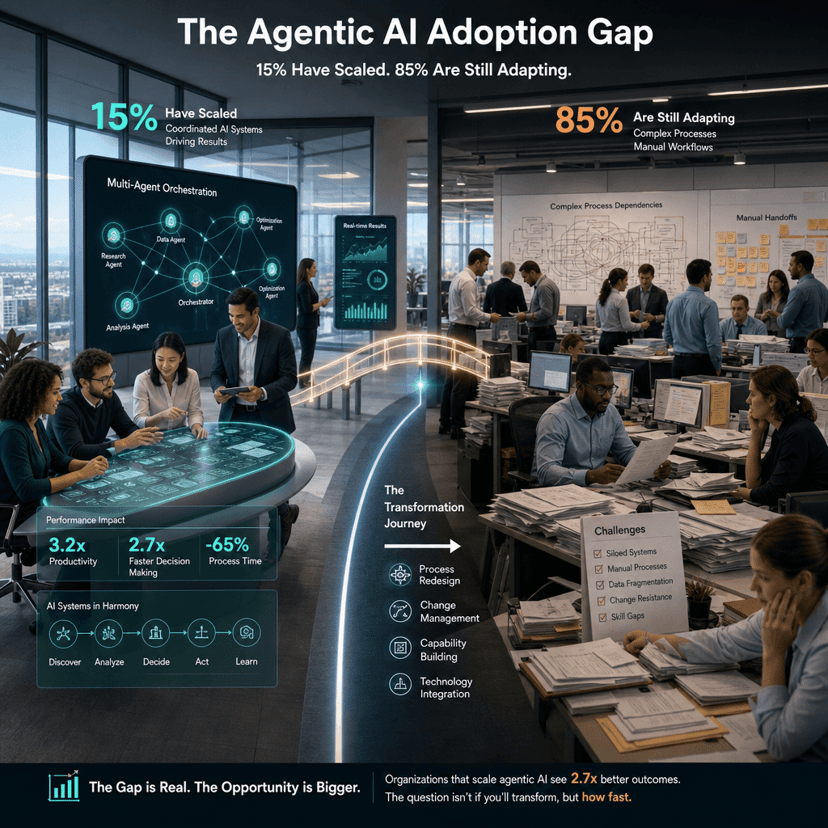
The agentic AI push represents NVIDIA's answer to a pressing industry question: how do you move AI from generating single outputs to orchestrating entire workflows? According to the company's blog announcement, these new systems can coordinate multiple AI models to handle tasks like scene composition, asset generation, and rendering optimization without constant human intervention. That's a significant shift from current pipelines where artists still manually stitch together outputs from different AI tools.
For media and entertainment studios, this could compress production timelines that currently stretch across months. Disney, Netflix, and other major content producers have been experimenting with AI-assisted workflows, but the tools have remained fragmented. NVIDIA's integrated approach through its Omniverse platform potentially solves that coordination problem, though adoption will depend on how well these agentic systems handle the creative nuance that still separates compelling content from AI slop.
The physical AI announcements target a different but equally strategic market: robotics. NVIDIA introduced enhanced real-time simulation capabilities that let robots train in photorealistic virtual environments before ever touching physical hardware. The physics engines can now model complex interactions like fluid dynamics, soft body deformation, and multi-object manipulation with what NVIDIA claims is unprecedented accuracy. Companies like Tesla, Boston Dynamics, and Figure AI have all emphasized simulation as critical to scaling robotic learning, making this a crowded but crucial battleground.
What makes NVIDIA's approach distinctive is the tight integration between simulation and its AI training infrastructure. Robots can iterate through millions of scenarios in Omniverse, then deploy learned behaviors on NVIDIA's Jetson edge devices without rearchitecting the entire pipeline. That end-to-end story matters as robotics companies race to move from research demos to commercial deployment.
The open models component adds another strategic layer. NVIDIA announced it's releasing several foundation models for 3D generation, physics simulation, and scene understanding under permissive licenses. This mirrors the playbook that's worked for Meta with Llama and Stability AI with Stable Diffusion - give away the base models to drive adoption of the underlying compute infrastructure. Developers who build on NVIDIA's open models will naturally gravitate toward NVIDIA GPUs for training and inference.
Timing-wise, these announcements come as NVIDIA faces intensifying competition across multiple fronts. AMD is gaining traction in data center AI with its MI300 series. Intel is positioning Gaudi accelerators as a more open alternative. Cloud providers like Amazon Web Services and Google Cloud are designing custom silicon. NVIDIA's response isn't just better chips but stickier software that makes switching costs prohibitive.
The graphics community at SIGGRAPH remains NVIDIA's home turf, and the company clearly wants to leverage that dominance into adjacent markets. Real-time ray tracing, neural rendering, and AI-assisted content creation all require the kind of parallel processing that NVIDIA has spent decades optimizing. But the leap from rendering pixels to orchestrating agentic AI systems and training physical robots represents a significant expansion of scope.
Industry reaction has been cautiously optimistic. Several visual effects studios told trade publications they're eager to test the new tools but wary of disruption to established pipelines. Robotics startups welcome better simulation but note that sim-to-real transfer remains a fundamental challenge no amount of GPU power fully solves. The open model releases drew praise from researchers who want alternatives to closed commercial offerings.
What happens next depends partly on execution and partly on how quickly customers can absorb these capabilities. NVIDIA has a track record of overpromising on software launches that take months or years to mature. The company also faces integration challenges - Omniverse needs to play nicely with tools from Autodesk, Adobe, Unity, and Epic Games that have their own AI ambitions and platform strategies.
Financially, NVIDIA doesn't break out revenue from these specific product lines, but software and services accounted for a growing portion of data center revenue in recent quarters. Analysts expect these SIGGRAPH announcements to drive incremental GPU sales as studios and robotics companies upgrade infrastructure to support the new capabilities. The bigger strategic value lies in ecosystem lock-in that sustains NVIDIA's premium pricing even as hardware competition intensifies.
NVIDIA's SIGGRAPH announcements represent a calculated bet that the future of computing isn't just faster GPUs but integrated systems that span graphics, AI, and physical simulation. The agentic AI tools could genuinely accelerate content production if they deliver on the workflow orchestration promise. The physical AI simulations address real pain points for robotics companies trying to scale beyond hand-tuned demos. And the open model strategy borrows from the playbook that's already worked for Meta and others to drive ecosystem adoption. But NVIDIA faces execution risk on multiple fronts - integrating with entrenched creative tools, proving sim-to-real transfer for robotics, and maintaining its software lead as competitors like AMD and Intel invest heavily in their own platforms. The next six months will show whether studios and robotics companies embrace these tools or whether they remain impressive demos that struggle to displace working pipelines. Either way, NVIDIA is making clear it sees its future as a platform company, not just a chip vendor.