OpenAI is setting its sights on a public debut by 2027 or potentially earlier, CFO Sarah Friar told employees during an all-hands meeting this week. The announcement comes as the AI giant navigates mounting competitive pressure from rival Anthropic, which has been signaling its own path to the public markets. Friar's message appears aimed at calming internal concerns about the company's strategic positioning as the AI race intensifies and investor appetite for AI stocks remains white-hot.
OpenAI just put a timeline on one of tech's most anticipated public offerings. CFO Sarah Friar told employees during an internal all-hands meeting that the company expects to go public by 2027 or potentially sooner, directly addressing growing speculation about when the ChatGPT maker would finally hit the public markets.
The timing is telling. Anthropic, OpenAI's closest competitor in the large language model race, has been making noise about its own public market ambitions, creating what sources describe as internal anxiety at OpenAI about falling behind in the perception war. Friar's message was blunt - don't worry about Anthropic's timeline, according to CNBC's reporting.
The competitive dynamic between these two AI heavyweights has intensified dramatically over the past year. While OpenAI commands massive name recognition thanks to ChatGPT's viral success, Anthropic has been quietly winning over enterprise customers with its Claude models and emphasis on AI safety. Both companies have raised billions in venture funding, but going public represents the next frontier - a validation of their business models and a test of whether public market investors will embrace AI infrastructure plays with the same enthusiasm as venture capitalists.
For OpenAI, the path to an IPO has been anything but straightforward. The company started as a nonprofit research lab in 2015, then created a capped-profit subsidiary in 2019 to attract the capital needed to compete in the increasingly expensive AI arms race. That hybrid structure has required extensive corporate restructuring, and sources familiar with the matter say untangling governance issues and creating a clean cap table suitable for public markets has been a multi-year project.
The 2027 timeline gives OpenAI roughly a year to get its house in order. The company would need to demonstrate consistent revenue growth, establish clear unit economics, and prove that its massive computing costs won't crater margins. OpenAI's annualized revenue reportedly crossed $3.4 billion earlier this year, driven primarily by ChatGPT subscriptions and API access for developers, but the company's infrastructure expenses remain astronomical. Training and running large language models requires hundreds of millions of dollars in cloud computing resources.
Friar's involvement in this announcement is significant. She joined OpenAI as CFO in 2023 after serving as CEO of Square (now Block) and brings deep public markets expertise. Her hire was widely seen as a signal that OpenAI was serious about eventual public market readiness. Former Goldman Sachs CFOs don't typically join companies that plan to stay private indefinitely.
The broader AI sector is watching this race closely. Microsoft, which has invested over $13 billion in OpenAI and integrates its models throughout its product suite, would see its investment marked to market once OpenAI goes public. Google, meanwhile, has invested heavily in Anthropic while building its own Gemini models, creating a complex web of competitive and financial relationships that a public OpenAI would need to navigate.
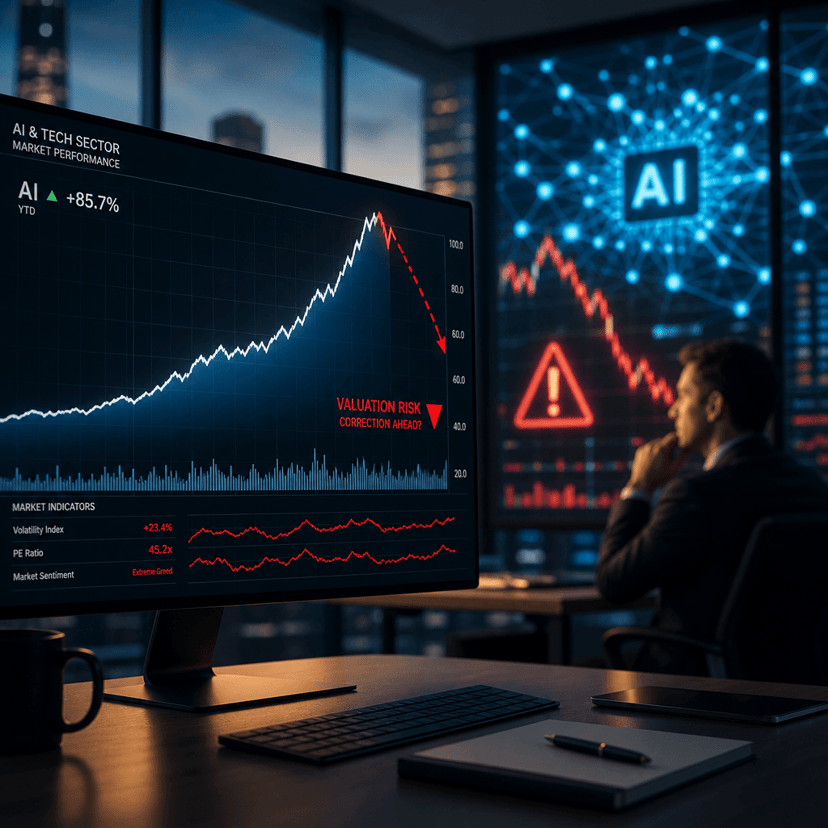
Investor appetite for AI stocks remains robust despite broader tech market volatility. Nvidia, the picks-and-shovels play for AI infrastructure, has seen its valuation soar past $3 trillion on the back of AI chip demand. But software-layer AI companies face tougher questions about defensibility and whether they're building sustainable moats or just paying Nvidia for compute cycles.
The competitive jockeying between OpenAI and Anthropic over IPO timing reflects a broader anxiety in the AI sector - that the window for going public at premium valuations might not stay open forever. If the AI hype cycle cools or if either company stumbles in proving out its business model, public market investors could turn skeptical fast. Better to lock in a strong valuation while the sector remains hot.
Friar's message to employees suggests OpenAI is confident in its positioning but aware of the optics. Letting Anthropic go public first could create an uncomfortable narrative that the competitor is more mature or better prepared for public market scrutiny. By putting a clear timeline out there - even if only internally - OpenAI is signaling it won't cede any ground in this high-stakes race.
OpenAI's 2027 IPO target marks a defining moment for the AI industry - the point where hype meets public market accountability. Friar's internal messaging reveals a company that's confident but acutely aware of competitive dynamics with Anthropic. The real test won't be going public, but proving to investors that AI infrastructure companies can generate sustainable profits at scale. With roughly a year to prepare, OpenAI needs to transform from a venture-backed moonshot into a business that can withstand quarterly earnings scrutiny. The clock is ticking, and the entire tech sector is watching.