Palantir Technologies just scored a $300 million contract with the U.S. Department of Agriculture, marking the data analytics company's most significant push yet into civilian government operations. The multi-year deal, announced Wednesday, will deploy Palantir's AI-powered platform to monitor and secure America's food supply chain - a dramatic expansion beyond the defense and intelligence contracts that built the company's reputation.
Palantir Technologies is making its biggest bet yet on civilian government work. The company inked a $300 million contract with the U.S. Department of Agriculture to build an integrated data platform designed to monitor America's food supply chain in real-time, according to CNBC.
The deal marks a strategic shift for a company that's spent two decades building its reputation - and roughly 60% of its revenue base - on military and intelligence contracts. Now Palantir is betting it can translate its battlefield analytics expertise into tracking everything from avian flu outbreaks to fertilizer shortages.
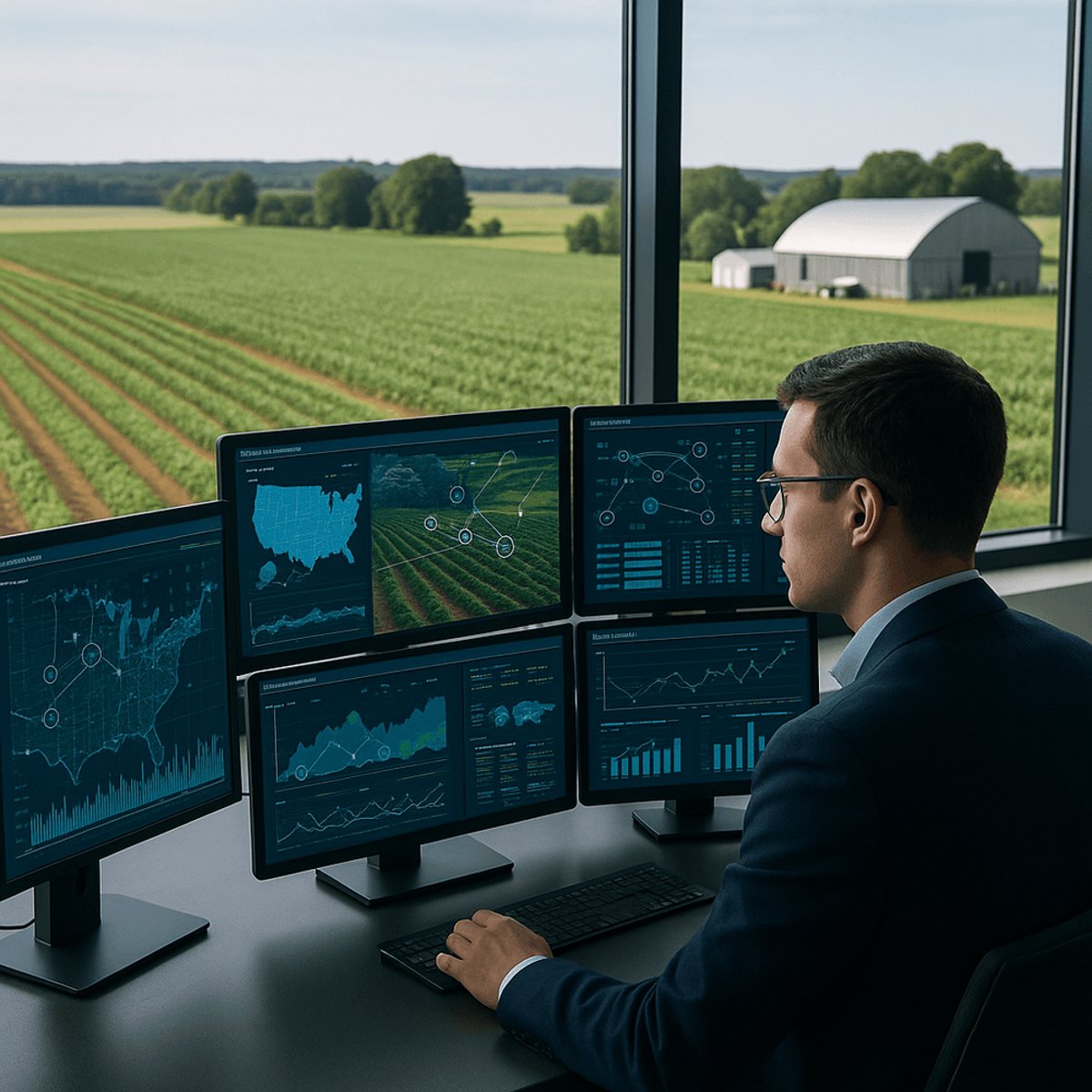
The USDA platform will integrate data from thousands of sources including farm sensors, weather satellites, import records, and disease surveillance systems. The goal is to give agriculture officials the kind of predictive intelligence that Palantir originally built for counterterrorism operations - just applied to crop yields instead of threat assessments.
This isn't Palantir's first rodeo with civilian agencies, but it's by far the largest such contract. The company has been quietly building relationships across federal departments, from the FDA to the CDC, as defense budgets face increasing scrutiny and competition heats up from rivals like Microsoft and Google in the government cloud space.
The timing makes sense. Food security has emerged as a national security priority following supply chain chaos during the pandemic and growing concerns about climate impacts on agriculture. The USDA has struggled with fragmented data systems that left officials blind to emerging threats until they became full-blown crises.
Palantir's platform will attempt to connect those dots in real-time. When a poultry farm in Iowa reports unusual bird deaths, the system could immediately cross-reference with disease patterns, weather data, and supply chain logistics to predict whether it's an isolated incident or the start of an outbreak that could disrupt egg supplies nationwide.
The contract structure spreads the $300 million across multiple years with performance milestones, according to people familiar with the deal. That's standard for large government technology projects, but it also means Palantir will need to prove the platform's value to secure the full payout.
Wall Street has been pushing Palantir to diversify beyond defense for years. The company's stock has been volatile partly because investors worry about concentration risk - what happens if defense budgets shrink or a major Pentagon contract doesn't get renewed? Commercial revenue has grown but remains inconsistent, making these large civilian government deals increasingly important to the growth story.
The agricultural sector represents a massive untapped market for enterprise AI and data analytics. American agriculture generates over $400 billion annually but has lagged other industries in digital transformation. If Palantir can prove its platform delivers real value for the USDA, similar deals with state agriculture departments and eventually private agribusiness could follow.
But the company faces skepticism. Government IT projects have a notorious track record of running over budget and under-delivering. Palantir's software is powerful but notoriously complex, requiring significant training and integration work. The USDA's existing systems are a patchwork of legacy databases that won't be easy to unify.
Competitors are circling too. Amazon Web Services has been aggressively pursuing agriculture clients with its cloud infrastructure and IoT tools. Microsoft has its Azure cloud platform embedded across federal agencies. Both tech giants have deeper pockets and broader product ecosystems than Palantir.
What Palantir brings to the table is specialized expertise in making sense of messy, unstructured data from disparate sources - exactly the challenge the USDA faces. The company's Gotham and Foundry platforms were built to handle the kind of complex, mission-critical analytics that agriculture monitoring demands.
The deal also reflects a broader trend of AI and data analytics moving into every corner of government operations. Food security joins a growing list of national priorities - from pandemic response to infrastructure resilience - that officials believe require sophisticated predictive technology.
For Palantir, success with the USDA could open doors across civilian agencies looking to modernize their data operations. Failure could reinforce doubts about whether the company's defense-oriented culture can adapt to the different demands of civilian government work.
Palantir's $300 million USDA contract represents more than just another government deal - it's a test case for whether the company can successfully pivot from its defense-intelligence roots into broader civilian markets. If the food supply platform delivers on its promises, it could unlock a new revenue stream across federal and state agriculture agencies while demonstrating that Palantir's technology translates beyond the battlefield. But the company will need to navigate complex legacy systems, prove concrete value quickly, and fend off deep-pocketed competitors who are equally hungry for government cloud contracts. The next 12-18 months will show whether this diversification bet pays off or becomes another cautionary tale about government IT projects.