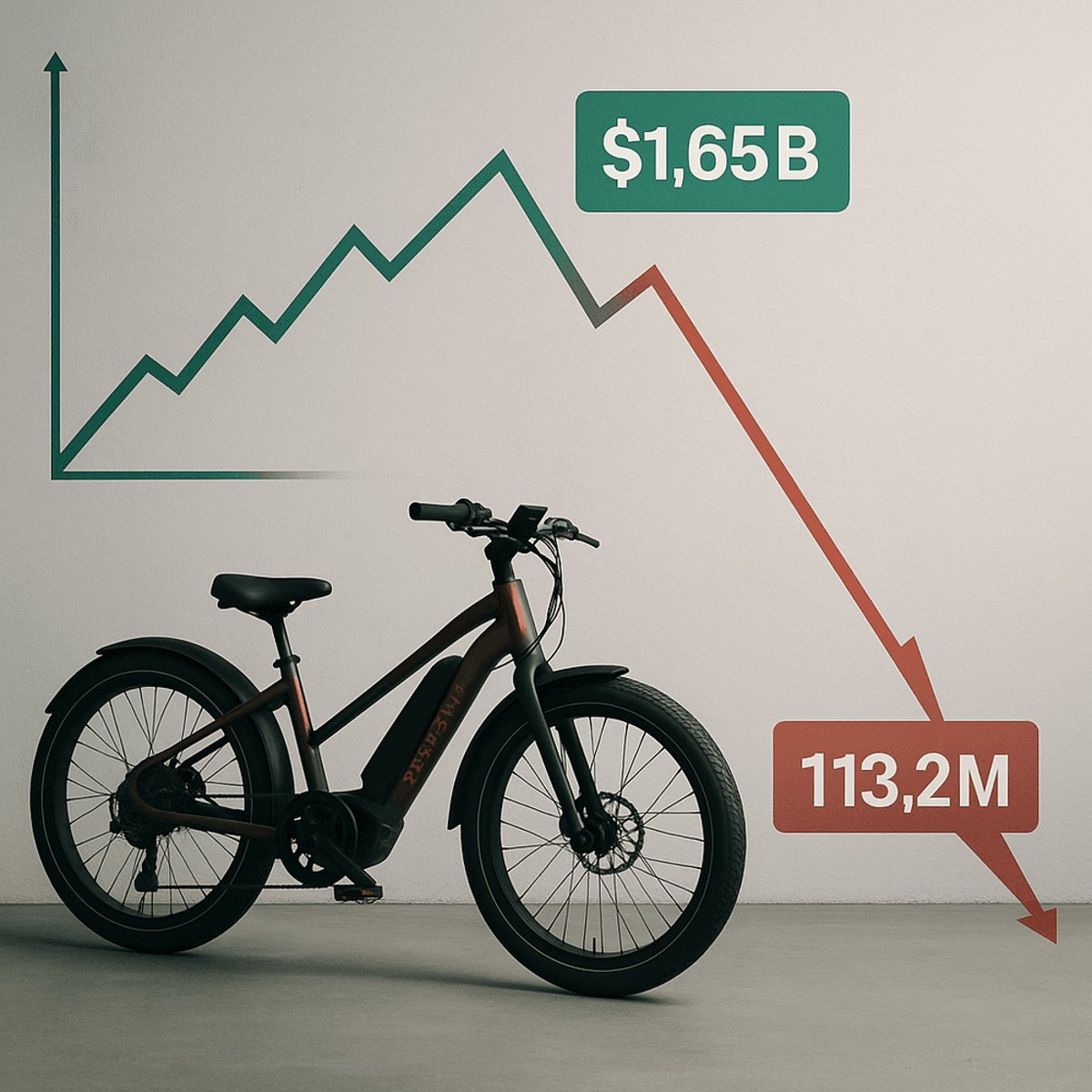
The e-bike boom has claimed another casualty. Rad Power Bikes, once valued at $1.65 billion, just agreed to sell itself to Florida-based Life Electric Vehicle Holdings for $13.2 million - a staggering 99% decline that underscores how far the micromobility sector has fallen since its pandemic peak. The deal, struck after a five-bidder auction last week, still needs bankruptcy court approval but marks the end of an era for one of America's most recognized e-bike brands.
Rad Power Bikes is selling itself for pennies on the dollar. The Seattle-based e-bike company reached an agreement over the weekend to offload its assets to Life Electric Vehicle Holdings for approximately $13.2 million, according to bankruptcy court filings. That's less than 1% of the company's peak $1.65 billion valuation from October 2021, when venture capital was still flowing freely into consumer hardware startups.
The deal emerged from a competitive auction held January 22, where five companies battled for control of what remains of Rad Power's business. Bidding opened at $8 million before Florida-based Life EV emerged victorious. When factoring in Rad Power's liabilities, the total transaction value climbs to $14.9 million - still a fraction of the $329.2 million the company raised from investors, according to PitchBook data.
Retrospec, another e-bike manufacturer, came in second with a $13 million bid and now stands as the backup buyer if the Life EV deal collapses before the bankruptcy judge signs off. The company's involvement hints at potential consolidation in the struggling e-bike market, where survivors are picking through the wreckage of pandemic-era overexpansion.
Life EV bills itself as a "developer, manufacturer, and distributor in the light electric vehicle industry" on its website, though most of its e-bike models were listed as sold out at press time. What the company plans to do with Rad Power's brand, intellectual property, and customer base remains unclear. Life EV CEO Robert Provost deflected questions to Rad Power, telling TechCrunch that "there is still a process underway and there is an exciting future being planned for Rad Power." The company did not respond to requests for comment.
Rad Power's collapse follows a familiar pattern in the micromobility sector. Like scooter companies and bike-share startups before it, the e-bike maker rode a pandemic wave of urban transportation enthusiasm straight into a post-lockdown hangover. Sales exploded in 2020 and 2021 as consumers sought alternatives to public transit and outdoor recreation options. Then demand evaporated.
The company executed multiple rounds of layoffs as it tried to right-size for slower growth. Leadership churned through CEO changes. Then came the safety crisis: the Consumer Product Safety Commission identified 31 reported fires linked to Rad Power's older battery packs, forcing recalls and damaging the brand's reputation. Rad Power pushed back hard, telling TechCrunch it "firmly stands behind our batteries and our reputation as leaders in the e-bike industry, and strongly disagrees with the CPSC's characterization of certain Rad batteries as defective or unsafe."
But the damage was done. The company filed for bankruptcy protection in mid-December, announcing plans to sell the business just over a month ago. Now that sale is complete, pending final court approval.
Rad Power isn't alone in the bankruptcy line. Dutch e-bike maker VanMoof went through restructuring and found new ownership. Premium Swedish brand Cake followed a similar path. Scooter company Bird, once valued at $2.5 billion, also crashed through bankruptcy court. The micromobility sector's collapse has been swift and brutal, leaving carnage across Europe and North America.
What happens next depends entirely on Life EV's strategic vision - assuming it has one beyond opportunistic asset acquisition. Will the Florida company try to revive Rad Power as a going concern, leveraging its brand recognition and customer loyalty? Or will it strip the assets, absorbing useful patents and manufacturing relationships while letting the brand fade?
The auction results suggest Life EV sees enough value to outbid four competitors, including an established e-bike player in Retrospec. But the razor-thin margin between the top two bids - just $200,000 - indicates neither buyer sees transformative potential in the assets. This looks more like bottom-fishing than visionary M&A.
For investors who poured $329.2 million into Rad Power over the years, the math is devastating. A $13.2 million exit means they'll recover roughly 4 cents on the dollar, and that's before creditors and bankruptcy costs eat into proceeds. It's a cautionary tale about pandemic-era valuations and the dangers of scaling consumer hardware too quickly without sustainable unit economics.
The broader e-bike market isn't disappearing - urban transportation needs haven't changed. But the venture-backed, growth-at-all-costs model has proven unsustainable. Companies that survive will need to focus on profitability, quality control, and realistic market sizing rather than chasing Silicon Valley-style hypergrowth. Rad Power's fire-sale price sends that message louder than any investor memo ever could.
Rad Power's $13.2 million sale marks more than just one company's demise - it's the final nail in the coffin of pandemic-era micromobility euphoria. The 99% valuation collapse should serve as a reality check for any investor still chasing consumer hardware moonshots without clear paths to profitability. As Life EV takes control, the industry watches to see whether Rad Power's brand can be salvaged or if this is simply a liquidation dressed up as an acquisition. Either way, the message is clear: the micromobility shakeout isn't over, and more consolidation is coming.