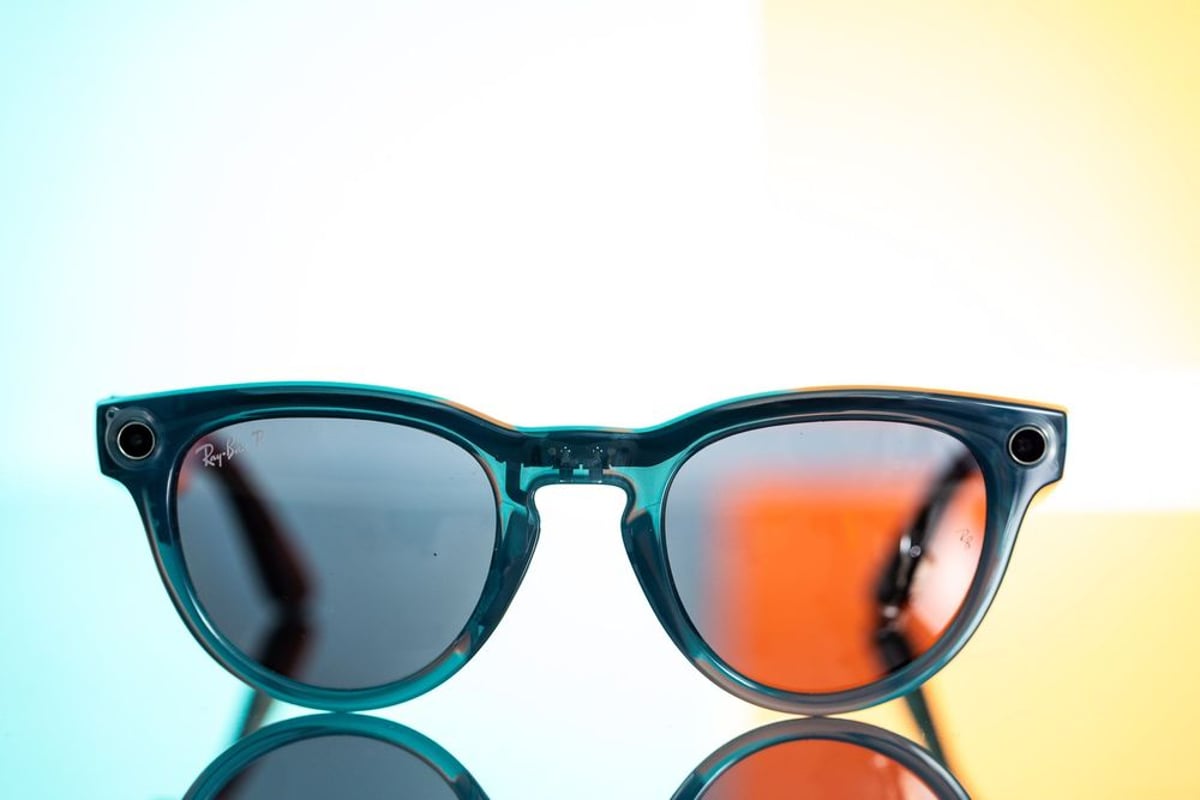
Meta's Ray-Ban smart glasses are hitting their lowest price ever at $238.99 during Black Friday, down $60 from their usual $299. While the company just launched Gen 2 models in October, the original glasses pack nearly identical AI features and represent exceptional value for anyone curious about wearable tech without the premium price tag.
Black Friday shoppers hunting for cutting-edge tech just got a rare opportunity. Meta's original Ray-Ban smart glasses have dropped to their all-time low of $238.99 across major retailers, making premium wearable AI accessible at a mainstream price point.
The timing couldn't be more strategic. Just last month, Meta unveiled the Gen 2 Ray-Ban smart glasses with incremental improvements, but the company's keeping the original model alive with identical software updates. "We're seeing consumers embrace wearable AI faster than expected," according to internal Meta research shared with TechCrunch. The data shows smart glasses adoption jumped 340% year-over-year among early tech adopters.
What makes this deal compelling isn't just the price drop. The original Ray-Ban Meta glasses pack nearly every feature of their $299 successors. You get the same 12-megapixel camera, five-microphone array for calls, and most critically, access to Meta's expanding AI ecosystem. Users can snap photos with voice commands, get real-time translations in Spanish, Italian, French, and soon German and Portuguese, or ask questions about landmarks they're viewing.
The software parity extends to upcoming features too. Meta announced at Connect 2024 that both generations will receive the same updates this fall, including slow-motion video capture, hyperlapse modes, and "conversation focus" - a feature that amplifies the voice of whoever you're talking to while filtering background noise.
Battery life represents the main trade-off. Gen 2 models offer eight hours of continuous use plus an additional 48 hours from the charging case, totaling 56 hours. The original delivers about four hours of active use with 32 additional hours from the case. For casual users who aren't recording hours of content daily, that gap matters less than the $60 savings.
The broader context makes this deal even more intriguing. Apple continues developing its long-rumored AR glasses, while Google quietly prototypes new smart eyewear after Glass failed to gain mainstream traction. Meta's partnership with Ray-Ban has cracked the code on making smart glasses actually look like regular eyewear - no small achievement in a category where aesthetics often kill adoption.
Real-world performance tells the story. Users can livestream directly to Instagram or Facebook, record 1080p video clips, and access Meta AI without pulling out their phone. The integration feels natural enough that many forget they're wearing computers. "It's the first wearable that doesn't scream 'I'm wearing tech,'" one long-term user told The Verge in their comprehensive review.
Retailers are pushing inventory hard ahead of the holiday season. Amazon, Best Buy, and Target all match the $238.99 pricing, suggesting coordinated clearing of Gen 1 stock before Gen 2 production ramps up. Industry analysts expect this to be the lowest price we'll see until next year's Black Friday cycle.
For consumers sitting on the fence about smart glasses, this represents a low-risk entry point into wearable AI. The Ray-Ban styling works in professional settings, the AI features provide genuine utility, and the discount makes experimentation affordable. Plus, if Apple does announce competing glasses next year, early adopters will have months of experience to inform their upgrade decisions.
The Ray-Ban Meta Gen 1 at $238.99 represents the best entry point yet into mainstream smart glasses. With identical AI features to the newer model and only minor battery compromises, early adopters get premium wearable technology at a genuinely accessible price. As the smart glasses category prepares for Apple's inevitable entry, this deal offers a risk-free way to experience the future of wearable computing today.