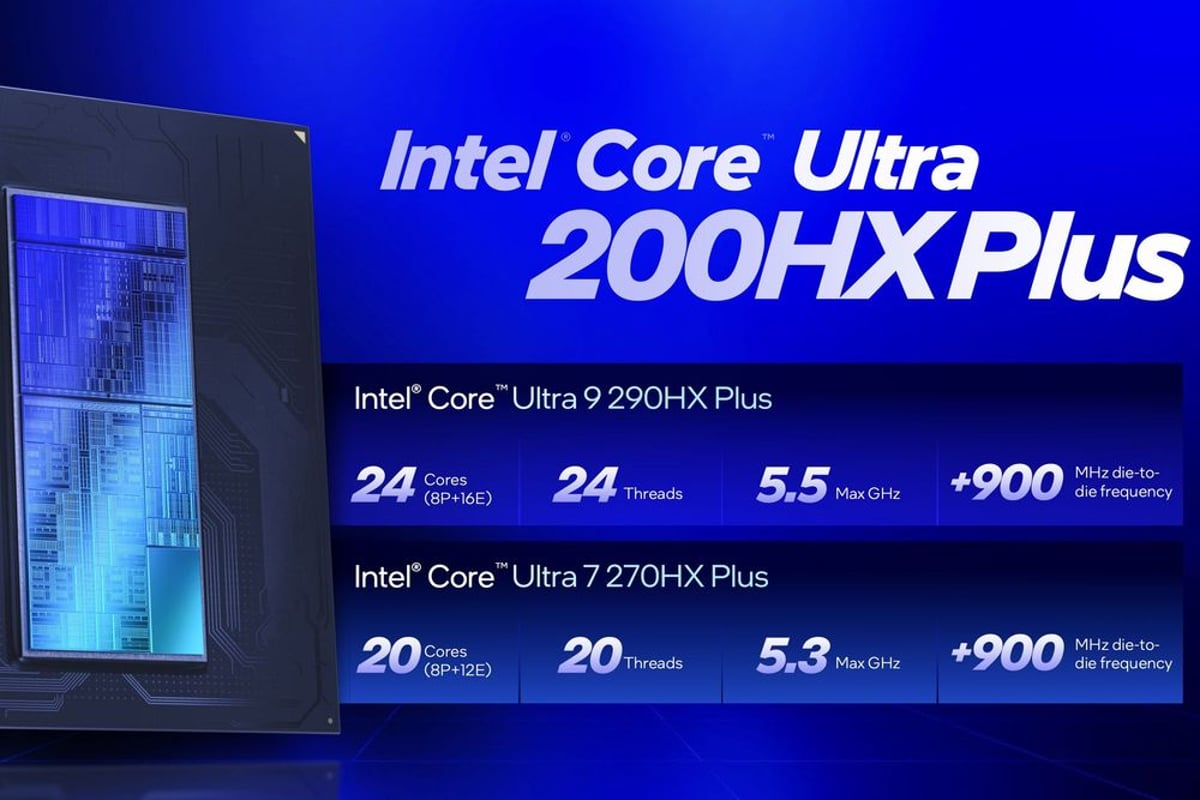
Intel just dropped two new flagship laptop processors aimed squarely at the high-end gaming crowd. The Core Ultra 9 290HX Plus and Core Ultra 7 270HX Plus represent the chipmaker's latest Arrow Lake Refresh lineup, packing 24 cores and 20 cores respectively - both without hyperthreading. Like the desktop Plus models Intel unveiled earlier this month, these laptop chips come loaded with the company's Binary Optimization Tool, promising performance boosts in select games for enthusiasts willing to pay premium prices.
Intel is making its play for the premium gaming laptop market with two new processors that push performance boundaries for mobile enthusiasts. The Core Ultra 9 290HX Plus and Core Ultra 7 270HX Plus arrive as the company's latest Arrow Lake Refresh chips, designed specifically for high-end gaming notebooks where price takes a backseat to raw power.
The flagship Core Ultra 9 290HX Plus brings 24 cores and 24 threads to the table, while its slightly smaller sibling, the Core Ultra 7 270HX Plus, offers 20 cores and 20 threads. Both chips notably skip hyperthreading, a design choice Intel's been making across its recent lineup as it focuses on core count and efficiency improvements instead.
What makes these chips interesting isn't just the core counts. Intel's bundling them with its Binary Optimization Tool, the same software enhancement the company introduced with its recently announced desktop CPUs. The tool promises to improve native performance in select games, though Intel hasn't specified exactly which titles benefit or by how much.
"These chips deliver meaningful, real-world performance gains so users can experience smoother gameplay, faster creation workflows, and more," Intel's Josh Newman stated, according to The Verge. It's the kind of language you'd expect from a product launch, but the real test will come when these processors hit actual gaming laptops and reviewers put them through their paces.
The timing here is notable. Intel's been fighting to maintain relevance in the gaming laptop space as AMD's Ryzen mobile chips continue gaining ground with OEMs. By pushing these "Plus" branded chips as enthusiast-focused options, Intel's essentially creating a premium tier within its already high-end HX lineup. It's a strategy that mirrors what the company's doing on desktop, where the Plus branding signals maximum performance without concern for power efficiency.
The Arrow Lake Refresh architecture itself represents an iterative update rather than a revolutionary leap. Intel's refining what it shipped with the original Arrow Lake generation, tweaking frequencies and optimizing for better gaming performance. The lack of hyperthreading means these chips rely purely on physical cores to handle workloads, which can be a mixed bag depending on the application.
For laptop manufacturers, these new processors offer a clear flagship option to anchor their premium gaming lineups. Expect to see them showing up in 17-inch behemoths with advanced cooling systems and price tags that start around $2,500 or higher. The kind of machines that blur the line between desktop replacement and portable workstation.
What Intel hasn't detailed yet is thermal design power (TDP) specifications or clock speeds, both critical factors for laptop performance. Gaming notebooks live and die by their ability to sustain high frequencies without throttling, and Intel's HX chips have historically been power-hungry beasts. The company's likely leaving those details for OEM partners to announce alongside their specific laptop designs.
The competitive landscape makes this launch particularly interesting. Nvidia's latest mobile GPUs are dominating the discrete graphics conversation, while AMD's preparing its own next-generation mobile processors. Intel needs these chips to deliver not just on paper specs but in actual gaming benchmarks if it wants to command premium pricing in a market that's increasingly competitive.
Intel's Binary Optimization Tool could be the wild card. If it delivers consistent, measurable improvements across popular titles, it gives these processors a genuine differentiator beyond core counts and clock speeds. But if the benefits prove marginal or limited to a handful of games, it becomes marketing fluff rather than a meaningful feature.
Intel's Core Ultra 200HX Plus processors represent a clear shot across the bow in the premium gaming laptop wars. The question isn't whether these chips will be fast - at 24 and 20 cores respectively, they'll handle demanding workloads just fine. What matters is whether the Binary Optimization Tool delivers enough real-world gaming improvement to justify what will inevitably be steep prices, and whether laptop makers can keep these power-hungry processors cool enough to maintain peak performance during extended gaming sessions. The next few months will reveal whether Intel's Plus branding becomes synonymous with best-in-class gaming performance or just another marketing tier that fails to move the needle.