Redwood Materials just closed a massive $350 million Series E round led by Eclipse, with strategic backing from Nvidia's venture arm NVentures. The funding values the battery recycling company at roughly $6 billion - up from $5 billion last year - as it pivots toward powering the AI data center boom with repurposed EV batteries. Founded by former Tesla CTO JB Straubel, Redwood is betting big on turning discarded electric vehicle batteries into grid-scale energy storage for hungry AI workloads.
Redwood Materials is making a bold pivot that could reshape how AI companies power their hungry data centers. The battery recycling startup founded by former Tesla CTO JB Straubel just secured $350 million in Series E funding, with the round led by venture firm Eclipse and featuring a strategic investment from Nvidia's venture capital arm, NVentures.
The funding values Redwood at approximately $6 billion, according to sources familiar with the round speaking to TechCrunch - a billion-dollar jump from its previous valuation. That meteoric rise reflects investor appetite for companies positioned at the intersection of sustainability and AI infrastructure.
What started as a battery recycling play in 2017 has evolved into something far more ambitious. Redwood originally focused on creating a circular supply chain by extracting valuable materials like cobalt, nickel and lithium from discarded electronics and battery production scrap. The company supplies these recycled materials to major customers including Panasonic, GM, and Toyota.
But Straubel spotted a bigger opportunity hiding in plain sight. The company recovers more than 70% of all used or discarded battery packs in North America, and many of these retired EV batteries still have significant life left in them - too much to justify immediate recycling. Enter Redwood Energy, the company's newest division launched earlier this year to repurpose these batteries for grid-scale energy storage.
The timing couldn't be better. AI data centers are consuming electricity at unprecedented rates, with some facilities requiring as much power as small cities. Nvidia's strategic investment through NVentures signals the chip giant's recognition that sustainable energy infrastructure will be critical for AI's continued growth.
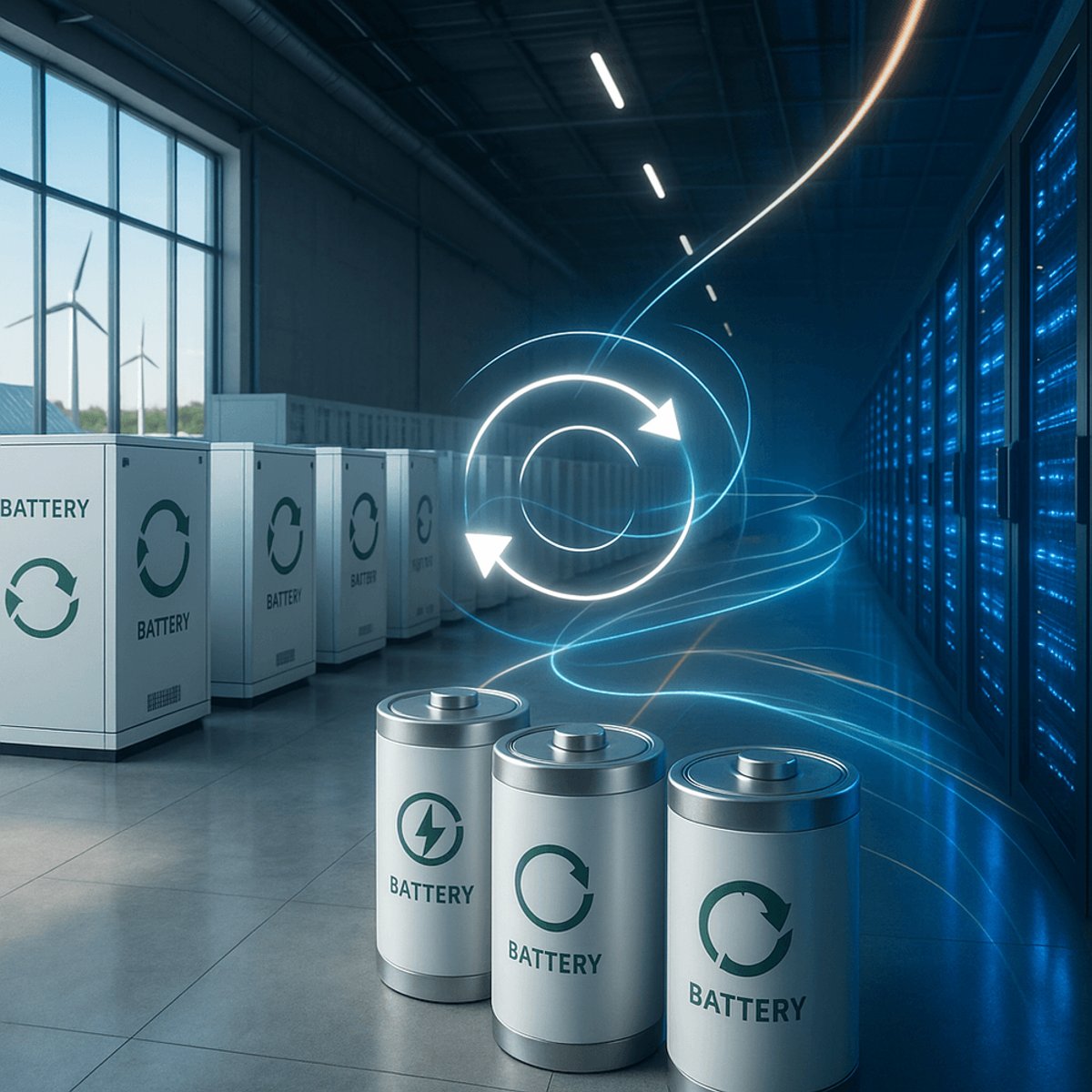
Redwood's approach is elegantly simple: connect retired EV batteries to renewable energy sources like wind and solar to create off-grid systems that can power AI data centers and industrial sites. The systems can also integrate with the traditional grid and even connect to natural gas turbines or future nuclear generators for large-scale storage.
The numbers are staggering. As of June, Redwood had stockpiled more than 1 gigawatt-hour worth of batteries ready for energy storage applications. By 2028, the company plans to deploy 20 gigawatt-hours of grid-scale storage - positioning itself to become the largest repurposer of used EV battery packs in North America.
"We're sitting on massive quantities of EV batteries that have too much life left to put through the recycling process," the company explains. This inventory represents both an environmental solution and a massive business opportunity as AI workloads continue expanding.
The new funding will accelerate expansion of Redwood's energy storage business while also boosting its refining and materials production capacity. The company also plans significant hiring, particularly engineers and operations staff to support its growing ambitions.
Eclipse's lead investment makes strategic sense given the firm's focus on industrial technology and sustainability. The venture firm has backed companies working on everything from carbon capture to advanced manufacturing, making Redwood a natural fit for its portfolio.
For Nvidia, the NVentures investment represents more than just financial backing. As the primary supplier of AI chips powering the current boom, the company has a vested interest in ensuring sustainable energy infrastructure can support continued growth. Data centers running Nvidia's H100 and upcoming Blackwell chips require enormous amounts of reliable power.
The competitive landscape is heating up as more companies recognize the potential in battery repurposing. But Redwood's early mover advantage and massive supply chain give it a significant head start. The company's existing relationships with automakers and battery manufacturers provide a steady stream of retired batteries, while its recycling expertise ensures it can maximize value from each unit.
This funding round also highlights a broader trend: the convergence of sustainability and AI infrastructure. As companies face increasing pressure to reduce their environmental impact while scaling AI capabilities, solutions like Redwood's repurposed battery systems offer an attractive middle ground.
Redwood Materials is positioning itself at the center of two massive trends: the explosive growth of AI infrastructure and the urgent need for sustainable energy solutions. With Nvidia's strategic backing and $350 million in fresh capital, the company is well-positioned to become the bridge between the EV revolution's waste stream and AI's insatiable appetite for power. As data centers continue multiplying to support AI workloads, Redwood's model of turning yesterday's car batteries into tomorrow's compute infrastructure could define how the industry powers its next phase of growth.